

By Beatriz Whitford-Rodriguez, Arts & Entertainment Editor
Spoilers for “Wildwood,” both the novel and the film, follow.
“Wildwood” is a 2011 novel by Colin Meloy, the frontman of The Decemberists, an indie-rock band based in Portland, Oregon. It was adapted into a stop-motion animated movie by the studio Laika and released on Oct. 11, 2026. Laika is famous for their animated movies, which also include an adaptation of Neil Gaiman’s children’s horror novel “Coraline.”
I associate the book “Wildwood” with my childhood: I more or less did nothing but read between the ages of six and twelve, and “Wildwood” exemplifies the kind of book I liked: a book that treated me like a serious reader even though I was a kid, on the line between bedtime story and young adult novel. It had elements drawn from fairy tales and other classic stories, but never shied away from the frightening or dark themes that are also part of these stories.
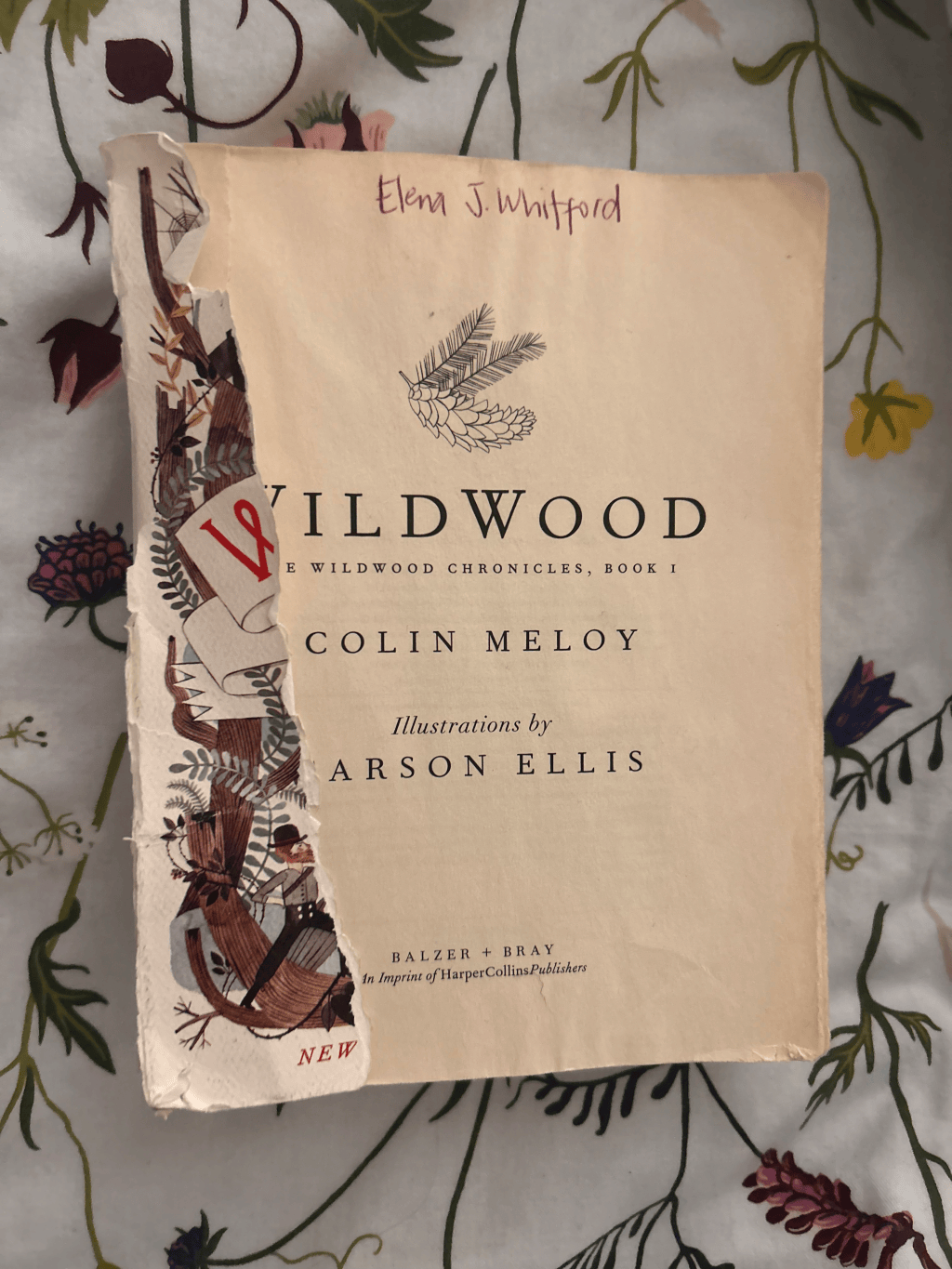
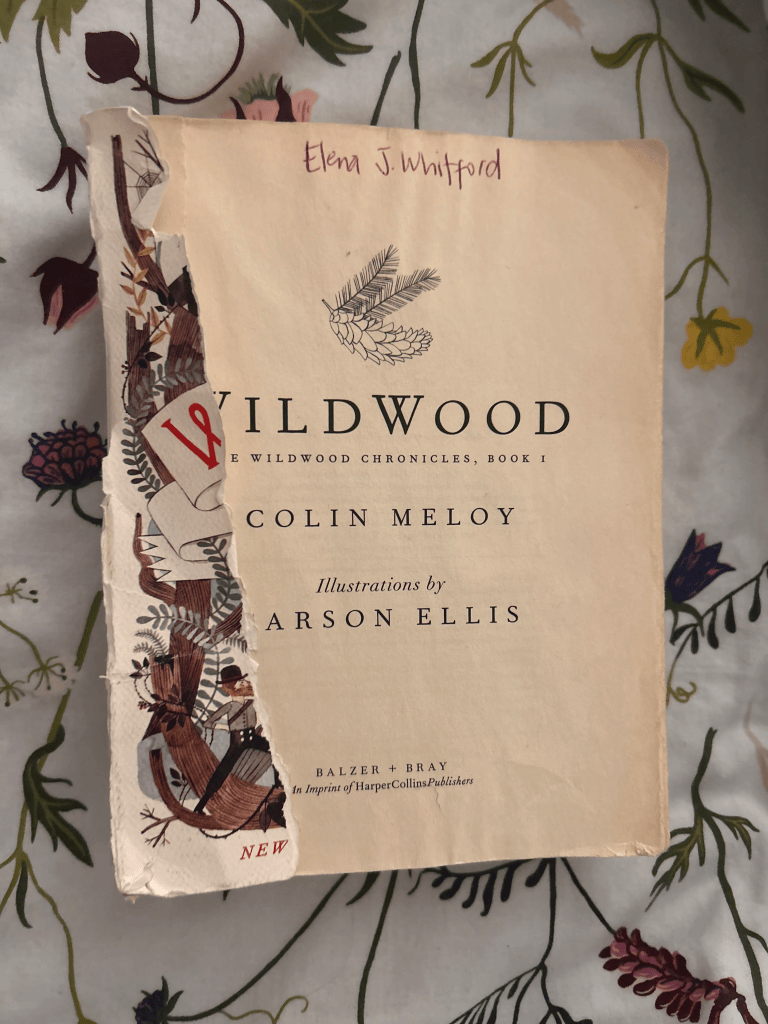
Growing up as a city kid in a small Andersonville apartment, “Wildwood” was an escape into a world of magic and nature – I could never look at the swooping willow trees in nearby Winnemac Park the same way after reading it. It was one of my sister and I’s first early obsessions, especially hers: our dog-eared copy has most of the front cover missing, and her name written neatly in the margin on the 31st page, as was our family tradition. Needless to say, I was incredibly excited to see its film adaptation.
On the surface, “Wildwood” is a story about a girl named Prue, who lives in Portland, and who is out one day with her baby brother, Mac, when he is kidnapped by a murder of crows. She follows them into the Impassable Wilderness – a fictionalized version of Portland’s sprawling Forest Park – and discovers a magical world of bandits, mystics and talking animals with surprisingly complex political systems, ruled by a tyrannical queen known as the Dowager Governess. The novel is just as intricate as the titular forest, and we could be here for hours while I list every minor change made in the film, but I will spare you.
The key difference between the book “Wildwood” and the movie “Wildwood” is in what they emphasize. In the novel, the complexity of the story and narrative are the focus; though Meloy describes the visuals, he mostly allows the reader to imagine the world Prue and Curtis find themselves in.
I would not say the story is overcomplicated in the book, but certain elements complicate the story more. Within its 541 pages, Meloy also has a tendency to ramble. One key scene, in which the Owl Rex – the prince of the Avian Kingdom – explains the Wood’s history to Prue makes up two chapters of dialogue in the novel, while the film condenses it to a brief but hardworking voice-over monologue. Characters tend to be fleshed out more elaborately, and so are the mechanics of the Wood. Notably, though, Meloy accomplishes all of this in largely plain writing – although his description of scenery can wander into the lyrical, for the most part, “Wildwood” is written in uncomplicated, approachable language.
The film is beautiful in a different way: it brings the world of “Wildwood” to life in less narrative depth, but uses that to its advantage. It fleshes out the story visually, in ways that would be impossible in any book — the intricacy of the stop-motion animation is able to hint at the sprawling world the story takes place in without, perhaps, needing to stop and explain. In order to create this film, animators constructed hundreds of sets and character puppets; the film’s lead facial animator, Benoit Dubuc, has noted that a character might wear as many as 24 3D-printed expressive masks in just one second.
The film’s detailed visuals are forced to simplify the story, while they expand it in another way. On the other hand, the book’s sprawling story is conveyed in plain language, and even the book’s interior illustrations tend towards simple, geometric designs – although when Carson Ellis’s art does foray into the detailed and dramatic, the film reproduces it with startling accuracy.
I would go so far as to say that “Wildwood” the book and “Wildwood” the movie can stand separately. Both tell the same story – a girl enters the woods to rescue her brother, and, like in any fairy tale, nothing is the same afterward – but in fascinatingly different ways. Regardless of iteration, “Wildwood” is a very complex story, but in the film, that complexity is visual, all rippling ivy and tangled trees, whereas the novel finds its complexity in its meanderings, the many doors it opens. If the movie does not look behind those doors, one can hardly fault it: at least it renders them in beauty, suggesting the richness that lies beyond.
My take: even if some of the changes hurt a little, they are all ultimately justified. Much like its titular forest, “Wildwood” is a beast of a book, twisting and turning at every corner down dozens of winding roads. In the service of bringing the vastness of both Meloy’s intricate world and complex story to life, it makes sense for some branches to be cut.





Leave a Reply