

By the Editorial Board
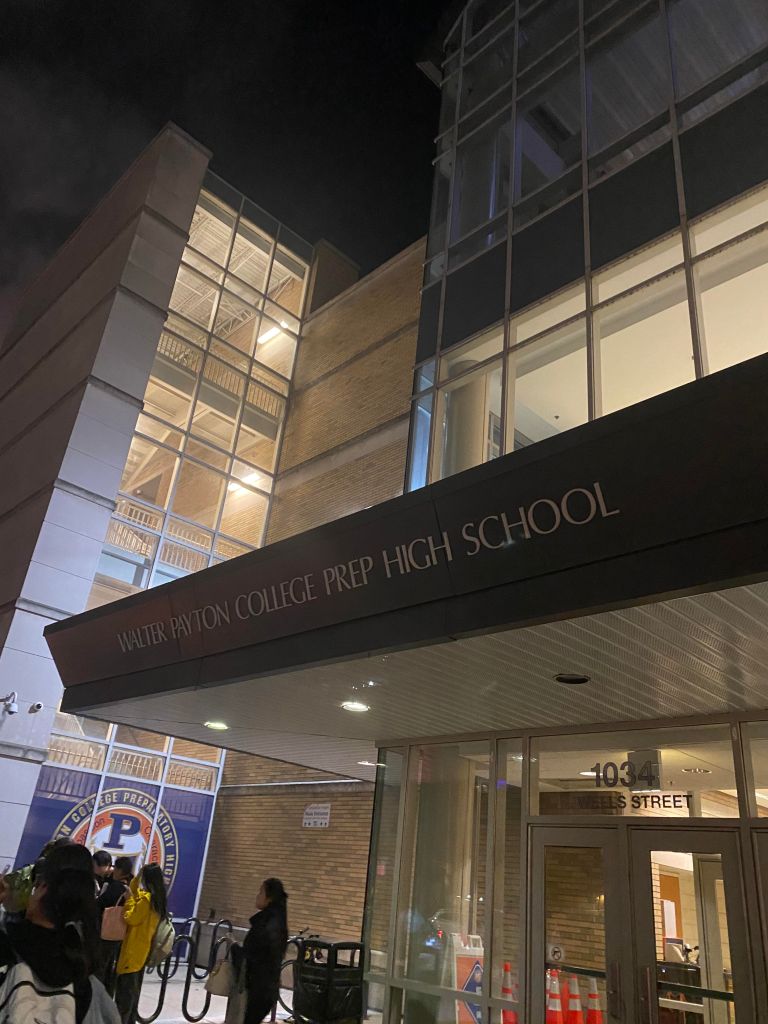
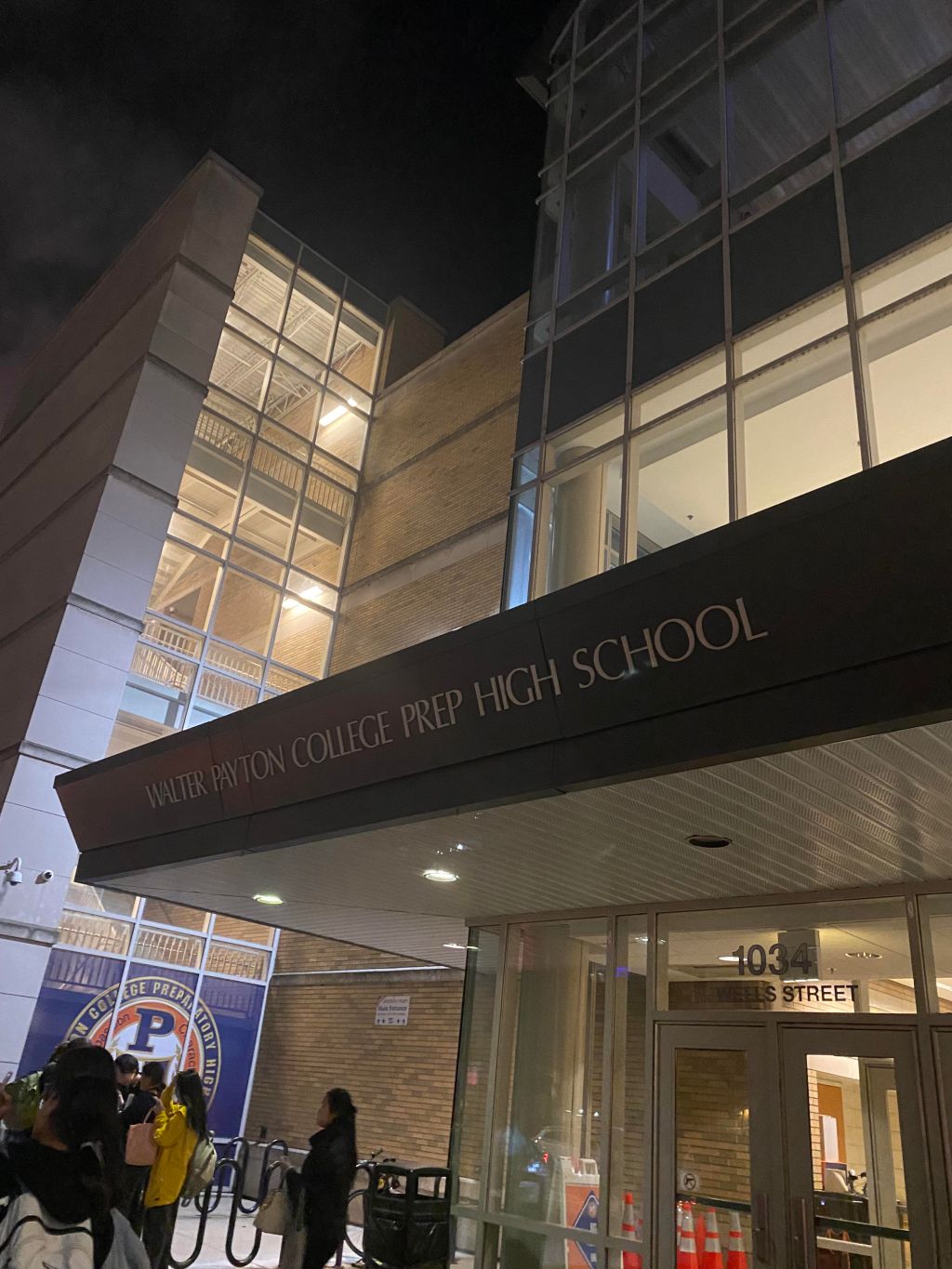
For what seems like the first time in ages, Payton is no longer the best public high school in the state.
That’s according to the highly anticipated U.S. News & World Report “Best High Schools” list released Aug. 18, revealing that Payton had conceded the top spot in Illinois to Northside College Prep, while also dropping from 32nd to 54th nationally. This continues a precipitous decline from the peak at No. 5 in 2022 — or so it appears. Rumors swirled in hallways and classrooms, among students, parents and teachers. Yet much of the uproar surrounding these jarring numbers is rooted in misguided fearmongering instead of evidence-based reasoning.
The decline in rankings should spark conversations surrounding reform within our school, but perhaps not the kind that you would expect.
For context, the ranking system uses six weighted indicators to compute the percentile from 0 to 100. These indicators are the following: the percentage of seniors participating in AP classes weighted with the percentage who passed an exam; college curriculum breadth; proficiency in state assessments in math, reading and science in the 2023-24 school year; demographic patterns in state assessments from the 2023-24 year; the gap between minority performance and the state median for nonunderserved students; and the graduation rate in 2024.
On Sept. 8, the subsequent stir within the Payton community culminated in an evening webinar led by Dr. Shabazz, Ms. Bennett and data specialist Mr. Dietrich, who also teaches math and computer science. For nearly an hour and a half, they broke down the complex data into concrete conclusions and fielded dozens of parent questions.
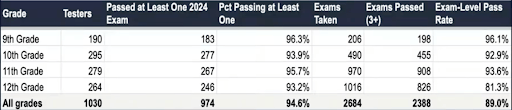
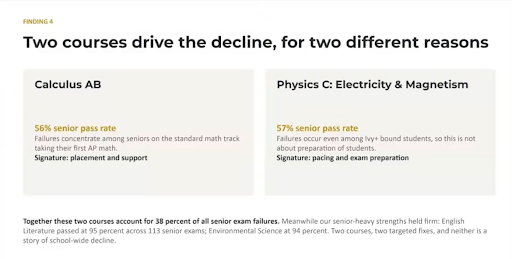
It turns out that Payton’s decline was a direct result of the first indicator mentioned above: only 81.3% of the class of 2024 passed an AP exam. In an email to Dr. Shabazz, a representative from the U.S. News & World Report confirmed that “the share of 12th graders from the 2024 class who took an AP exam and earned a qualifying score of 3 or higher was slightly lower, which accounts for the shift in their ranking.” Various explanations were offered, ranging from the pervading malaise of “senioritis” to the fact that more advanced senior AP courses such as Calculus and Physics C are, well, harder.
But that’s it. The reason for our ranking is as simple as that, stripped of the clutter and noise: not a systemic socioeconomic disparity, not a slump in teacher performance and not a harbinger of worse to come.
Over the past decade, Payton has firmly established itself as one of the top “feeder” schools in the nation. Qualitatively, one can simply observe the big names popping out of the colorful sea of college sweatshirts during the annual Decision Day celebration. The Chicardgo School’s Elite College Placement Index, which weighs matriculation rates to top-25 colleges among other metrics, confirms that Payton’s stellar outcomes are first in the state. There is no evidence to suggest that this will change as a result of the drop in ranking.
Besides, margins are razor-thin between the city’s elite high schools. As Dr. Shabazz explained, “Our total score out of 100 was 99.7. The other school just north of us [Northside College Prep] was a 99.8. With just a little bit more grit and perseverance and just good habits and attitude, I believe we could be at 99.9.”
Our obsession with trivial differences between somewhat arbitrary numbers is a symptom of the warped perspective here at Payton. We are haggling over a decimal place in a school district where only 42% of students are proficient in reading and 27% are proficient in math, according to ISBE data. We are an outlier in Chicago Public Schools, blessed with the privilege of a premier education that is closed off to most of Chicago’s teens. Out of 984 public high schools in Illinois, Payton remains in the top 0.2%.
Furthermore, the rankings do not always reflect reality. The U.S. News & World Report attempts to condense complex institutions and diverse student bodies into convenient numbers, which may be useful for eye-level comparisons but falls short beyond that. Case in point: Payton’s graduation rate, normally at 100%, dipped slightly after an international exchange student was classified as a non-graduate because they did not complete a four-year sequence. Couple that with the fact that Payton’s ranking on paper boils down to the performance of a senior class from three years ago, when the current class of seniors were freshmen. The rankings are lagging indicators, and incomplete ones at that.
Whether you agree or disagree with the methodology, you cannot seize one number in isolation to confirm your preconceived notions about Payton’s supposed decline.
Griping about the drop to No. 2 displays a fastidious arrogance that reduces our student accomplishments into a numbers-oriented rat race within our sheltered environment. It means that, despite all of the evidence transparently compiled and presented, people will still find a way to air their grievances against Payton’s administration and students. It reveals a toxic culture where the first instinct is not to seek constructive solutions, but to point fingers at whomever is easiest to scapegoat.
This is not to diminish the importance of accountability at Payton. As students, we earned our seats at the most competitive selective enrollment high school in Chicago, and we have the right to demand a quality education. But accountability is a two-way street. If we really do attach that much importance to our school’s reputation, then it is time to lower the pitchforks, sustain the effort through senior year and support those who are taking advanced courses for the first time. And beyond that, we should recognize that while external motivators may validate our hard work, our ultimate objective is to learn, not chase a test score.
Placing the burden of institutional success on a single group of students may further exacerbate the mental health issues that already plague Payton’s senior class. High pass rates are admirable, but they are best attained through our drive to excel, not through an insatiable desire to nudge our future U.S. News score up a couple of decimal places.
In the webinar, administrators claimed that AP success is a “legacy that [seniors] are leaving behind” comparable to a class gift to the school. But in reality, seniors do not owe it to anyone but themselves to score well on their AP exams. And there are practical incentives for doing so. Students bound for regional public universities are more likely to receive credit for those exams, potentially saving thousands of dollars in tuition. Yet according to the data, these students perform worse overall on AP exams than those accepted to prestigious Ivy League schools.
These are the takeaways that we should focus on.
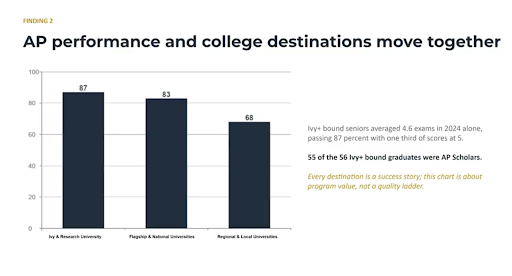
Dr. Shabazz offered a path forward through the new “Finish Stronger Together” campaign. There are three key components of the strategy: intra-department vertical alignment for streamlined progression from introductory to advanced classes, dedicated resources for seniors struggling with coursework and increased training for AP teachers. It is a team effort that involves administrators, teachers and, most importantly, students. Rather than complaining about the problem, we should be part of the solution.
So do we really want our school to succeed? Or will we continue to disguise our arrogance as concern, while ignoring the problems and solutions that truly deserve a spotlight?



![[Photo Gallery] 2026 Homecoming Football Game](https://paytonpawprint.com/wp-content/uploads/2026/10/7-img_2435-1.jpg?w=1024)




Leave a Reply