

By Steven Jiang, Editor-in-Chief
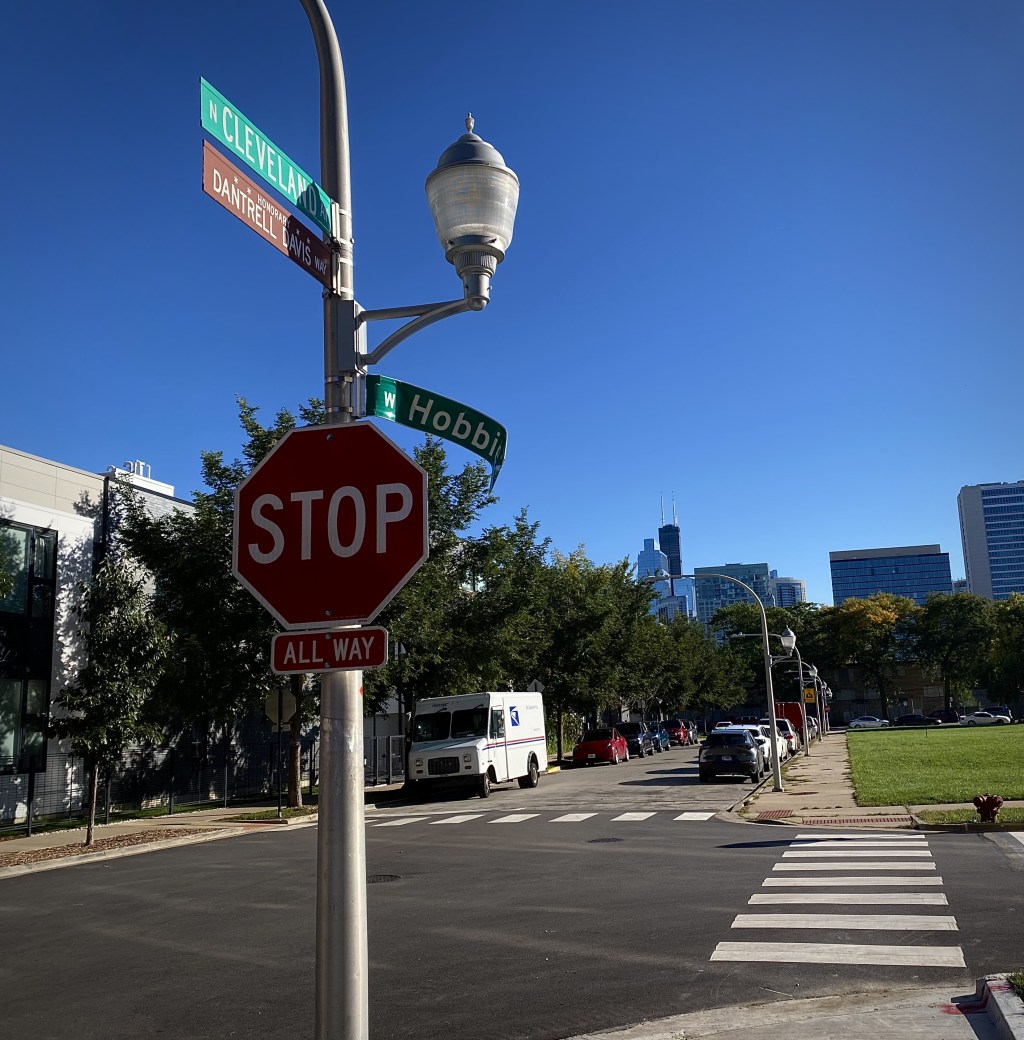
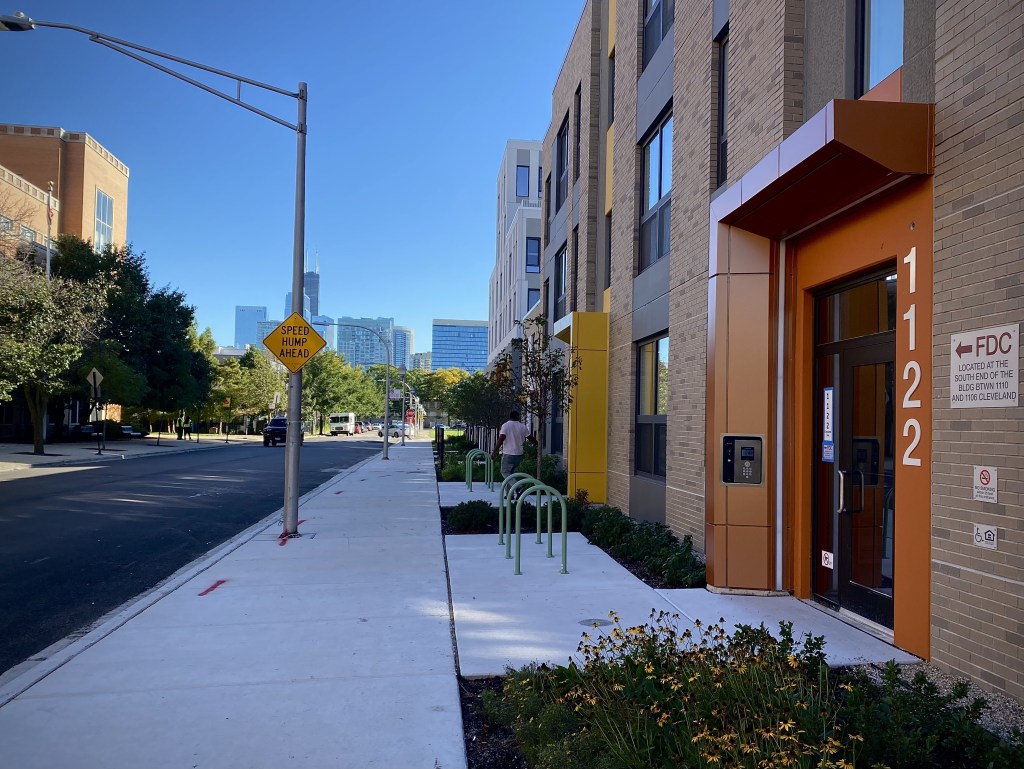
On the corner of Hobbie and Cleveland, steps away from the Ogden International School’s Jenner campus, there stands an honorary street sign marking “Dantrell Davis Way.” It faces a small grove of pristinely trimmed trees and two-story modern townhomes. Behind it, a sleek apartment complex casts shade upon the sidewalk. It had risen from a construction site hardly a year earlier. Across the street in the other direction, a curiously empty field offers a grand glimpse of the downtown skyline, punctuated by the distinct antennae of the Sears Tower. Two blocks east of this nondescript sign is Walter Payton College Prep, among the nation’s elite secondary institutions.
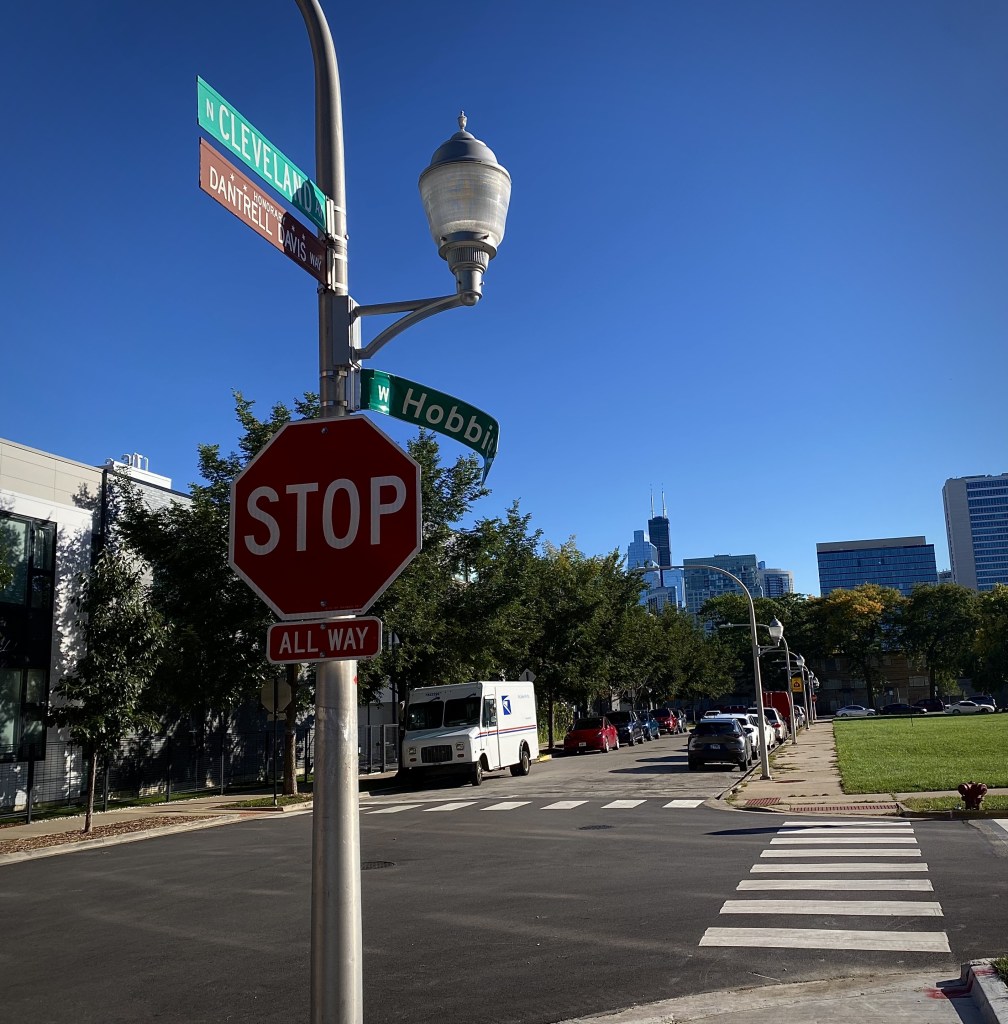
The sign bears the name of a 7-year-old boy who spent his last moments in this world walking to school. A chilly October morning in 1992 was pierced by the crack of a gunshot fired from 100 feet above. The 10th- story window belonged to a high-rise building — one of 23 that constituted Chicago’s notorious Cabrini-Green public housing project.
Originally constructed in the postwar era amidst an urban renewal wave, the project’s descent into destitution into several decades was poignantly captured by the bullet that spilled the innocent blood of Dantrell Davis. The front-page Chicago Tribune headline “SNIPER KILLS CABRINI KID STEPS FROM SCHOOL” did not mince words. It was not just another murder nestled in the fine print of the Crime section. No, what was especially appalling for the Tribune’s readership was that the shooting had transpired within shouting distance to the city’s pockets of wealth. A child, yes, a child, trudged through a warzone blocks away from the ritzy Magnificent Mile, Chicago Loop and Lincoln Park.
From afar, Cabrini-Green innocently blended into the skyline. On the Cabrini towers, a grid of beige orthogonal lines criss-crossed on the russet bricks, while the Green buildings projected simple, light-gray concrete exteriors. These colors were not foreign to Chicago’s architectural palette. Most of the city’s early twentieth-century homes were brownstones and greystones, built of sandstone and Indiana limestone, respectively: the halcyon symbol of middle-class living.
Yet upon closer examination, the buildings were devoid of homeliness. Their bland uniformity evoked the Soviet khrushchevkas designed for mass industrial construction. It was bare-bones government housing, after all — supposed to temporarily shelter the poor as they hoisted themselves up by their bootstraps and reached for the American Dream.
But Cabrini-Green’s balconies, which were later completely sealed off by prison-esque chain-link fencing, hardly exuded havens of opportunity. Rather, the buildings formed an island of concentrated poverty in the heart of Chicago. Its residents were trapped far above in slums where society’s plagues were left to fester. The units housed children of broken families who turned to gangs for brotherhood — gangs that hollowed out the promises of social mobility from within. By the 1990s, as the nationwide crack cocaine epidemic ravaged Chicago’s poorest communities, Cabrini-Green became a jagged eyesore that reflected the peaks in the city’s murder chart.
Enough was enough. Public housing was in shambles and far beyond saving. Then-Mayor Richard M. Daley vowed to “reform a deplorable public housing system that was failing its residents and taxpayers.” With funding from the federal government, Chicago forged an ambitious “Plan for Transformation” that vowed to demolish virtually all public housing high-rises and replace them with “mixed-income” housing developments. The government had failed, but urban renewal through the private sector would offer a fresh start…
Thus the crudely oversimplified tale of Cabrini-Green abruptly ended.
Destruction is a chillingly beautiful thing. The buildings were stripped to their skeletons, revealing colorful walls and haphazard wiring sticking out like tangled hairs. Wrecking balls leered at the remaining concrete skeletons as the sun set on Cabrini-Green for the very last time. “And to dust you shall return,” declares the biblical condemnation of humanity, and so too did those buildings implode into clouds of dust and rubble. The walls that had once confined generations of the most vulnerable Chicagoans simply collapsed into the earth.
“And to dust you shall return,” declares the biblical condemnation of humanity, and so too did those buildings implode into clouds of dust and rubble.
But just as the old is destroyed, the new is raised up from its remnants. New condominiums sprouted from the soil, offering whimsical spins on rectangle-centric modernism. They were adorned with tree-lined walkways, black wrought-iron fences and flamboyant splashes of color on the walls. Slowly, yet suddenly, the faces on the sidewalks became whiter. Wells Fargo and Jewel-Osco appeared on storefront LED displays, spurred on by the invisible hand of the market.
Payton was founded in 2000, as Cabrini-Green entered the final throes of a miserable, prolonged death. We were supposed to be an experiment in selective enrollment — a melting pot of wealthier and predominantly whiter students sharing classrooms with students of color. Perhaps this was how Chicago would move on from the public housing era.
So our school grew up in this uncertain environment, where certain things were understood but left unspoken, where the dust of destruction saturated the air…and where towers and people were slowly disappearing. We were a bastion of diversity, yet gentrification was swallowing our surroundings day by day.
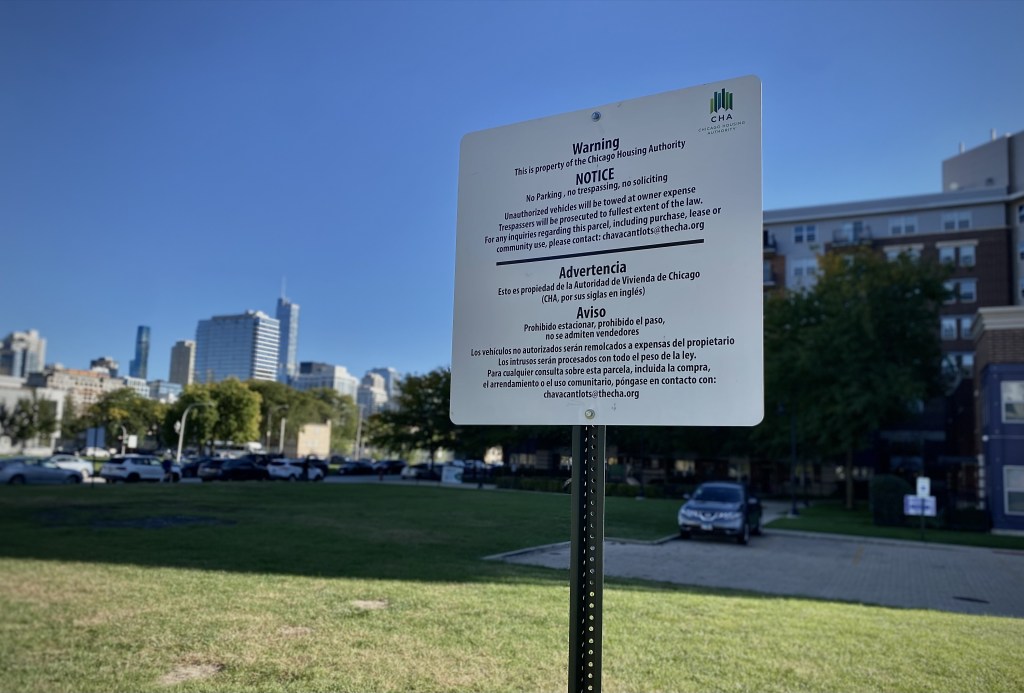
The last high-rise at 1230 N. Burling was demolished on March 30, 2011 in a less-than-spectacular coup de grace. It stood merely a block away from Skinner North Classical School, the top-rate alma mater of many Payton students. Shortly thereafter, a Target appeared on the empty field. The only remaining trace of Cabrini is a lonely sign in the neatly trimmed grass that proclaims, “WARNING: This is property of the Chicago Housing Authority” in both English and Spanish. The buildings never existed. But the Target is there and has always been there.
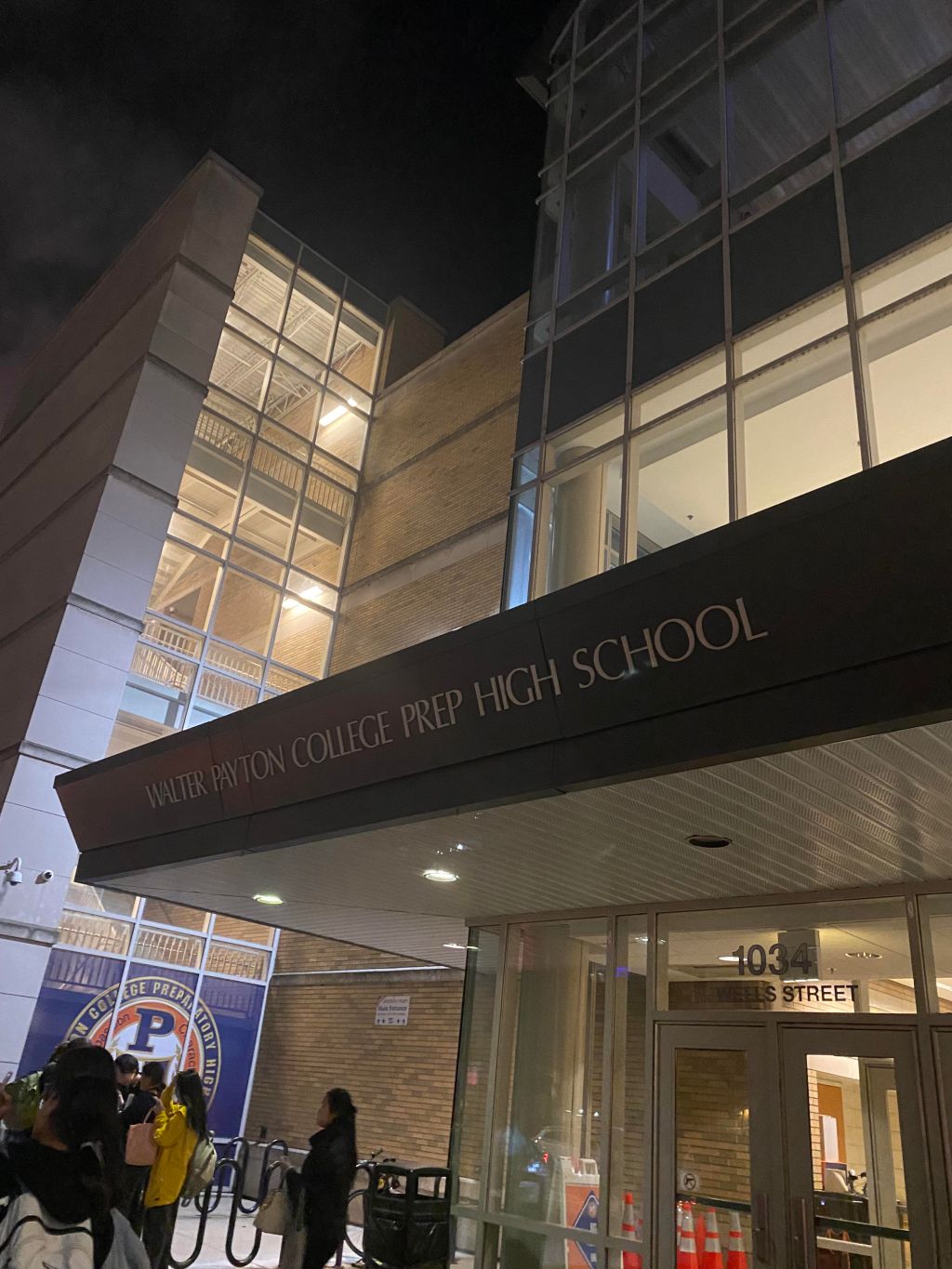
Today, Payton’s glass facade reflects the opulence of the Gold Coast’s luxury apartments that gaze down upon it. They epitomize catalogue-cover American homes in the twenty-first century, accentuated by modernist furniture and ostentatious artworks. Yet the greatest commodity is the view of the city below. From the top of Old Town Park, people will pay up to $24,000 a month to live among the crown jewels of the Midwest.
Why do we not remember Cabrini-Green? We romanticize the struggles of inner-city communities from our secure, triumphant perch overlooking the wealthiest ZIP code in Chicago. Cabrini used to be the “hood,” the place where young Black men lived in perpetual territorial warfare, viciously fought over drugs and racked up criminal records. Back then, we had “O Block” in our neighborhood.
Now, from the comfort of our since-gentrified haven, we embrace this holier-than-thou caricature. We reduce poverty and violence into gangster archetypes. We view the vacant stretches of grass just west of our school as awkward eyesores. We pretend as if the decrepit monoliths that once tainted the otherwise perfect postcard view were not still standing as late as fifteen years ago.
But what frustrates me about Cabrini-Green is its perfect ambiguity. Some claim that public housing reinforced redlining by merely pushing the slums into the sky. Yet this cynicism alone cannot explain the zeal with which the city pursued urban renewal in poor neighborhoods. Pragmatically, constructing public housing in existing segregated areas would raise the standard of living without angering whites who fiercely resisted integration.
Just as Cabrini-Green’s construction was mired in controversy, so too was its eventual downfall. The residents suffered from neglect and corruption by the Chicago Housing Authority. The buildings creaked as they deteriorated into tenement-style conditions. Water dripped from rusty pipes, windows were boarded up and broken appliances were left to decay. As the demolitions unfolded, a small but importunate contingent of residents took to the streets holding signs that read, “FIX ‘EM UP, DON’T TEAR ‘EM DOWN.”
But the stereotypes did hold some truth. The ubiquitous gang graffiti revealed the cataclysmic breakdown of law and order. While often sensationalized in the media, it was a place where young children like Dantrell Davis grew up under the gun.
In Cabrini-Green, policemen ventured into shadowy corridors and dingy elevators with guns drawn. On July 17, 1970, Officers Severin and Rizzato were ambushed from above by sniper fire while serving on a community policing mission. Their bodies crumpled upon the Seward Park grass, killed by some of the very people that they tried to protect. Today, Payton’s athletes practice scrimmages where innocent blood spilled fifty years ago.
Perhaps it’s the quintessential example of NIMBYism. There are those that will profess that public housing failed because of a racist and inequitable system. They may mildly denounce gentrification in theory while fully reaping its benefits. Who can blame them? Reasonable parents bring their young children to stroll through Seward Park because stray bullets no longer whiz overhead. They move into the new housing developments because they want their kids to attend the city’s flagship schools nearby. Why would they condemn the soil upon which their privileges rest?
Cabrini-Green only mattered because it was a black sheep — quite literally. Its very existence repudiated the delicately curated image of downtown Chicago: a wasteland of squalor that none could unsee. But Cabrini-Green was only unique in its geographical location. Most of the city’s public housing developments were concentrated in an even greater spectacle on the State Street Corridor. Rows of uniform high-rise buildings stretched into the horizon on a narrow strip of land parallel to the Dan Ryan Expressway. It was a marvel of ambitious urban planning, as if a child’s city of blocks had come into fruition. The Corridor included the Robert Taylor Homes, the nation’s largest public housing project that usurped Cabrini-Green’s tenants by a factor of three and endured the worst of the gang wars of the late twentieth century. But they were easier to ignore because, well, they stood on the South Side.
Cabrini-Green only mattered because it was a black sheep — quite literally. Its very existence repudiated the delicately curated image of downtown Chicago: a wasteland of squalor that none could unsee.
Just because Payton no longer lies in Cabrini’s shadow does not mean that we can absolve ourselves from its legacy. Without the towers staring down upon us, do we still care about our city’s social crises? Or do we only bother to perpetuate stereotypes about streets that we have never walked on in neighborhoods tucked away behind our skyline?
It’s eerie how rapidly people have moved on. Beneath the blades of grass are dust particles that once represented home for over ten thousand mostly-Black Chicagoans. But for all the buzzword talk of analyzing the “root causes” of social issues, our generation remembers excruciatingly little about public housing. We act as though we do not still come from different cities within our city.
Yet when that final school bell releases us into the outside world every day, our lives sharply diverge. Many will commute a stone’s throw away to idyllic neighborhoods where one can walk at night without furtive glances over the shoulder. Some will watch from smeared bus and train windows as the cityscape melts into the South and West Sides — where the metaphorical ashes of Cabrini were scattered across.
The real tragedy of Cabrini-Green was not that it was inevitably demolished, but that it was forgotten because of a twisted marriage of willful ignorance and rational self-interest. As real estate developers expanded into the newfound frontier on downtown’s edge, we retreated further into our own bubbles. Why even debate these uncomfortable topics if they no longer affect us?
Yet until very recently, Cabrini-Green was our backyard.




Leave a Reply