
By Charles Niewiarowski, Contributor
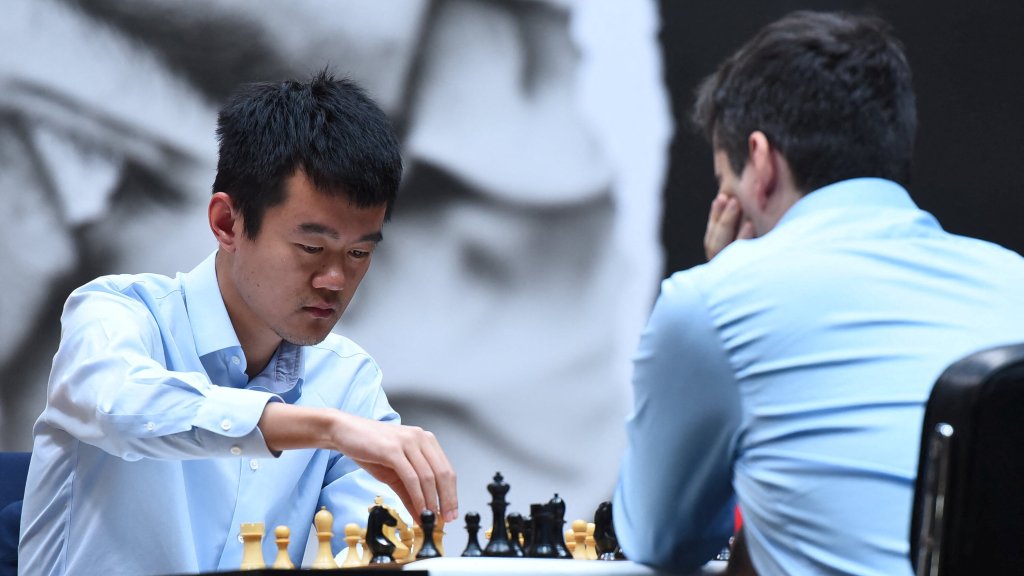
It’s April 2023. The Chess World Championships are under way. The previous champion, Magnus Carlsen announced a brief stint from over-the-board play for this year. Carlsen was the champion for the past decade, smashing every opponent he faced, and building up a reputation as the greatest chess player of all time. With his return planning to take place in 2024, this series was every chance player’s perfect chance to finally get to the title they’ve been dreaming of.
However, after the Candidates, a generally uneventful tournament, only two men remained: Ding Liren and Ian Nepomniatchtchi. Ding, as most refer to him, was not even projected to play in the tournament. After four previous games, his lackluster projections did not even have him placed in the Candidates. But, he overcame all odds, and swept the competition all the way up to the finals. Ian had a more guaranteed pathway. He was the top player in the tournament, ranked second in the world. Two years prior, in 2021, he played against Magnus Carlsen in the tournament final. But, as we know, he was beaten like a dog.
None of this mattered when it was time to start the championship. Nothing in these two men’s lives mattered more than the next two weeks. And the man that took this to heart was Ian Nepomniachtchi. After the first seven games Ian was up four points out of seven to Ding’s three points out of seven. And after the next four games, all draws, Ian was up at six points. All he needed to do was win one and a half points. He had three more games to do so. All Ian needed to do was match Ding. But he didn’t. In the next few games, Ian was beaten up, never feeling like he could further the gap between him and Ding. In the last few games, Ding fought back, winning a game and drawing the rest. It was tied after fourteen games. A tiebreaker was needed. This was the first time this had happened in 20 years. The last two decades of championships have been decided by such utter dominance. Chess fans were ecstatic. They were seeing one of the greatest world championship series of all time.
The tiebreaker games took place in one day. There would be four games, all shorter than the previous ninety minute per player timing. The first three felt eventful, yet they weren’t. There was so much tension, that even the most simple draws appeared to be legendary. With the last game, however, there was no pretending. The game seemed to be heading for a draw: equal material, equal position, equal king safety. Ian gave ding a check, a check that could’ve been responded to with a kind move. But Ding said no, he wanted the win. Instead of evading, Ding blocked the check with his bishop, a seemingly inaccurate move. Ian had the advantage, but it wasn’t easy to find. Could he? He couldn’t. In fact, the next two moves dropped Ian’s evaluation to nearly 3 points lower than Ding’s. In other words, Ding’s position was so much better that he may as well have another piece. The position was so strong because of Ding’s advancing pawns, which he continued to capitalize on. In an obviously lost position, Ian sat for a minute, fumbling with his pieces with sweat dripping from his face. He slumped in his chair, finalized his decision, and resigned. Ding and Ian shook hands. Ding Liren was, and now is, the Classical Chess World Champion.


![[Photo Gallery] Homecoming Football Game Payton vs. Brooks](https://paytonpawprint.com/wp-content/uploads/2026/03/img_4761.jpeg?w=1024)
 The Paw Print
Leave a comment