
By Sanaa Taqvi, Staff Writer
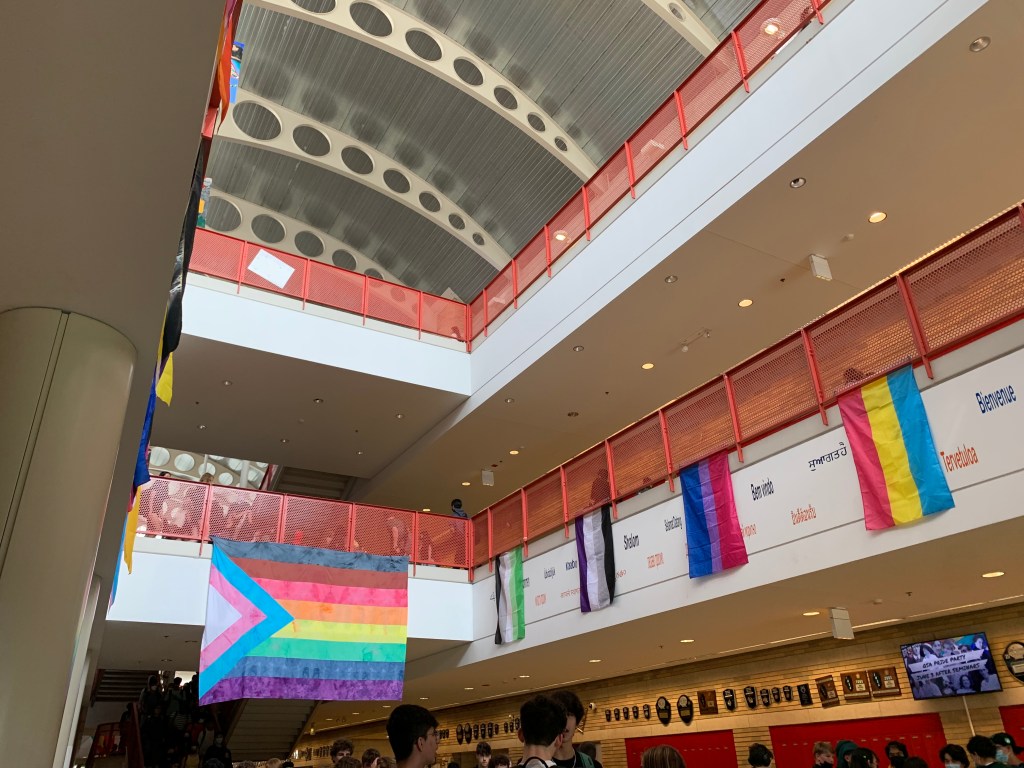
The first day of June marks the beginning of the month-long celebration of the LGBTQ+ community. During this time, people come together to recognize the history, achievements, and challenges faced by those a part of this community as well as an opportunity for people to express pride in their identities while working towards a more inclusive society. Walter Payton College Prep has a significant LGBTQ+ population, with a relatively liberal environment to support individuals.
Over the course of the last 50 years, the LGBTQ+ community has become more outspoken, encouraging more and more young people to be more open about their identities. At Payton, many students are either a part of or support this community. However, a survey of Payton students showed that over 90 percent of respondents reported that they have been involved or witnessed a mislabeling situation where a student used incorrect pronouns or misgendered another.
According to American Progress, recent studies have shown that more than one in three LGBTQ+ Americans have faced some form of discrimination in the past year, and this increases to more than three in five amongst transgender Americans. Discrimination adversely affects the mental well-being of many members of the LGBTQ+ community: studies show that one in two who actually report derogatory or discriminatory comments have experienced a significant negative impact on their psychological well-being.
Some transgender members of the Payton community may openly express their aversion towards being mislabeled. While others simply brush it off, in fact, some small slip-ups may affect LGBTQ+ individuals than they initially show.
According to a Payton student survey, the overwhelming majority of the students who responded to the survey expressed their discomfort and reported being distressed by this matter, whether they were directly involved in the situation or were simply a witness. The most common types of mislabeling at Payton, according to the responses, were with preferred pronouns and names. Of the 43 respondents who identified as a part of the LGBTQ+ community, approximately four out of five stated they have been directly affected or have witnessed a case of mislabeling. All of the respondents, whether or not they were at the receiving end, wanted to know what they could do differently to avoid a negative situation.
“Since I came out as genderqueer (they/he/she) at school, it hasn’t been an easy thing to navigate. Even figuring out my own identity has been a difficult process, and it is still confusing at times,” said an anonymous sophomore. “What makes it even more difficult is peers continually using my deadname and only using she/her pronouns. I understand that it can be difficult to remember, especially for people who don’t know me, but what really bothers me is when it’s people I talk to a lot who repeatedly ignore my preferences.”
Another student, though not directly involved, has expressed great empathy for a different student who was mislabeled. “The person had changed their name between school years and another student called them by the wrong name (likely accidentally) once after being initially corrected,” said a junior. “People don’t always use the right pronouns when referring to classmates or only use one pronoun when a student uses she/they pronouns for example.”
“I often assume pronouns or forget pronouns of people I’m not completely familiar with,” another senior explained. This student wasn’t alone in their response— a handful of other students who responded stated that they have mistakenly classified someone as ‘dude’ or ‘guy’ when the student prefers feminine pronouns. Further, other students expressed confusion as to whether terms such as “dude” are gender-neutral terms.
In Payton, many students feel that as a collective student body, we should make a conscious effort about labeling our peers correctly, and that it is important to understand the unforeseen consequences of mislabeling. In the survey, the majority of students recommended improving the issue of mislabeling at Payton by educating us more about LGBTQ+ identities. One anonymous student suggested adding an option on Selenium where a student can provide their preferred pronouns so they appear on the teacher’s register, similar to the “nickname” feature that allows students to input their preferred name on an enrichment register.
What can you do if you mislabel someone or witness someone being mislabeled?
- Apologizing is the first step! Even if the incident was quick and you’re unsure if anyone actually heard your slip-up, apologize as soon as you can but in a brief yet genuine way and move on. And don’t say how bad you feel for messing up— this can make the person who was misgendered feel more uncomfortable.
- Correct yourself – Use the person’s preferred pronouns and/or name correctly right away.
- Commit to making a conscious effort to improve; practice using the person’s pronouns always, not just when you’re around them.
- Take an active role in your classes when you hear a fellow peer mislabel someone. In most cases, it is acceptable to gently correct them and move on. Do not ignore it; it is important to let the mislabeled student know that you are working to practice your allyship.


![[Photo Gallery] Homecoming Football Game Payton vs. Brooks](https://paytonpawprint.com/wp-content/uploads/2026/03/img_4761.jpeg?w=1024)
 The Paw Print
Leave a comment