
By Owen Zolner
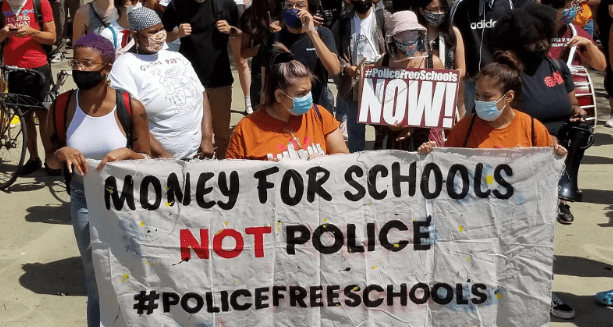
Student Resource Officers, or SROs, have long been a present element in Chicago Public Schools. Opinion on them has shifted greatly over time, with SROs (who were originally introduced in the 70s) seeing their usage increase in CPS to address safety concerns that coincided with the increase in school shootings in the 2000s. However, over time these SROs have harmed students more than they’ve helped them, with schools that implement an SRO into their community seeing increases in suspensions and seeing a direct relationship between SROs and the creation of a school-to-prison pipeline.
As part of Mayor Brandon Johnson’s campaign, he pledged to remove all SROs from CPS. In a week, city council members will vote on a bill that will officially start the removal process of SROs from any school where they are still present. The resolution should pass not just for the sake of students, but also for the sake of attitude towards school culture.
SROs being implemented in school doesn’t wain students away from doing things that may cause disciplinary action- rather, it exacerbates them. Transfer student 25’ Miguel Arias noticed that shift at his old school, Kennedy. When asked about SROs at his old school, he went on to say that they “made the school environment feel somewhat unsafe, actually… everybody always felt like they would get in trouble for the smallest step out of line, and they would sometimes punish wide groups of students for the actions of just a few of us… they didn’t change anything, just more of us would get punished for the smallest things, like spending to much time in the halls or just being loud in class… it felt like they took their job too seriously.”
This helps illustrate how so-called student resource officers provide no resources to students. They make their lives more uncomfortable. Many proponents of SROs, especially when they were first introduced to CPS, argued that they could help in times of crisis, such as a school shooting. However, this has not been the case with SROs not being reliable in the case of school shootings, with zero recorded instances of an SRO stopping one. The only real benefit of them for these types of situations is that they may provide a false sense of security, but there is no quantifiable evidence that points towards any benefits in times of crisis.
Critics of SROs often point towards the fact that the money being used for them could easily be directed towards addressing the actual causes of the issues. Mayor Brandon Johnson argued for replacing them with mental health advisors who could work directly with students to prevent issues that SROs are meant to address. This is a better idea than SROs because it catches the problem at its root before it escalates into something that an SRO would need to address.
It is essential to build a school environment where students feel safe, an environment where police involvement in school is not necessary. By doing away with SROs that cause a direct pipeline between students and prison, and rather encouraging the building of a safe school community. It is important to invest time and resources in building a better community that fosters a healthy relationship between students and the school. As Junior 25’ Alex Zhunio put it, “I want to feel safe in school. I think that having police in school might just make me feel more afraid to act up than be safe.”
Overall, the intent behind student resource officers is good. However, they don’t accomplish the goal that they were initially intended for. It is through instilling a positive school culture via the usage of other resources that students can begin to feel safe and thrive, which should be the goal of our school.

![[Photo Gallery] Homecoming Football Game Payton vs. Brooks](https://paytonpawprint.com/wp-content/uploads/2026/03/img_4761.jpeg?w=1024)
 The Paw Print
Leave a comment