
By William DeAllaume

As Payton welcomes the class of 2027 into the building for the first time, it also welcomes a cohort of 17 new teachers, staff, and school administrators joining the WPCP community. I met with Mr. Johnson, a visual arts teacher at Payton, to hear his story.
The Paw Print: What is your role at Payton, what do you teach?
Mr. Johnson: I’m a visual arts teacher and this year my classes are Honors Drawing & Painting I/II, Honors Photography I/II, and AP Studio Art for 2-D design and 3-D design.
The Paw Print: How has your experience at Payton been so far?
Mr. Johnson: With my students it’s been really enjoyable; Payton has the opportunity to incorporate the entire city of Chicago, and I think that’s a really nice experience as a teacher to be able to teach our vast breadth of students.
The Paw Print: Why did you choose to come to Payton?
Mr. Johnson: I really enjoy teaching students and watching them grow where they have challenging situations, and I think I had to realize that even at Payton, there are students that have challenging situations.The second thing is I really enjoy the high level of interaction with arts. In teaching you can always find a worthy challenge, a worthy goal, to keep me set with engaging students. For years, I’ve been developing approaches to get students to learn who haven’t been performing at a high level to perform at a high level in art.
The Paw Print: What is your favorite part about Payton?
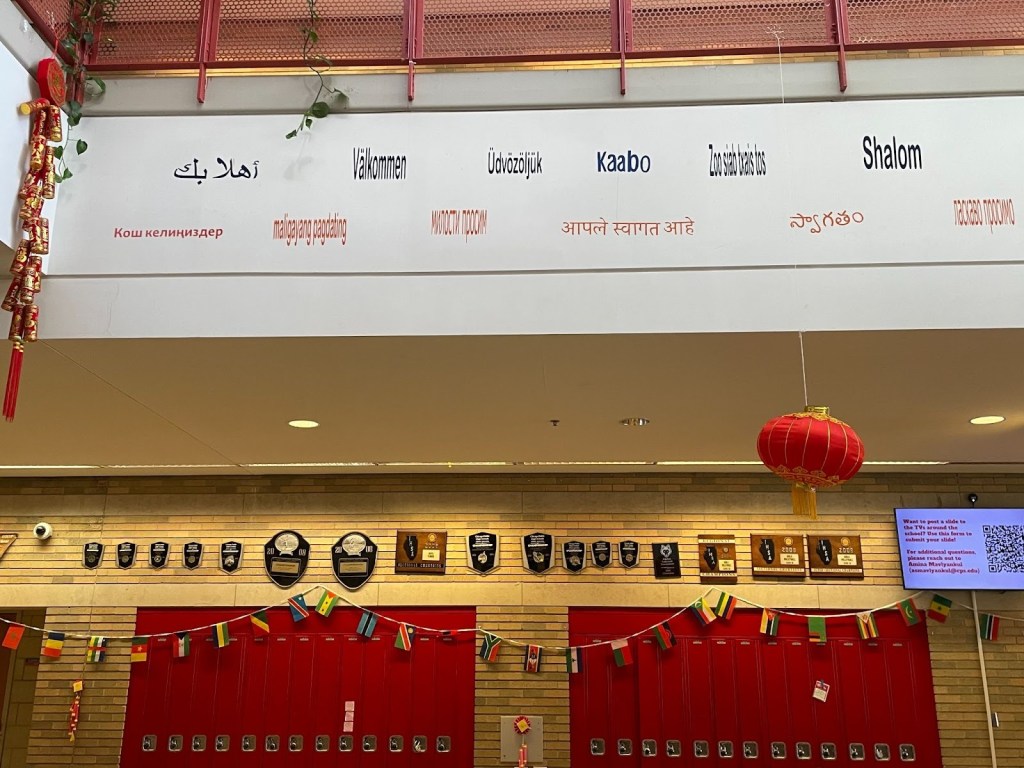
Mr. Johnson: My favorite part is, number one, the diversity. Being able to have a student body where you have such a breadth of cultures really allows for the students and staff to learn about people as a whole, and I really enjoy that.
The Paw Print: What do you think is the biggest challenge that high schoolers will face?
Mr. Johnson: I think that the biggest challenge would be growing up and becoming adults and being able to treat each other properly, but then also to be able to accept the responsibility of being treated properly. Unfortunately, our country is having to deal with a lot of culture issues that have been swept under the rug. I think it’s important for the coming generations to take that on while other generations haven’t really been as successful.
The Paw Print: As a teacher, I wanted to get to know more about your background. Where did you grow up and where did you go to college?
Mr. Johnson: I grew up on a small family farm in North Carolina. It was purchased by my great grandparents who were born around the turn of the 20th century, and I grew up knowing them very well. I grew up very immersed in the old ways of growing up, like being self-sufficient, learning how to interact with an almanac, how to deal with seasons, how to grow your own food, how to fish, how to preserve food, and how to listen and tell stories, so I had a really good sense of self as far as my family and culture. Having those generations there, I didn’t realize how much I was absorbing until I left for college. I went to, my first year, Elon College (now Elon University), I played football and was going to be a business major. I transferred and went to Fayetteville State, a historically Black college/university. My uncle went there so pretty much everyone else had gone there. I played football there and decided to stop playing football and switch to art as my major.
The Paw Print: What would you say led you to art?
Mr. Johnson: I started really young. I enjoyed drawing and copied a painting I saw and my great grandmother, I think she was my first art teacher, asked me if I could draw from memory because I was just drawing what I saw. I think that was my first art lesson.
The Paw Print: Leading onto the teaching part, how did you get into teaching and what grades have you taught?
Mr. Johnson: I’ve taught kindergarten through retired people, so a full gambit of stages alike. What got me into it: I did not want to be a teacher, I wanted to be a business owner, and I was. In between that, I was working with the state and I did a paid internship with them as an art major. I had time off during the week with the way my job was structured, so I decided to become a substitute teacher and I took this class at a community college. I took the class and the professor and the administrator decided they wanted me to teach there, so I taught at a community college in my hometown and taught at 2 different campuses. I fell in love with teaching math. In order to teach art, the community college told me I had to teach math and English and they needed teachers very badly. I didn’t know I liked teaching, but I did it and loved it.
The Paw Print: How would you say the skills you’ve developed throughout your life have helped you become a better teacher?
Mr. Johnson: I had to learn confidence, first from myself, that I gain confidence by being able to trust my students. I think that the biggest thing I’ve learned is trusting my students and realizing just how much they have to offer and how much they can do. I try to tailor my teaching around that.
The Paw Print: What is your favorite thing to do in Chicago? How would you say Chicago’s environment has affected you and the students you teach?
Mr. Johnson: I’ve become keenly aware of all of the different pressures that our students have. Chicago, unfortunately, still has pressures where some students are constantly in fear of their life just because of where their family behavior has been. Some students don’t have the time to do all the extracurricular things they want to do because of just how large the city is, so travel time is very hard here. That’s probably the biggest thing I would have to say that’s more universal – being able to travel and being able to stay after school. All of those things really impede learning a little bit and our high school experiences.
The Paw Print: What are your takeaways from your experience so far and what would you like to do in the future at Payton?
Mr. Johnson: My biggest takeaway is that students, not just students in my class but students at large, have a large array of interests and I know that they are constantly seeking adult guidance and to facilitate a lot of their interests. That’s one thing that really resonated with me here, so I try to make a point to be self-directed, like in the seminars and enrichments– not just what I want to do but try to really listen to the students and their interests and see if I can help be a part of that and develop that.
![[Photo Gallery] Homecoming Football Game Payton vs. Brooks](https://paytonpawprint.com/wp-content/uploads/2026/03/img_4761.jpeg?w=1024)
 The Paw Print
Leave a comment