

By Elena Whitford
Chicago has countless cultural events, ranging from Broadway musicals to art installations, and it’s impossible to see them all. But one event in particular is underpublicized yet crucial for premiering and publicizing movies from an often overlooked part of the world.
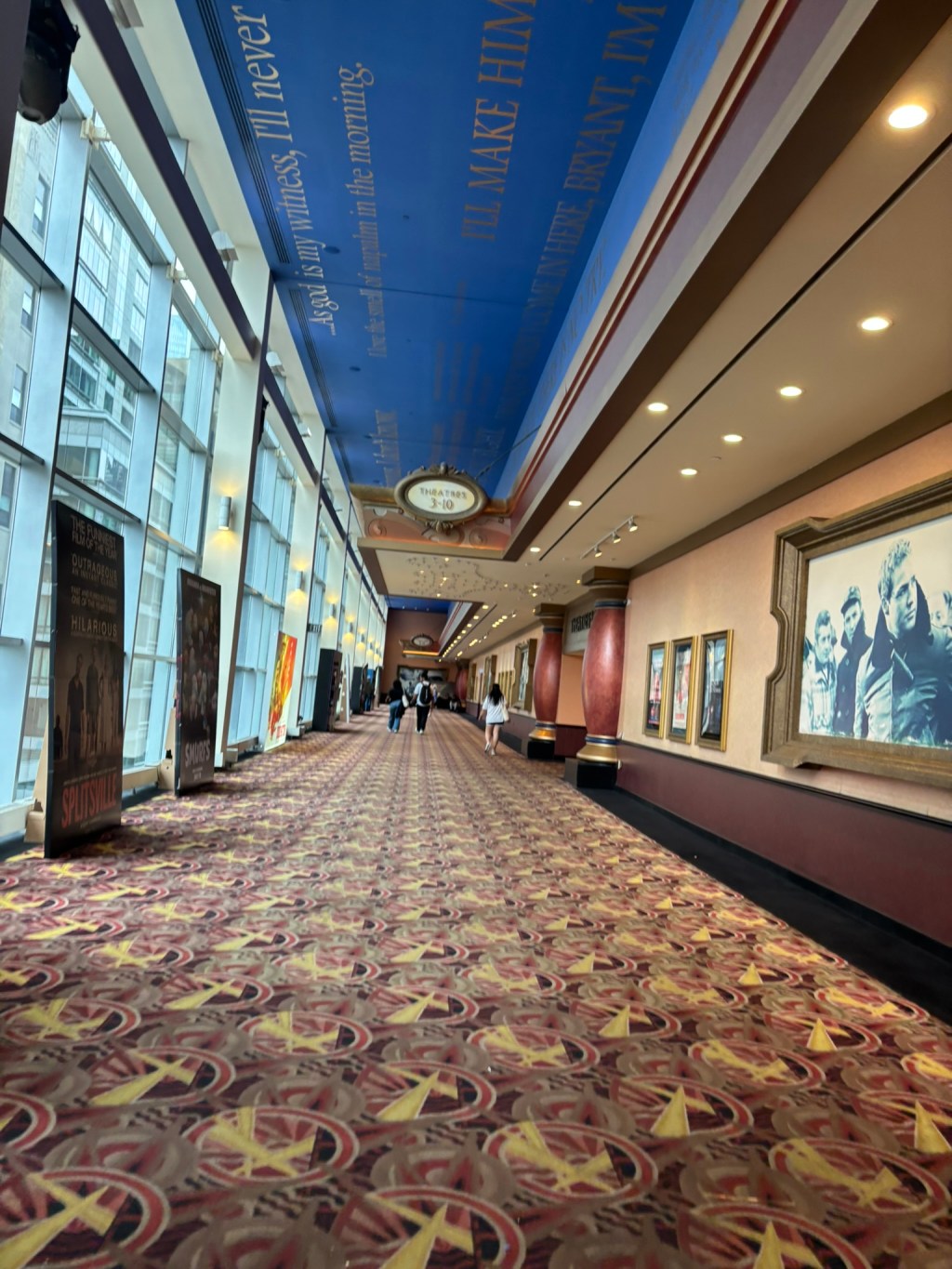
The 40th Chicago Latino Film Festival (CLFF) happened from April 11 to April 22, mostly at Landmark Century Centre Cinema in Lakeview, and showcased 50 features and 35 short films from 19 countries in Latin America, Spain, Portugal, and the US. I was able to go a few times, and I highly recommend it for anyone interested in film, language, or simply being immersed in Latine culture!
Although a third of Chicago is Hispanic, and nearly 300,000 people speak Spanish here, film events tend to be limited to American films, with a few international ones sprinkled in. The vast majority of movies shown are in English.
So having a two-week festival dedicated to Latin American film, with almost all of the movies entirely in non-English languages, is an important step in creating linguistic and cultural diversity in the film industry. Also, many of the movies had their U.S. premiere at the CLFF, meaning they reached not just a few more people, but an entire country more than they would have otherwise.
Within the festival, diversity is also prioritized. Two of the films I saw, for example, were Hace Mucho Que No Duermo (Long Time, No Sleep), a surreal, Buster Keaton-esque Argentinian film following an epic chase through the streets of Buenos Aires; and the world premiere of Corozo, a smaller, visually stunning, romantic yet tragic movie from Colombia. Although they were completely different in style, plot, and country of origin, they complemented each other wonderfully.
Throughout the festival, viewers are encouraged to expand their cinematic horizons. Before each screening, a short film from a different country is played, carefully curated to match the tone of the movie while still providing a different experience. (For instance, before Corozo played, we watched a Haitian-American short film called “Konpa,” which had a different feel to Corozo but was still very touching.)
Another exciting feature of the CLFF is viewers’ ability to rate their favorite movies. The highest-rated movies at the festival’s end win audience awards, so viewers are able to continue to engage with and support the films after watching them.
I conducted an email interview with Simon Elias, Corozo’s director. He gave me valuable information about the process of creating a movie in Latin America, especially one shot in two weeks, and about the key role that film festivals play in strengthening Latine communities around the world. The complete interview, which I’ve translated from Spanish, is below.
What role do independent and low-budget films (like Corozo) play in the current system of international film?
Independent and low-budget cinema has a fundamental role in global cinema because it’s tangible proof that it’s possible to tell incredible stories and make unique movies, without the necessity of big budgets. This allows all the young filmmakers of the world to take the risk to tell their stories and find a way to make them possible. All this allows us to have a great variety of new and unique movies, and to be able to enjoy a global variety of films.
The process of filming Corozo seemed very unique to me because you filmed it in two weeks with an iPhone and a crew of six people. How was the final movie affected by these conditions?
Having filmed it with an iPhone and in two weeks was a decision that we took with Lorena and Camilo, the directors of photography, to be able to film in unique locations in Colombia that are beautiful but at the same time hard to record. This is because they are breathtaking and, in a way, sacred, and a normal crew with hundreds of people wouldn’t be allowed in this type of location because they could damage the scenery.
Also, the versatility that the iPhone gave us allowed us to film the movie in very little time and be able to finish recording all the scenes within the two weeks we had established.
I’d like to invite all young filmmakers or people interested in making cinema to use the iPhone or their own device to film shorts or movies because these days, they give us an incredible image quality.
How was the experience of showing this movie in Chicago, to Latine and non-Latine people alike?
To be able to show Corozo on a movie screen in Chicago has been one of the most incredible experiences of my life. To see that the Latine and non-Latine public enjoyed this story and connected with the characters was wonderful. It was also very satisfying to be able to share the beauty of my country, Colombia, through this movie.
Why do you think the Chicago Latino Film Festival is important? What does it contribute to cinema and the Latine community?
This festival is very important because it accomplishes the act of reuniting a wide variety of Latin American movies that show and frame the reality of Latines around the world. This festival has a large number of Latine films that show us, from a closer viewpoint, the human condition of Latines and their way of seeing and dealing with life. This festival is also able to strengthen the Latine community in the United States and in the world, since it reunites and connects us as filmmakers to share and discuss the new forms of Latine cinema. It incentivizes us to keep creating Latin American stories.

![[Photo Gallery] Homecoming Football Game Payton vs. Brooks](https://paytonpawprint.com/wp-content/uploads/2026/03/img_4761.jpeg?w=1024)
 The Paw Print
Leave a comment