
By Steven Jiang
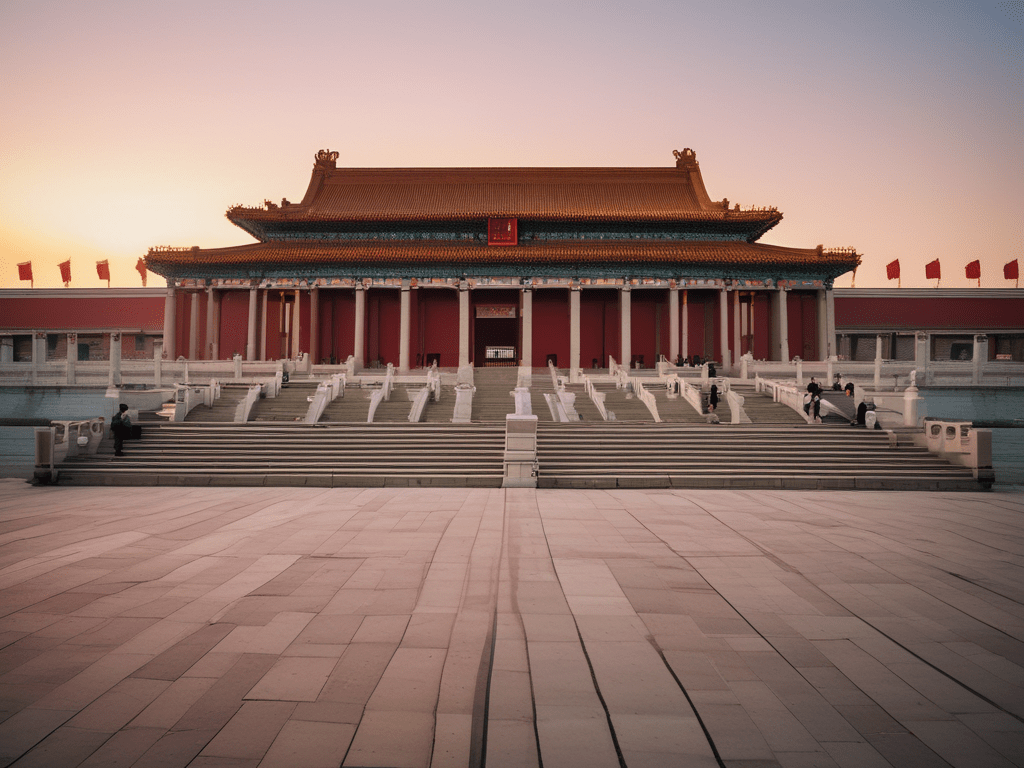
On October 23, 2022, all eyes were on the Great Hall of the People in Beijing, China. The ruling Communist Party’s 20th National Congress, held once every five years, had just wrapped up. One by one, the new starting lineup of China’s ruling political body was unveiled to the world in the strict order of seniority.
Leading the group was a familiar face. It was the man who has led China with an iron fist for the past decade: Xi Jinping.
It shouldn’t have been this way. At 70, Mr. Xi is past the Chinese politician retirement age of 67. Since the age of Chairman Mao, presidents had been limited to two terms, specifically to prevent the dangerous personality cult that pervaded that era.
Xi’s rise to power through China’s labyrinth of backdoor politics was ruthless. Like Chairman Mao, his rule also has no end in sight.
China’s system of government
The Chinese government is fundamentally different from Western democracies both in structure and function. It is a one-party state governed by the Chinese Communist Party, of which President Xi is the General Secretary. There is no separation of powers between branches of government, and the party always comes first.
The system is nominally designed to empower all levels of government through selective promotions and elections from the lowliest village to the central government in Beijing. However, in practice, it is often the opposite: Higher-ranking party bosses hand-pick their subordinates in secret meetings, applying top-down governance instead. At the top of the pyramid is the Politburo, which is further narrowed into seven politicians that constitute the Politburo Standing Committee. The PSC effectively governs as a super-cabinet that supersedes all other government bodies, and is chaired by the General Secretary.
Defying precedent and leveraging the system
Xi’s rule has been largely defined by consolidation of power and indifference to political tradition. Since 2012, his anti-corruption campaign has investigated over 5 million party cadres and business leaders at all levels. China’s justice system is notoriously opaque, and high-profile sackings often follow a pattern of forced disappearance months before formal charges are declared, after which conviction, removal from office, and expulsion from the party is almost inevitable.
To be sure, corruption is rife in Chinese politics, but the removal of key figures has conveniently quashed anti-Xi factions within the party and restricted the private sector. Furthermore, the lack of a clear successor ensures that he remains in power. At his direction, the nation’s rubber-stamp congress abolished the two-term limit on the presidency in 2018. Thus, Xi was able to clinch a third term and reshuffle the PSC, replacing outgoing members with loyal allies.
The anti-corruption campaign has coincided with a crackdown on civil liberties. Freedom of speech, already heavily restricted, has been further curtailed through an expansion of mass surveillance and digital censorship. In Xi’s China, any implicit criticism of the regime is deemed “politically sensitive” and swiftly silenced. Amidst a property market crisis and a stagnating post-pandemic recovery, Xi has responded by further tightening control.
On the world stage
It seems so long ago when US-China relations were relatively amicable under President Hu Jintao. China presented itself as a country that was open to foreign relations and investment, especially during the international spotlight of the 2008 Beijing Olympics. President Hu embraced consensus-based leadership before voluntarily relinquishing power in 2012.
Xi’s foreign policy strategy of aggressive “wolf-warrior” diplomacy has tarnished China’s reputation on the world stage. In the US, public perception of China has reached an all-time low, with 82% expressing an unfavorable view. He has embraced a more hardline and militant stance on the Taiwan issue and territorial disputes in the South China Sea. Relations have also warmed with autocrats like Russian President Putin to directly challenge the global influence of the US.
Despite the appearance of total stability, authoritarian governance is highly volatile and unpredictable. Xi has shown that he is willing to resort to extreme measures to pursue his goals, whether it was in China’s stubborn zero-Covid mass lockdowns or in the mass internment of the Uyghur people to supposedly fight terrorism. The susceptibility to rash action poses a danger to both China and the world.
We could very well anticipate the reign of a dictator more destructive than Chairman Mao, this time as the world’s second largest economy and international military power.

![[Photo Gallery] Homecoming Football Game Payton vs. Brooks](https://paytonpawprint.com/wp-content/uploads/2026/03/img_4761.jpeg?w=1024)
 The Paw Print
Leave a comment