
By Kieran Blake, Sports Editor
During Bill Clinton’s 1992 presidential campaign, his chief strategist, James Carville, wrote three crucial messages on a whiteboard. The first of those messages was “change vs. more of the same.” With chants of “we’re not going back” echoing throughout the United Center, both in the stands and on the stage, the theme of moving forward has been on full display at the 2024 Democratic National Convention.
This theme of change and progress was especially expressed midway through night three, when TV personality Oprah Winfrey, whose namesake show was broadcast from Chicago, urged voters to “choose the sweet promise of tomorrow over the bitter return to yesterday.” As the audience cheered, she put into words the sentiment that many in attendance felt: “We won’t go back. We won’t be sent back, pushed back, bullied back, kicked back. We’re not going back.”

When Secretary of Transportation Pete Buttigieg came out to speak, he said that “[Republicans are] telling you that greatness comes from going back to the past.” He then shared a more personal account of why he believed progress was necessary. Buttigieg, a gay man, offered a glimpse into his home life, and he explained how change made it possible. “The makeup of our kitchen table, the existence of my family, is just one example of something that was literally impossible as recently as 25 years ago, when an anxious teenager growing up in Indiana wondered if he would ever find belonging in this world.
“This kind of life went from impossible to possible. From possible to real. From real to almost ordinary in less than half a lifetime.” He stressed that this change was brought about as a result of “the right kind of politics.” He ended his speech by saying that “in November … we will choose a better politics,” and that “that is what Kamala Harris and Tim Walz represent.” He urged voters “to end [Donald] Trump’s politics of darkness once and for all,” and to “embrace the leaders who are out there building bridges.”
Two nights earlier, President Joe Biden shared similar sentiments, saying that when he was inaugurated, he “wasn’t looking to the past, [he] was looking to the future.” He went on to say, “I believed then, and I believe now, that progress was and is possible.” He later said that “we made incredible progress, and we have more work to do.”
Former President Barack Obama also touched on these themes in his speech on Tuesday, saying that Trump’s “act has … gotten pretty stale.” He said that “we do not need four more years of bluster and bumbling and chaos. We have seen that movie before, and we all know that the sequel is usually worse.
“America’s ready for a new chapter. America’s ready for a better story. We are ready for a President Kamala Harris.” Obama is just one of many Democrats throughout the week and throughout the campaign that have emphasized the need for progress and change rather than going back to the past.
When it came time for Minnesota Gov. and Vice Presidential nominee Tim Walz to speak, he too stressed the need to “keep moving forward.” Walz, a former football coach, urged voters “to get in the trenches and do the blocking and the tackling.” He stressed that “that’s how we’ll turn the page on Donald Trump.”
There is a stark contrast between the Democrats in Chicago this week, who are emphasizing the need to move forward, and Trump, who continues to ask Americans one question: “Are you better off than you were four years ago?” Throughout the 2024 Democratic National Convention, Democrats continue to focus on “change,” while telling people that Republicans will only take them backwards, giving them “more of the same.”
Now for the big enchilada. The second of those messages was “the economy, stupid.” These three words have rung true in every election since Carville wrote them, and 2024 is no different. With inflation, the job market and affordable housing all being key issues in the upcoming election, many Americans are looking to the next administration to do something to quell rapidly rising inflation and housing prices, while also creating more jobs for the working class.
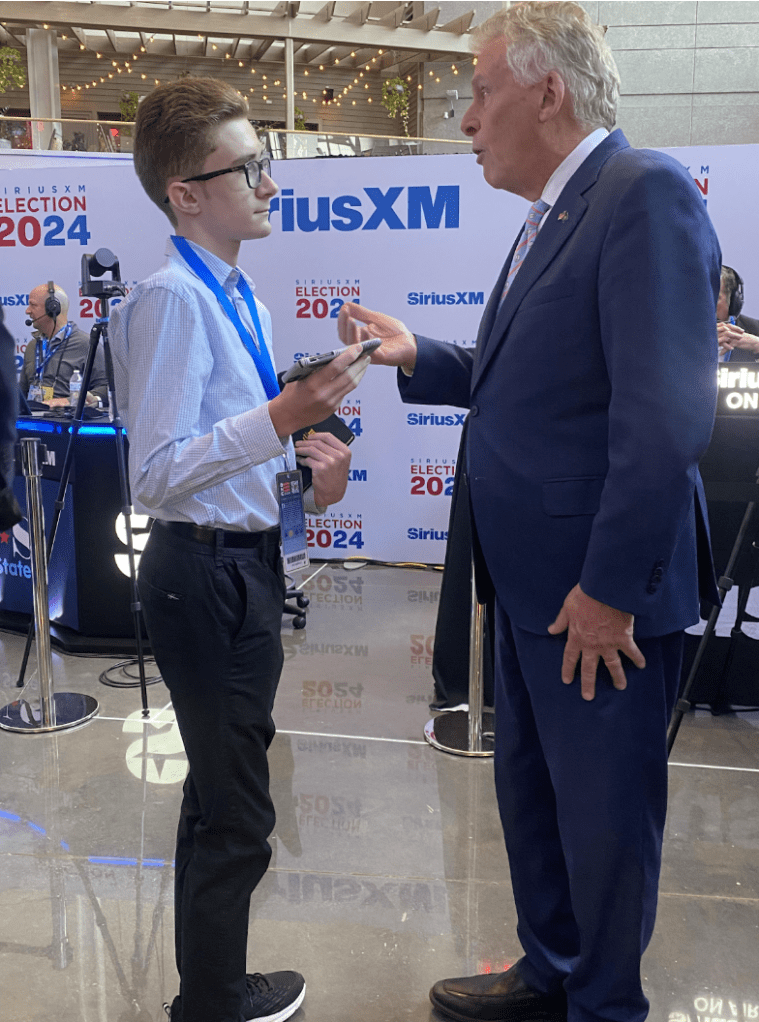
When asked what he believed the Harris campaign can do to address voters’ economic concerns, former Virginia Gov. Terry McAuliffe said the economy will “be the big issue I think as we head into the fall campaign.” McAuliffe went on to add, “Inflation’s come down dramatically, we’re under three percent today, and we’ve got to keep it going.”
McAuliffe also added that “[Harris’] whole campaign” was about “making sure people aren’t getting by, but they’re actually gaining economically, moving to the next level.” He then contrasted this with former President Donald Trump’s actions while in office, saying that “all Trump did when he was president was give tax cuts to wealthy guys,” which “didn’t help this country” or the “people who most needed a tax cut.”
When it came to the job market, Sen. Richard Blumenthal of Connecticut said, “I think we need to continue investing in skill training, which is essential to fill jobs that exist right now.” He went on to say that around Connecticut, employers “can’t find enough people with the right skills to fill jobs.” He believes that with increased skill training, “more jobs will be created, because there are people to fill them.”
In his speech on Tuesday, Vermont senator and populist champion Bernie Sanders declared that “we need to increase the minimum wage to a living wage.” He also emphasized that “we need to pass the Pro Act so that workers can organize a union and gain the decent pay and benefits they deserve.” Democratic support for the right to unionize was also on display on Monday, when Shawn Fain, the president of the United Auto Workers, took to the stage to criticize Trump and support Harris.
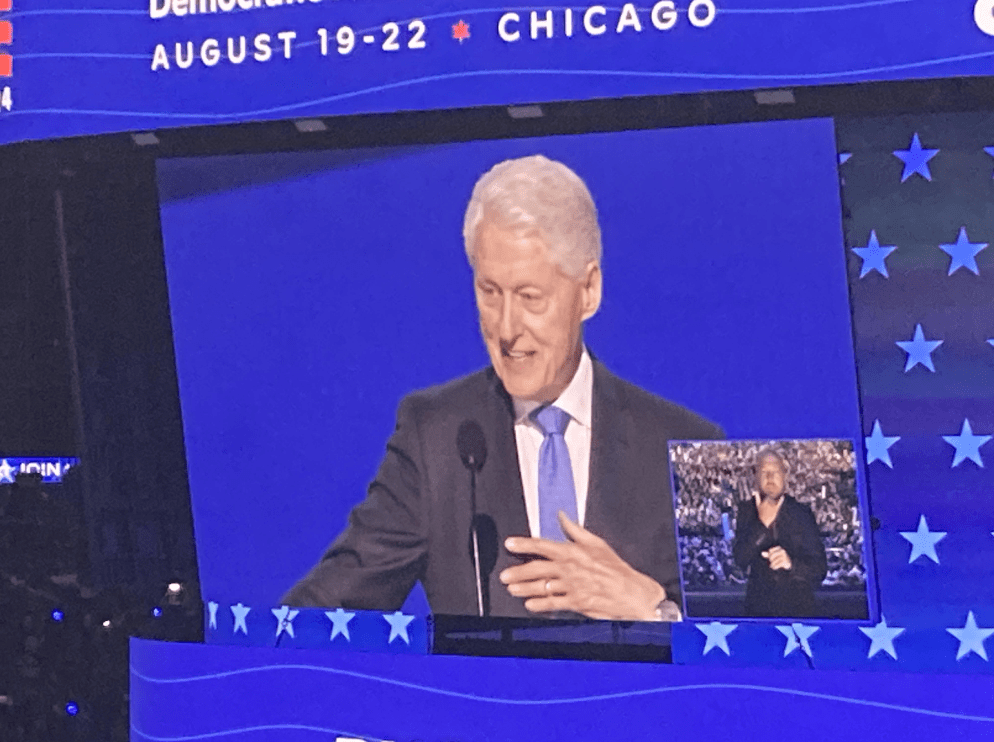
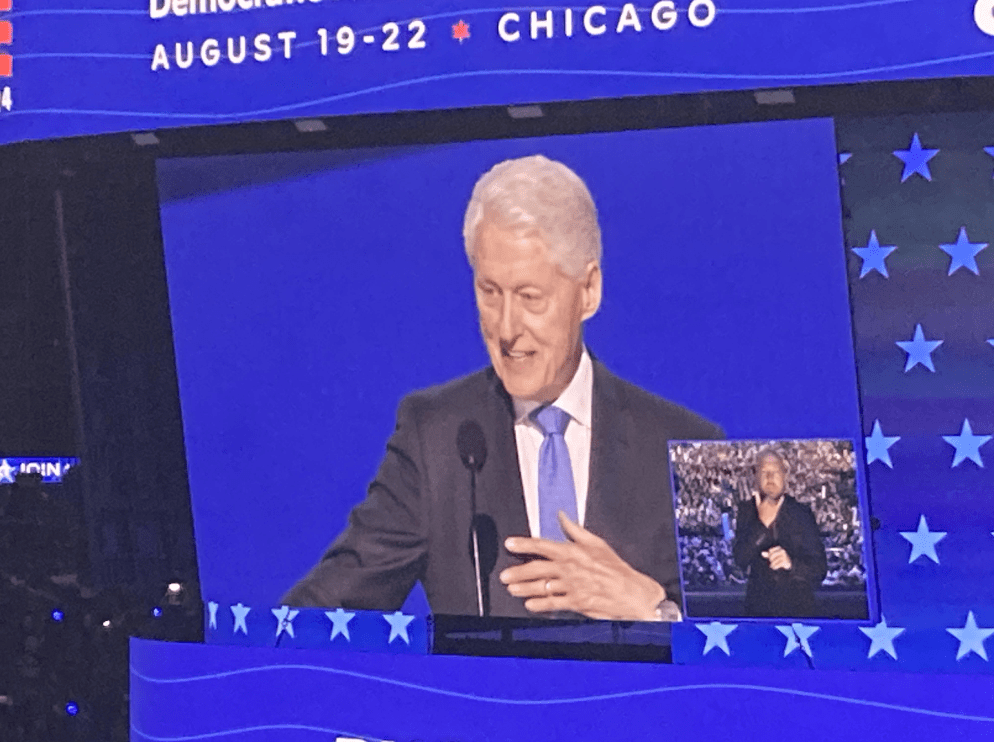
When former President Bill Clinton addressed the audience on night three of the Democratic National Convention, he posed a question to Americans across the country. “Do you want to build a strong economy from the bottom up and the middle out? Or do you want to spend the next four years talking about crowd sizes?” After this jab at previous comments from Trump regarding the size of his crowds, Clinton pointed to historical evidence about job creation since the end of the Cold War. He pointed out that since 1989, “America has created about 51 million new jobs.” He then pointed out to the crowd that of those 51 million jobs, 50 million were created by a Democrat, while only 1 million were created by a Republican.
Clinton then went on to say that affordable housing is “a terrible problem in America now” and that “we need more.” He also advocated that “we need more financing for small businesses.”
When Walz spoke, he also stressed his record of, among other things, helping everyday Americans economically. “We cut taxes on the middle class,” said Walz. “We passed paid family and medical leave. We invested in fighting crime and affordable housing.” He also promised to middle-class families that “Kamala Harris will cut your taxes” and to hopeful homeowners that “Kamala Harris is going to help make it more affordable.” These themes have echoed the stands of the United Center throughout the week, and it is likely that Harris and Walz will continue to stress their economic record, as well as what they plan to do in the future, along the campaign trail.
The third and final of those messages was “don’t forget healthcare.” Throughout the week, Democrats have most certainly not forgotten healthcare, with many of them bringing up the accomplishments of the Biden administration, as well as their plans to further increase healthcare aid in the future.
Biden, during his own speech to close out Monday night, highlighted the fact that under his administration, they “finally beat Big Pharma,” reducing the cost of insulin for seniors from $400 to just $35, with “Vice President soon-to-be President Kamala Harris” casting “the tie breaking vote.”
During his speech, Clinton cited that Democrats were fighting for affordable healthcare by putting “a limit on monthly payments for insulin and a $2,000 a year out of pocket limit,” while still “bargaining for prices” in an attempt “to cover more drugs.”
The previous night, Sanders had brought up these same accomplishments as well. Sanders, an Independent who was one of the frontrunners for the 2016 Democratic nomination, has championed healthcare for all Americans throughout his career. He continued to express this sentiment while throwing his support behind Harris on Tuesday, saying that Democrats must “guarantee healthcare to all people as a human right, not a privilege,” sparking an uproarious response from the crowd.
In his speech, Walz assured voters, “If you’re getting squeezed by prescription drug prices, Kamala Harris will take on Big Pharma.” He also pointed to the fact that under his leadership as governor, Minnesota “cut the cost of prescription drugs and helped people escape the kind of medical debt that nearly sank [his] family.” He described how when his dad died of lung cancer, “he left behind a mountain of medical debt,” and how thanks to Social Security survivor benefits, his family was able to recover. Having experienced medical debt himself, he wanted to show the American people that he and Harris were determined to combat it.

With healthcare being a key talking point of Democrats for decades now, whether that be the Affordable Care Act or prescription drug prices, it is clear that they have not forgotten about healthcare. Rather, they have committed to expanding healthcare aid throughout the campaign, and this has been emphasized by a multitude of speakers throughout the week.
32 years after they were written, Carville’s words remain the building blocks of many political campaigns, and that is especially true for the Harris-Walz ticket. Democrats continue to push for progress rather than regress, to look forward to the future rather than back to the past. The economy continues to remain an issue, if not the issue, for many Americans. Expanding affordable healthcare is still a crucial pillar of the Democratic platform. With how contentious the 2024 election is shaping up to be, and with how important these issues are, how Democrats approach Carville’s messages could very well be a deciding factor in the 2024 election.

![[Photo Gallery] Homecoming Football Game Payton vs. Brooks](https://paytonpawprint.com/wp-content/uploads/2026/03/img_4761.jpeg?w=1024)

 The Paw Print
Leave a comment