
By Alexa Gola, Associate News & Features Editor
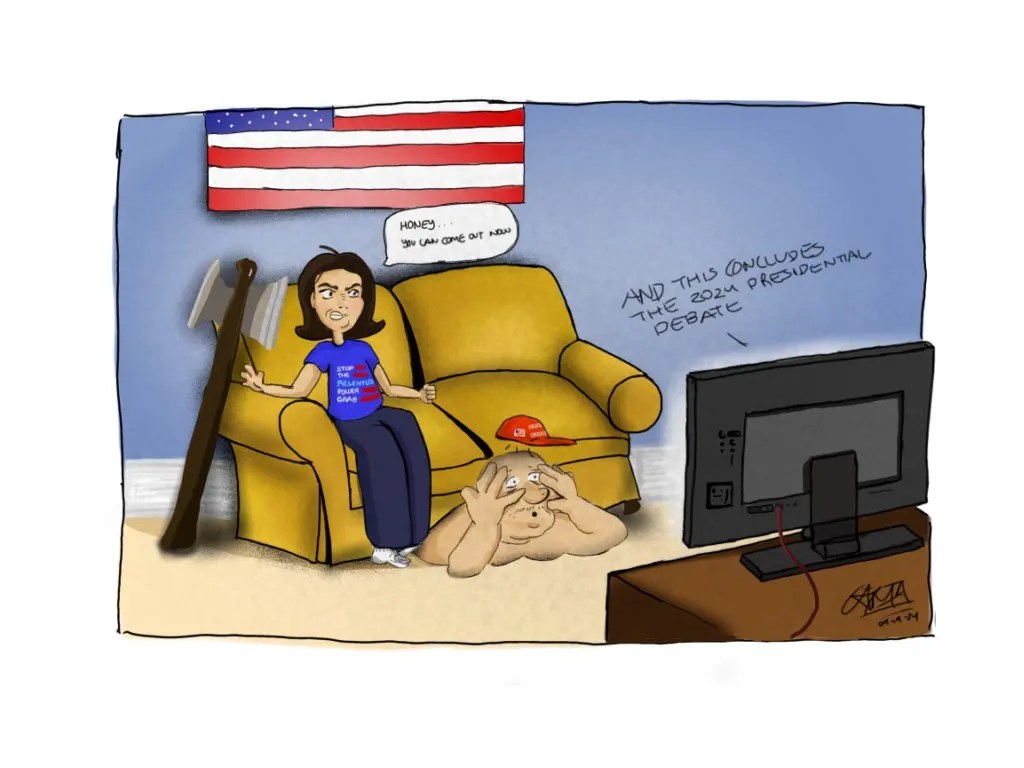
As Sept. 10 rolled around, America waited with bated breath for candidates Kamala Harris and Donald Trump to take the debate stage. Several news organizations, including the debate’s host, ABC News, broadcasted live pre-debate commentary, while other teams geared up to fact-check the candidates over the course of the planned 90 minute showdown. For her part, Harris said that she expected Trump “to lie” throughout their debate, warning the American people that “there’s no floor for him in terms of how low he will go” during a pre-recorded interview released on Monday.
In the days leading up to the event, analysts collectively emphasized Trump’s need to focus on policy, while Harris needed to continue to introduce herself to the American people and offer further policy detail, which has consistently been lacking. Some analysts acknowledged that Trump may not appeal to Americans as a personality, despite his television background, but Republicans generally appeared to feel confident that his legislative vision would better speak to the American people than what the Harris-Walz campaign has to offer.
At 9 p.m EST, Harris crossed Philadelphia’s National Constitution Center stage to shake Trump’s hand, kicking off the first, and potentially last, presidential debate of the electoral season. Meeting the former president at his podium, she introduced herself, saying, “Kamala Harris. Let’s have a good debate.” Despite overlapping terms as senator and president, the event was also the first face-to-face interaction between Trump and Harris.
Moderators David Muir and Linsey Davis opened the debate with a question about the economy. Harris quickly highlighted her middle class upbringing, promoting her vision for the “opportunity economy” touted throughout the Democratic National Convention and baiting her opponent with the words “Trump sales tax.” Trump took it immediately, denying Harris’s claim that such a tax existed before highlighting his work on increasing tariffs and claiming the economy under the Biden-Harris administration “has been a disaster for the people.”
On abortion, Trump attempted to bring up the idea that Democrats support executing babies after birth. He found himself fact-checked by Davis, who asserted that “there is no state in this country where it is legal to kill a baby after it’s born.” He also repeatedly declined to answer whether he would veto a national abortion ban, should one come to his desk as president. On the other side of the stage, Harris notably dubbed the criminalization of nurses and doctors performing abortion care “Trump Abortion Bans” and said, “The government, and Donald Trump certainly, should not be telling a woman what to do with her body.”
When asked about immigration, Harris again leaned into her background, spotlighting her time as a California prosecutor before inviting viewers to attend Trump’s rallies, claiming, “People start leaving his rallies early out of exhaustion and boredom.” Trump’s reply found its way to immigrants allegedly consuming pets in Ohio, a statement Muir clarified to have no credible evidence, giving Harris an opportunity to flaunt endorsements from hundreds of Republicans while labeling Trump as “extreme.”
Neither a question on how Trump would deport undocumented immigrants nor a question on why Harris’s values have reportedly not changed while her policies yielded a direct answer. Still, responses notably included a jab at Trump’s 34 felony counts and allegations of weaponization of the criminal justice system.
Invited to express regret for his actions on Jan. 6, Trump claimed innocence before referring to the rioters as a “group of people that have been treated so badly.” He wondered why immigrants aren’t prosecuted more often before attempting to shift blame for Jan. 6 to Nancy Pelosi, former Speaker of the House. In her response, Harris noted other instances of the former president’s involvement in political violence, calling on Americans to “turn the page” with a mantra that frequented the Democratic National Convention: “We’re not going back.”
When directly asked if he admits that he lost the 2020 election, Trump denied it. This led Harris to declare that “Donald Trump was fired by 81 million people… and clearly, he is having a very difficult time processing that,” a fact that she finds “deeply troubling.”
The two candidates were then asked a series of questions about foreign policy. On the Middle Eastern conflict, Harris reasserted her view that “we must chart a course for a two state solution,” promising national security for Israel, to rebuild Gaza and the right to security, dignity and self determination for Palestinians. For his part, Trump claimed Harris hates both Israel and “the Arab population,” as well as that Iran now has “300 million dollars” because the Biden-Harris administration removed Trump-era sanctions on the country. Harris also accused Trump of exchanging “love letters with Kim Jong Un” and cozying up to other dictators, including Putin, who she told him “would eat you for lunch.” Trump notably would not state whether or not he thought it was in the United States’ best interest for Ukraine to win and Harris did not answer a question on whether or not she had met Putin.
Commenting on Trump’s statements about her race, Harris shared that she thought “it’s a tragedy” that a potential President of the United States has “attempted to use race to divide the American people” throughout “the course of his career.” Trump responded by saying that “they’re destroying our country,” in reference to the Biden-Harris administration and shifted to the current state of the economy, which he attempted to tie to Harris.
On Obamacare, Trump said he has “concepts of a plan” to make “something better and less expensive.” Harris chose to reply to a handful of Trump’s earlier jabs before emphasizing the work she and other Democrats have done to cap drug and insulin prices, saying “access to healthcare should be a right and not just a privilege for those who can afford it.”
In a final question before closing statements, the moderators asked what the candidates would do to fight climate change, noting that the issue is one young people care deeply about. Harris answered by reminding viewers that “the former president had said climate change is a hoax,” emphasizing that it is very real while bringing up her work in creating jobs while fighting the crisis. Nothing about Trump’s answer addressed the question, but he did say that “what [Biden and Harris have] done for business and manufacturing is horrible” and claimed the country has lost thousands of manufacturing jobs in the last month.
Harris emphasized the contrast between herself and Trump throughout her closing statement. She reasserted the mantra that “we’re not going back” to a Trump presidency, continuing to champion abortion rights while maintaining that she would invest in “you, the American people.” She also emphasized her intention to create “an opportunity economy” and reminded viewers that she has only ever had one client: the people.
Speaking second, Trump used his closing statement to wonder why Harris hasn’t already done the things she has championed throughout her campaign, pointing out that she has been in the White House for three and a half years. He also claimed that “we’re gonna we’re going to end up in a third World War,” declaring Harris to be “the worst vice president in the history of our country.”
Immediately following the event, both polls and the consensus of commentators, including several from Fox News, generally recognized Harris as the winner of the debate. Despite Harris’ campaign offers to do so, Trump has said he will not debate the vice president a second time before the election. In a visit to the media spin room, Trump also claimed that the evening was his “best debate ever,” a notion repeated with a post on his social media platform, Truth Social.
Taylor Swift endorsed Harris shortly after the debate concluded.

![[Photo Gallery] Homecoming Football Game Payton vs. Brooks](https://paytonpawprint.com/wp-content/uploads/2026/03/img_4761.jpeg?w=1024)
 The Paw Print
Leave a comment