
By Isabella Sun, Associate News & Features Editor
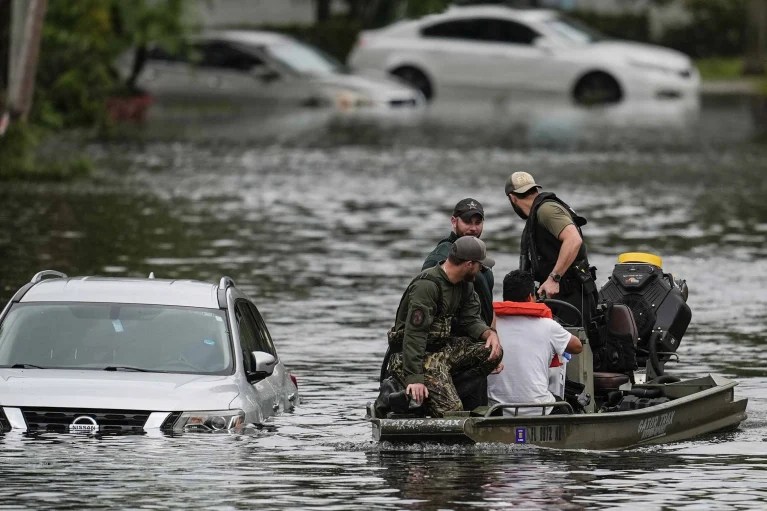
On Sept. 26, Hurricane Helene made landfall as a Category 4 hurricane, plowing through the Gulf Coast of Florida and Georgia. It struck the Blue Ridge mountains, wrecking havoc as it washed down roads, caused landslides and cut power service for millions. Damage in western North Carolina was also widespread after the hurricane: towns were destroyed, water and fuel supply lines were disrupted and communication was down.
Helene’s path of destruction also touched regions of Tennessee, West Virginia and South Carolina. As of Oct. 6, the death toll had risen above 230 people.
Reports of destruction and flooding cover more than 600 miles. In western North Carolina, there was pounding rain, flash floods and dangerous landslides, causing cell phone service and electrical power to shut off. Despite numerous 911 calls, officials had difficulty locating and helping the victims.
Fallen trees, telephone lines and mudslides caused hundreds of road closures. Interstate Highways 26 and 40 were only available to emergency rescue vehicles.
With assistance from search-and-rescue teams, officials have been trying to reach isolated communities. The federal government has also been airlifting food and supplies and sending workers to repair the water systems. Officials in Asheville, North Carolina said repairing the area’s water system could take several weeks.
Furthermore, Helene set some records after landing in Florida. Upon entering Florida’s Big Bend region with wind speeds up to 140 mph, Helene broke storm surge records across the Gulf Coast that were set a year ago by Hurricane Idalia.
According to one local news station, Helene has swept away 90% of the homes in Keaton Beach, a small shoreline community. Cedar Key, a small collection of islands in the Gulf of Mexico, was “completely gone,” said Michael Bobbitt, a resident.
Additionally, Helene overwhelmed towns as far north as Cincinnati. Inundations from the south overflowed their dams, causing minor damages. In Tennessee, the Nolichucky Dam was near collapse before the water receded.
Even though the storm did not reach areas like Atlanta, around 100,000 households were affected by power outages and a few neighborhoods were flooded.
The White House approved emergency requests from Florida, Georgia, North Carolina, South Carolina and Alabama before Helene made landfall. Once Helene hit, around 1270 rescuers were deployed.
Many people remain missing, and the death toll continues to rise. Hundreds were killed by flooding, falling trees, vehicle crashes and the hurricane itself. The state with the highest death toll is North Carolina, where the state has confirmed 119 people to be dead.
Furthermore, Florida was still recovering from the effects of Helene when another tropical hurricane made landfall on Oct. 9. Hurricane Milton, which strengthened to a Category 5 hurricane on Oct. 7, drove sustained winds up to 175-mph over the Gulf Coast. However, the system started weakening before Milton made landfall as a Category 3 hurricane 70 miles south of Tampa in Siesta Key, Florida.
According to the National Weather Service, St. Petersburg, Fla. had 18.31 inches of rain in the 24-hour period during which the storm made landfall. This included 5.09 inches between 8 p.m. and 9 p.m.. That level is considered to have a 0.1% chance of happening in a year. In addition, there were 779,850 power customers without electricity the day the storm hit, according to the power outage tracking website poweroutage.us.
About 80,000 people spent the night in shelters, and thousands fled after authorities issued a mandatory evacuation across 15 Florida counties.
The storm’s impact was widespread, and water levels may continue to rise, but Gov. Ron DeSantis said it was not the “worst-case scenario.”
“You face two hurricanes in a couple of weeks — not easy to go through — but I’ve seen a lot of resilience throughout this state,” DeSantis said. He was “very confident that this area is going to bounce back very, very quickly.”
At least 14 people passed from Milton. At a White House briefing, Homeland Security Secretary Alejandro Mayorkas said there were reports of at least 10 fatalities from tornadoes.
Throughout the state, around 1,200 people were rescued by state emergency workers and the Florida National Guard. Cleanup efforts are underway in many parts of Florida as a result of both Helene and Milton.
Still, Hurricane Milton was not as destructive as expected. One FEMA official said, “We did not have the extreme impacts of the worst case scenario that we prepared for, but there’s still so many people that have been impacted by this.” Still, the 38 tornadoes that touched down caused “significant damage [on] a level that Floridians have not seen before.”



![[Photo Gallery] Homecoming Football Game Payton vs. Brooks](https://paytonpawprint.com/wp-content/uploads/2026/03/img_4761.jpeg?w=1024)
 The Paw Print
Leave a comment