
By Aanya Mathew
As the school year starts and the tests and quizzes come rolling in, video game soundtracks, or OSTs (original soundtracks), are my favorite type of music to throw on while studying. This is not only because of my minor obsessions but also because of the specific way video game music is created.
Video games have some of the most iconic soundtracks ever made, for example the Mario jingle and the Subway Surfers theme which we all have heard at least once. Maybe you played Subway Surfers on your mom’s phone as a kid, or you have a Nintendo at home and play Mario Kart with your family. One way or another you must have played some form of a video game. Even Kahoot, the beloved trivia game used by many teachers, counts as one. The Kahoot theme that plays in the background is a great example of how video game music is designed. The melody is repetitive and low-key: you never really pay attention to it, making it almost non-existent while still being in the background helping you focus.
Many video games have different styles of music. For example, two of Nintendo’s most famous titles, The Legend of Zelda and Splatoon, are complete opposites but both have well made soundtracks. Zelda’s music is regal and uses instruments like piano, accordion, violin and other classical, more rustic instruments to fit its setting of a Western fantasy theme. Splatoon, on the other hand, jumps straight into the opposite, being focused on the upbeat punk rock sounding music with heavy guitar, drums and keys. On top of that, it uses synthesized gibberish as its vocals. This creates an underwater sounding effect fitting with the squid-like characters.
Another difference between the two games is their genre. The last two installments of the Zelda franchise (Breath of the Wild and Tears of the Kingdom) are both open world role-play games (RPGs). The RPG genre calls for more music in total, especially ones as story focused as Zelda. All of the dramatic moments call for different songs. Whether you are finding a Korok or fighting Dark Blight Ganon, it all has background music. Splatoon, on the other hand, is a third person shooter game. Though it has a story mode with its own soundtrack, its main gameplay is online turf war matches with other players and a team. During those games, the background music is the main way players experience it in the game.
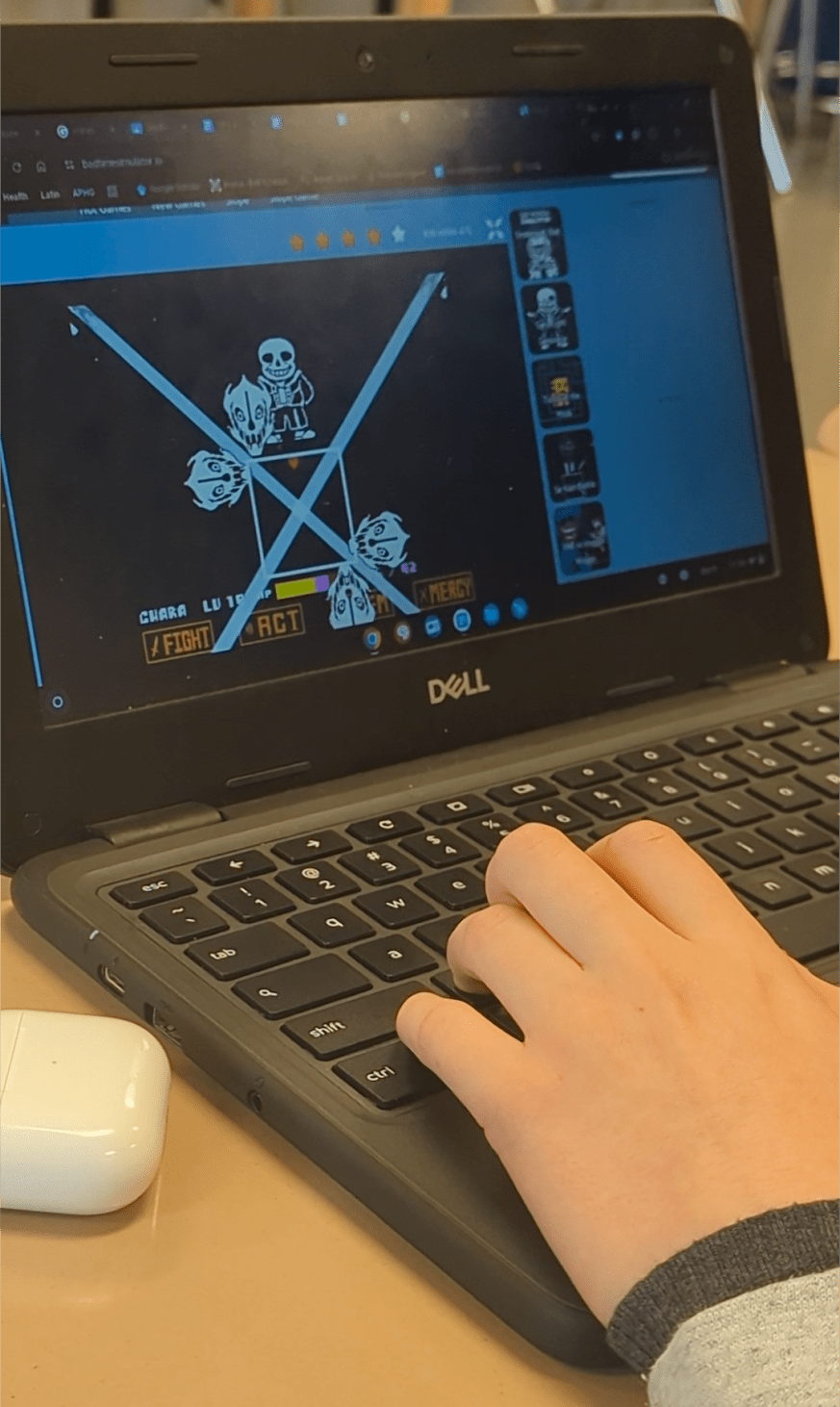
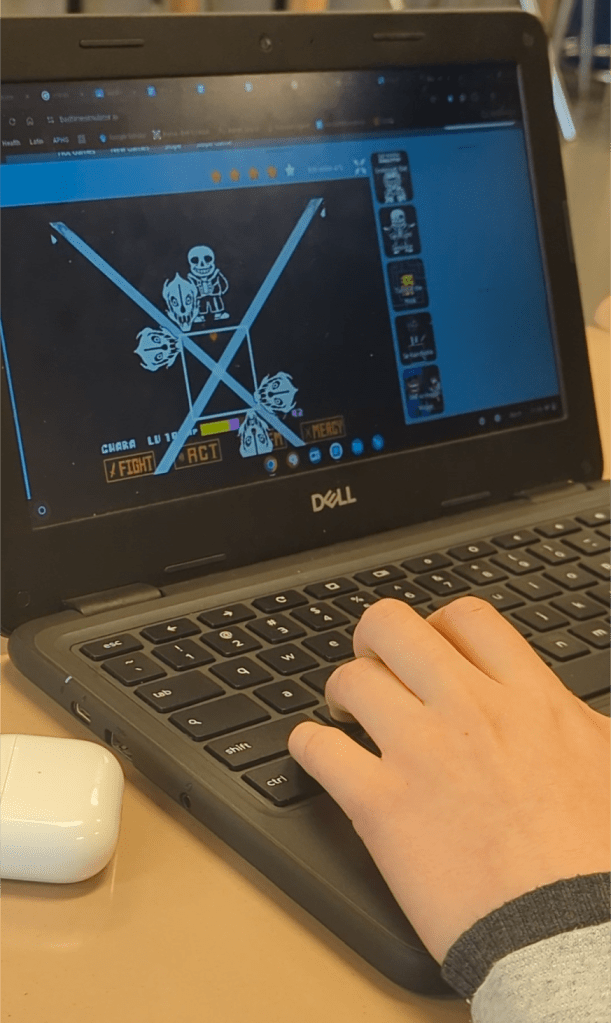
Emotion in music is largely based on the instruments used and the drama being portrayed through the music. Undertale is a game that does this beautifully. The game, developed by Toby Fox, has an OST that takes a digital approach with very few classical instruments. Fox uses digital tools, like FL studio, to create his songs and it really works with the pixel art style of the game. His portrayal and execution of the songs he composes are thought out and just nice to listen to.
From a storytelling viewpoint, each of the characters have musical motifs and ideas related to them. Important characters and their motifs show up in more than one song. Undertale is a story based game with lots of lore, and the music adds to it with easter eggs to analyze in almost every song. The music is widespread, so even if you have never played or even heard of the game, you’ve most likely heard at least one song from it.
As someone who pays a lot of attention to lyrics in songs, having music playing in the background without anything to distract me in it helps me focus way more and actually makes working more tolerable. Video game OSTs are specifically designed to be played in the background, not distracting you from the actual gameplay, which is why it is perfect for your playlist while cramming for the test you have tomorrow.

![[Photo Gallery] Homecoming Football Game Payton vs. Brooks](https://paytonpawprint.com/wp-content/uploads/2026/03/img_4761.jpeg?w=1024)
 The Paw Print
Leave a comment