
By Elena Whitford, Arts & Culture Editor
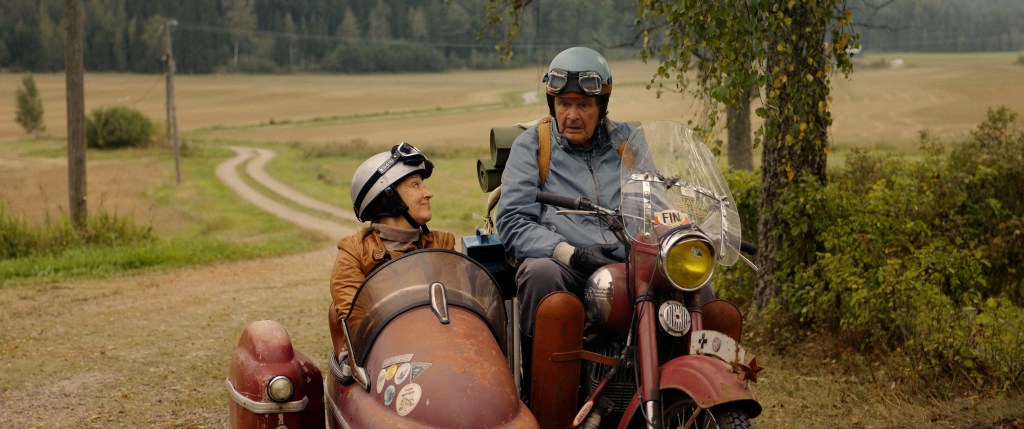
Films from places as far-reaching as Europe to Oceania to South America and back again were shown at the 60th Chicago International Film Festival (CIFF) from Oct. 18 to Oct. 27 of 2024.
Through the festival’s streaming platform (available with a press pass, which was easy to get) I was able to see four movies in all: Peacock from Austria, Turning Tables from Germany, Long Good Thursday from Finland, and Return of the Projectionist from Azerbaijan.
Both the diversity and the limitations of the offerings available at the CIFF were notable. Lesser-represented regions in film, including French Guiana, Latvia and Cape Verde, had submissions to the festival; however, the majority were from Europe or America, with France, the United States and Finland having at least five films each. I was surprised to learn that, since high-profile movies from Europe or the US would have massive publicity here less than a month or two after release. Couldn’t a smaller film be added in the place of a special screening of Conclave?
Of course, anyone who’s even a casual Oscars fan attending an international festival of this caliber has to wonder which of these, if any, will be nominated for the Best International Feature Film award in 2025.
We might look to the festival’s own awards for guidance; Vermiglio (Italy) and All We Imagine as Light (India) won the Gold and Silver Hugo awards (no relation to the prestigious science-fiction prizes) respectively. Or we might consider the chatter that surrounded others, such as the U.K.’s Blitz, even before their U.S. releases.
But in reality, it’s not so possible to predict which film will win which award. There are always some upsets, such as Anatomy of a Fall losing France’s International Feature nomination at the Oscars last year.
With that in mind, here’s a review of each of the films I saw.
Peacock (Directed by Bernhard Wenger) – Five stars
This film begins with a relatively standard comedic premise: Matthias is available for hire to stand in as an educated boyfriend, loving son, or just someone to practice arguing with. But the plot quickly goes somewhere darker and more surreal, as Matthias begins to doubt who he really is. His life slowly deteriorates and most of the people in his life end up abandoning him, leading him to further question his identity.
Throughout the film, the beautiful cinematography provides some brief moments of escape from the uncertainty of it all (it’s difficult to feel overwhelmed when you’re staring at a serene scene of nature). Director Bernhard Wenger doesn’t often back down from the dreamlike plot, though. I won’t spoil anything, but I was thinking about this movie’s haunting ending days after watching it.
Although it certainly isn’t for everyone, I highly recommend watching Peacock and sincerely hope it gets a wider U.S. release soon.
Turning Tables (Directed by Angelina Maccarone) – Three and a half stars
This political drama follows four people (Malik, Mathilda, Richard and Amina) who find connection with each other, despite their deeply different views and circumstances, amidst a wave of Islamophobia after a bombing in Frankfurt. Malik has been smuggled into the country from Morocco by Richard, a British expat, while Richard’s friend Mathilda, a politician, deals with her views about immigrants when she hires Amina (who is Moroccan-German) as her personal assistant.
I didn’t love Turning Tables as much as I did the others, and not only because it’s the most conventional of the four that I saw. The story was too complex for each character to be fully developed in just over two hours, which was frustrating as they each showed glimmers of incredibly intriguing potential. I kept wanting more, and I think it would have made a very good TV show.
Ultimately, though, Turning Tables is still a well-made film, and one that would fit in with the American cinema scene. Although it certainly isn’t the big-budget type of movie that we love so much here, I think its themes of immigration, politics and human connection would go over well with U.S. audiences.
Long Good Thursday (Directed by Mika Kaurismäki) – Four and a half stars
I originally considered giving this movie a lower rating because most of the plot is spent meandering with seemingly no direction and only some plot development in the last half hour or so. But I came to realize that aimless wandering is what the film is meant to be about.
Long Good Thursday, based on a beloved Finnish book series, is about an old widower, unnamed in the film but called “Grump” in the books, who meets a free-spirited artist named Saimi who encourages him to have more adventures and changes his views on old age. The rest of the film chronicles their seemingly mundane travels around the Finnish countryside… and that’s mostly it (some conflict does show up in the form of the Grump’s adult sons who disapprove of the relationship, but it’s all very lighthearted).
But what may sound boring turns out to be a beautiful portrait of two contrasting personalities who bring out the best in each other. It’s short, sweet and very heartwarming, which is what we all need at one point or another.
Return of the Projectionist (Directed by Orkhan Aghazadeh) – Five stars
In just over 80 minutes, Return of the Projectionist tells the story of the titular elderly projectionist and his protégé, a young man passionate about animation and film technology, as they work hard to bring a movie theater back to their tiny Azerbaijani hometown. We follow their ascent to a hilltop for internet connection so they can order a bulb, their desperate search for a movie dubbed into a language the audience will understand and their recruitment of potential audience members. More than anything, though, we come to appreciate cinema and its power to create bonds as strong as that between its two devotees, our protagonists.
This film might very well be a Best Documentary contender. I say this not because it helps you learn about a pertinent real-world issue (it’s not that serious) or because it sheds light on an underrepresented topic (that isn’t the point of the movie). No, I say this because up until halfway through the film, I didn’t even realize it was a documentary. That speaks to the editing, directing and cinematography skills present in the film: impressive considering its very small scale. But more than that, it shows just how beautiful true stories like that of Return of the Projectionist can be.
The bottom line: you can’t go wrong with CIFF. Each of these movies has been carefully chosen by the festival committee, and whether it’s Austria’s equivalent of a Wes Anderson film (Peacock) or an indie documentary from the Caucasus (Projectionist), it will be sure to make you laugh, cry, gasp in shock, or, as was often the case, all of the above.

![[Photo Gallery] Homecoming Football Game Payton vs. Brooks](https://paytonpawprint.com/wp-content/uploads/2026/03/img_4761.jpeg?w=1024)

 The Paw Print
Leave a comment