
By Steven Jiang, Associate Opinions Editor
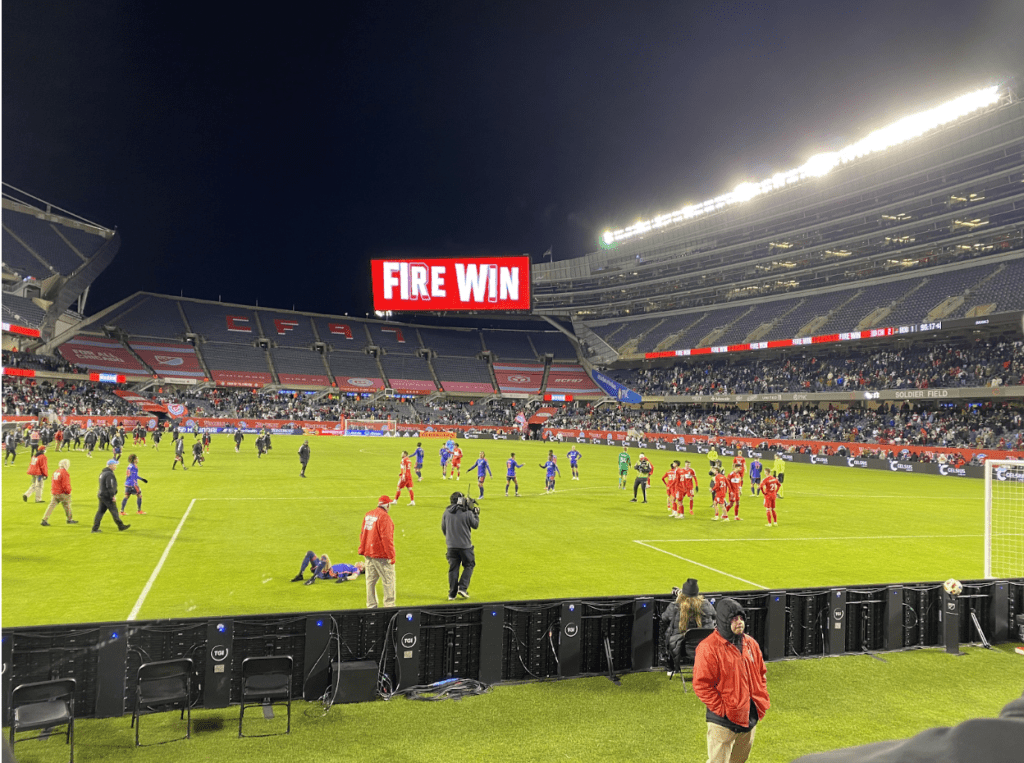
Yes, Chicago has a soccer team. The Chicago Fire Football Club has played in Major League Soccer since 1997, with one MLS championship and four U.S. Open Cup titles. If you have never heard of them, it’s probably due to their hopeless mediocrity in recent years, punctuated by a decade-long postseason drought (with the exception of 2017). But change is in the air. Across the league, international stars like Lionel Messi, regarded as one of the greatest soccer players of all time, have reshaped the American soccer scene. In Chicago, new head coach and former men’s national team boss Gregg Berhalter has led a dramatic squad overhaul.
As Major League Soccer continues to skyrocket, the future of the Fire is brighter than ever before. It is time to give our hometown club the attention it deserves.
Last year, two former Payton students, Christopher Cupps and Chase Nagle, were recruited to play full-time for the Chicago Fire Academy. The Academy program develops young players to potentially play professional soccer in the future. Cupps recently signed a homegrown pro contract with the first team, and Nagle has featured with the Chicago Fire II reserve side.
I first got hooked on the Fire in 2021 when a player visited my summer camp. I had always enjoyed watching soccer, but I didn’t really feel a sense of personal connection with a European team halfway across the world. Although the team’s performance was, frankly, terrible, I could not stop watching their games. When I went to see a live match for the first time, some fans invited me to help hold up a tifo (a giant hand-painted banner). The atmosphere was incredible and very welcoming.
The Fire’s recent performance largely mirrors that of their more well-known co-tenants at Soldier Field: the Chicago Bears. Their last playoff win was in 2009. Big-money signings like Swiss star Xherdan Shaqiri frustratingly failed to revitalize the team’s prospects. Last year, the Fire fired (ha) head coach Frank Klopas, while the Bears ditched Matt Eberflus. “I only want to watch soccer at the highest level,” says Vaughn Collier ‘25, a former varsity soccer player and current track athlete. He is a fan of the English Premier League club Chelsea. “Why would you watch the UFL [the minor league of American football] when the NFL exists?”
But Major League Soccer has absolutely skyrocketed in the past few years. Lionel Messi’s arrival at Inter Miami has catalyzed a wave of high-profile signings, including France’s Olivier Giroud and Germany’s Marco Reus. The league has also entrenched itself into American pop culture, with stars like Will Ferrell and MrBeast in attendance at matches. It is no longer just a retirement league for aging European and South American stars; teams like the Chicago Fire have signed both young talents and players in their prime. Kavin Bendre ‘27, a goalkeeper on the Payton soccer team, also notes that American stars like Christian Pulisic and Antonee Robinson have shined on the world stage, “ingrain[ing] soccer more in the national culture.”
Our city has a vibrant soccer community that is bursting with potential. We saw this last summer, when Inter Miami visited Chicago at Soldier Field. Despite Messi’s absence due to injury, Soldier Field was packed with spectators from all corners of Chicago to witness ex-Barcelona stars Luis Suarez, Jordi Alba and Sergio Busquets. Supporter groups like Sector Latino and the Red Line Supporters Group highlight the shared fan experience.
Soccer’s meteoric rise in America will only continue to thrive as our country prepares to co-host the 2026 FIFA World Cup. Bendre hopes that the global sporting event will bring “more investment into the soccer industry, which has historically been one of the factors preventing development of great American soccer players.”
The Fire just kicked off their 2025 season against the Columbus Crew on Saturday, Feb. 22. All matches are streamable with an MLS Season Pass subscription on Apple TV, with some free games throughout the season. Students can receive exclusive $15 tickets for matches, a deal that I personally took advantage of. Chicago’s soccer fans now have a thriving local community, with enough quality and competitiveness to rival the top leagues in the world.
![[Photo Gallery] Homecoming Football Game Payton vs. Brooks](https://paytonpawprint.com/wp-content/uploads/2026/03/img_4761.jpeg?w=1024)
 The Paw Print
Leave a comment