
By Elena Whitford, Arts & Culture Editor
One-third of Chicago’s population is Hispanic. Just under a quarter of residents speak Spanish at home. And about 400,000 people here primarily speak a non-English language.
In order to accommodate the growing population of non-English speaking people, Chicago museums and libraries have been increasingly providing bilingual exhibits and programs. Nearly all are in English and Spanish.
Sometimes linguistic accessibility is simple. The Museum of Contemporary Art recently followed through with its commitment to become fully bilingual and now each of its signs have equally sized text in English and in Spanish; on a recent visit, I noticed no grammatical errors in either language.
Occasionally, though, a museum’s commitment to respecting bilingualism turns out to be true in name only. Consider Indigenous Chicago, a recent exhibit at the Newberry Library downtown. Descriptions of items in this exhibit are in English and Spanish, with the Spanish mostly being a direct translation of the English.
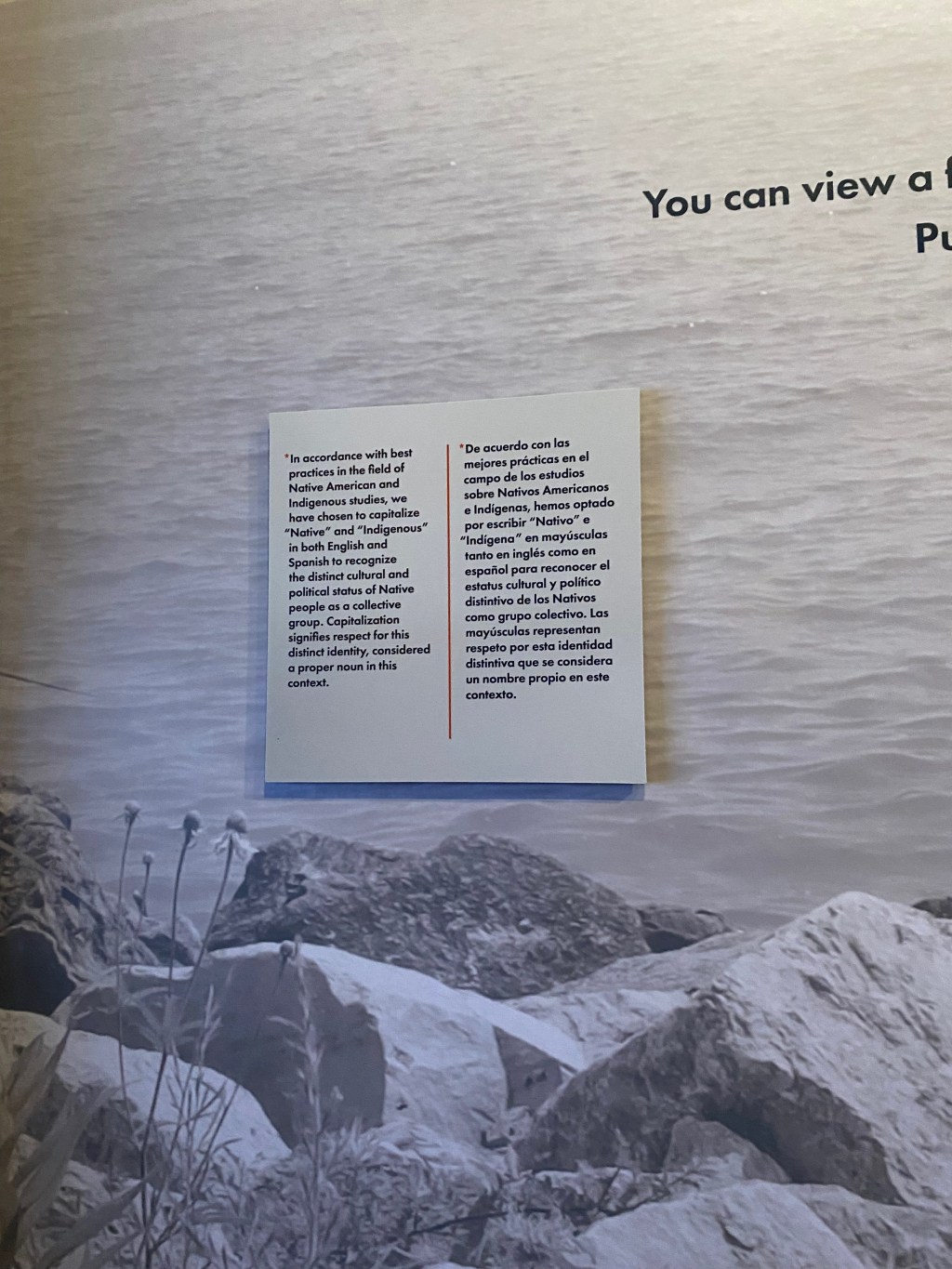
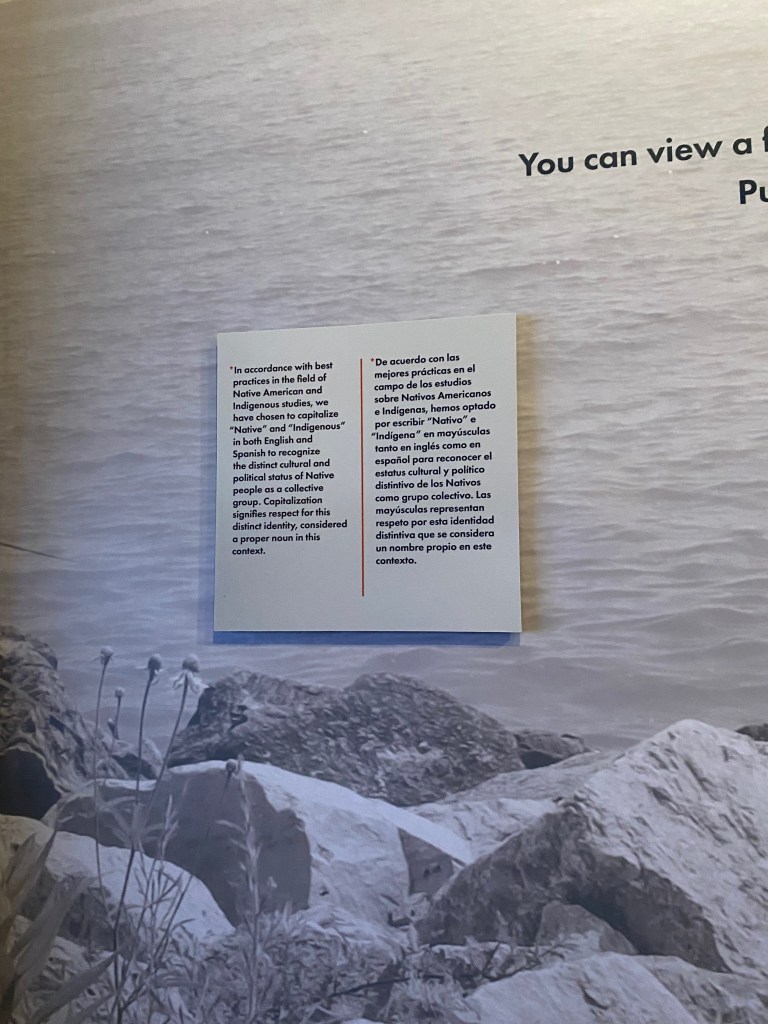
Because the exhibit aims to humanize the issues of Native Americans living in the Chicago area, the library has decided to capitalize “Native” and “Indigenous” in both English and Spanish. A small sign on one of the walls justifies this by saying, “Capitalization signifies respect for this distinct identity, considered a proper noun in this context.”
For an English speaker, the use of capitalization sounds reasonable and respectful. The problem is that in Spanish, names for groups of people are never capitalized; for example, “Latin Americans” translates to “latinoamericanos.” Thus, the Newberry’s policy anglicizes the Spanish language, imposing one language’s conventions on another. Effectively, in an effort to achieve cultural sensitivity, the Newberry Library has rejected cultural sensitivity.
The Newberry Library did not reply to multiple requests for comment.
It’s not difficult to have effective bilingual programming. Canada, where the official languages are French and English, requires all public signs (including in museums and libraries) to be displayed with equally sized text in both languages, with French placed first in Québec. Museums have found engaging ways to complement this requirement; at the Canadian Museum of History in Gatineau, Québec, displays make clever use of the similarities between French and English.
Similarly, when I visited the Shedd Aquarium in January, I noticed that many of its exhibits, including the popular Wild Reef, had been changed to include Spanish text as well as English. In addition, some of the lesson plans on its website include bilingual materials.
It shouldn’t be too difficult to provide rich, informative text for those non-English speakers out there. Perhaps museums could be nudged to provide quality bilingual exhibits with a reminder that the US has the world’s fourth largest population of Spanish speakers. A greater percentage of Chicagoans speak Spanish than Canadians speak French; if all Canadian museums must provide bilingual exhibits, why shouldn’t Chicago have a similar law?
One thing stopping it could be a recent executive order by President Trump declaring English to be the sole official language of the United States. This means all government materials will now be English-only, presumably including some museums.
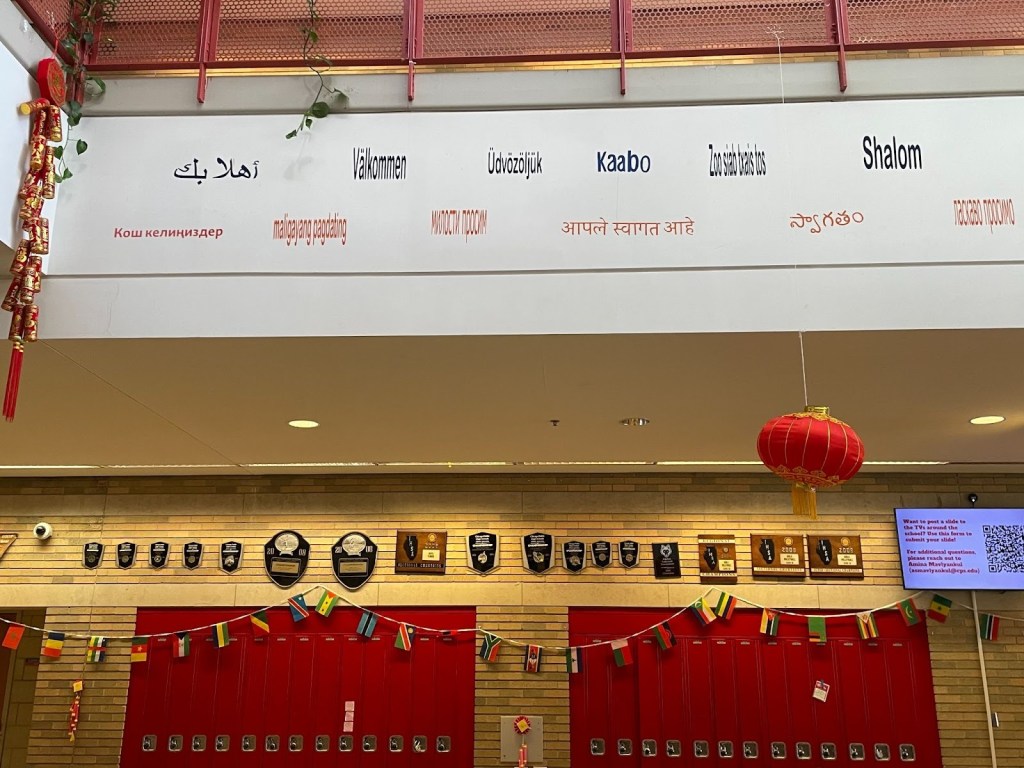
However, bilingual exhibits are not destined to die, as plenty of museums including our own Art Institute, are private and thus don’t receive government funds. Many of these will probably be more likely to provide multilingual exhibits in a desire to resist Trump’s demands; before long we may see explanations in Arabic, Chinese, or Tagalog alongside Spanish and English.
Ultimately, while bilingual museum exhibits are currently imperfect, a little improvement in each American museum can create a culture of accessibility so that the large population of nonnative English speakers can still understand the context behind the art, animals, and history on view. After all, the MCA and the Shedd have already proven it’s possible.
![[Photo Gallery] Homecoming Football Game Payton vs. Brooks](https://paytonpawprint.com/wp-content/uploads/2026/03/img_4761.jpeg?w=1024)
 The Paw Print
Leave a comment