
by Raina Suri
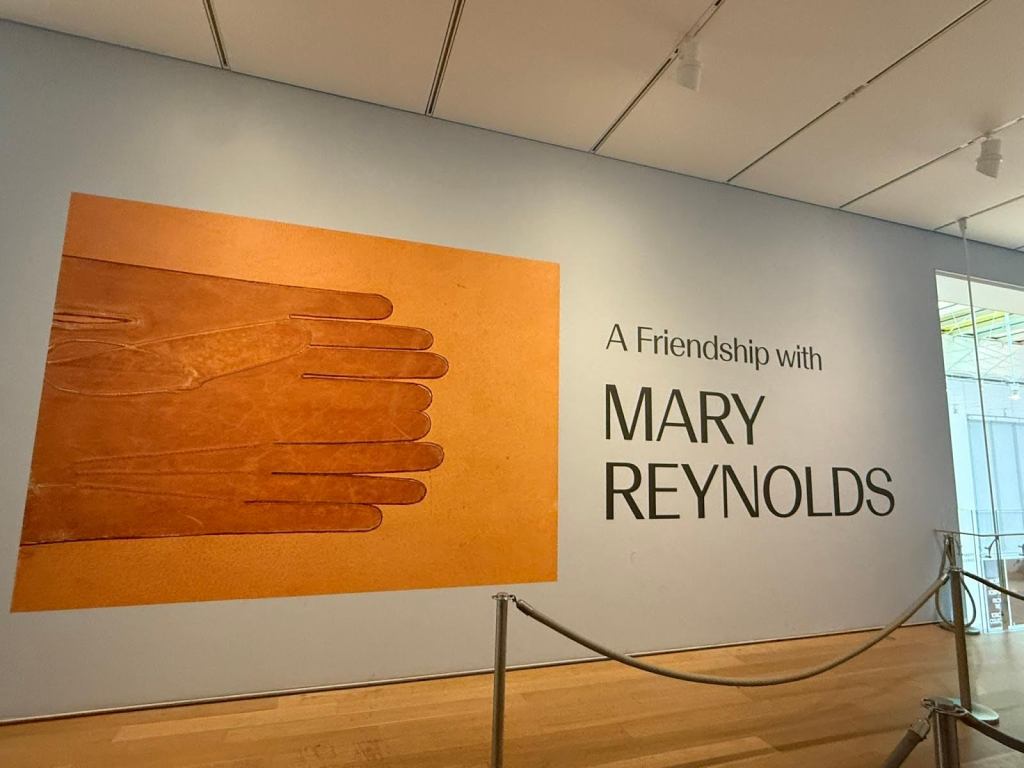
On March 29, the Art Institute of Chicago opened a new exhibit in its modern wing. Frida Kahlo’s Month in Paris: A Friendship with Mary Reynolds aims to highlight the growth of the former artist during her only trip to Europe and subsequent friendship with Reynolds. Reynolds, unlike Kahlo, is not a household name but rather a lesser-known bookbinder and lover of famed artist Marcel Duchamp. This placed her squarely in the middle of the French surrealist movement, with innovators such as Yves Tanguy and Jean Cocteau frequently visiting her house.
Kahlo and Reynolds met when the latter visited Kahlo in the hospital, who was undergoing treatment for a kidney infection. Kahlo had been in Paris at the behest of Andre Breton for an art exhibition that she was reluctant to participate in. This all changed upon meeting Reynolds, who invited Kahlo to stay with her and Duchamp and thus enter into this world of surrealist contemporaries and free-thinkers. These events transpired in January of 1939, setting the exhibit against the backdrop of pre-World War Two Europe.
The collection features around 100 objects, with many well-known pieces by Kahlo, such as “The Wounded Deer,” along with an impressive collection of Reynolds’s bookbindings and correspondence between Kahlo and photographer Nickolas Muray, her lover at the time. A handful of paintings from other European surrealists are also exhibited, presumably to show the similarities between their work and that of Kahlo.
However, while a good concept in theory, the exhibit was not executed cohesively. Despite the extensiveness of the collection, there were only a few rooms for the exhibit to be displayed in, leading to an abundance of information that was poorly connected. The links between ideas presented were tenuous, and viewers will leave the exhibit wondering exactly how the Paris trip changed Kahlo’s style and popularity. Reynolds herself was an impressive figure, having had a major role in the French Resistance movement. However, much like the rest of the exhibit, we see no connection to Kahlo within these events.In fact, there was no clear reason as to how Kahlo and Reynolds developed their friendship with each other, bar the one interaction they had in the hospital.
The exhibit also presents contradicting messages, with the letters between Frida and Muray presenting an image of her resenting the French artists she was surrounded by and longing to return. In fact, Kahlo famously stated, “I never knew I was a Surrealist until Andre Breton came to Mexico and told me I was.” This blatant disregard the Mexican artist felt for her French Surrealist counterparts is never remedied, which only furthers the viewer’s confusion.
If allotted more space, the exhibit could have been a major success. However, its brevity and lack of clarity leaves us patrons slightly disappointed. For the average art museum-goer, I would recommend skipping this exhibit unless you’re a major fan of Frida Kahlo.
![[Photo Gallery] Homecoming Football Game Payton vs. Brooks](https://paytonpawprint.com/wp-content/uploads/2026/03/img_4761.jpeg?w=1024)
 The Paw Print
Leave a comment