
By Kieran Blake, Sports Editor
I had just woken up on a Monday morning to get ready for school when I decided to check my Instagram feed to see how the world of politics was doing. Yet when I opened the Instagram app on my phone, one of the first things that I saw was the heartbreaking news that Pope Francis had passed away. I took a moment to absorb the information I had just seen. Ever since I had really known what a pope was, Francis had held that title. Growing up Catholic and attending a Catholic school, Pope Francis had been an important figure in my life for over a decade, so it was almost surreal to see that he had died. One day after Easter, the second biggest mass of the year (second only to Christmas), Pope Francis had died.
Pope Francis’s legacy will be one of progress and modernization in the Catholic Church. He is without question one of the most liberal popes of all time, and the change he brought about was monumental. He led the Catholic Church in endorsing the death penalty’s abolition. He championed greater inclusivity toward gay and trans people. He issued a long-overdue public apology for the Church’s role in the forced assimilation of indigenous people in Canada. He championed the betterment of life for the poor and the working class while simultaneously advocating for universal basic income and tax raises for the rich. Pope Francis was a living symbol of Jesus Christ’s teachings and actions toward the less fortunate.
Pope Francis also spent his pontificate working toward peace around the world. Since the beginning of the most recent conflict between Israel and Palestine, he had condemned the violent actions of both Hamas and Israel. He repeatedly called for the release of all hostages, an immediate ceasefire and a two-state solution. Every night until the day that he died, he would call the Catholic Church in war-torn Gaza, and his final public appearance saw him speak in favor of a ceasefire to end the crisis in the region. He also called for peace in Eastern Europe between Russia and Ukraine, calling for Vladimir Putin to end his invasion while asking at the same time for Volodymyr Zelenskyy to work toward peace.
Pope Francis also prioritized the rights of migrants and refugees during his pontificate, especially as the migrant crisis rose to prominence around the world and especially in the United States. As Donald Trump implemented his mass deportations when he arrived in office this year, Francis decried the administration’s efforts, especially as Vice President JD Vance used Catholic doctrine to justify them. Francis has also called out other leaders around the world for their treatment of migrants and handling of the migrant crisis.
Still, Francis was by no means a perfect pope. He had his fair share of controversies and arguably mistakes. Many believe that he severely mishandled the clergy abuse scandal that marred the Church’s reputation throughout the 21st century. While he was by far the most accepting toward the LGBTQ community of any pope in modern history, he did still face criticism over some of his comments regarding LGBTQ people from both liberals and conservatives. Some people felt that, with regard to social issues, Francis was too progressive, and some felt that he was not progressive enough. For all of his successes, Pope Francis still had many faults and failures.
Nevertheless, Francis still is, in my mind, the closest we have ever gotten to what a pope should be. He came from humble beginnings, and he always remembered to fight for the working class of the world, as his parents were part of that same working class when he was growing up. He relentlessly pushed for peace, fought for the poor and disadvantaged and truly embodied the Good Samaritan that Jesus spoke of in the New Testament. He championed acceptance and inclusivity more than any other pope in recent history, and he broke down barriers by doing things previously unprecedented for a pope. He truly embodied the key principle of the New Testament: love thy neighbor.
Some of Francis’s most notable moments as pope involved the washing of people’s feet. While it was common for a pope to perform this action on Holy Thursday, Francis expanded its reach far beyond its original boundaries. He washed the feet of inmates, migrants, women—all people who had previously been excluded from the ritual. Among the migrants whose feet he washed were those of different faiths—Muslims, Orthodox Christians and Hindus as well as Catholics—epitomizing Francis’s commitment to inclusivity and compassion. When it came time for Francis to be laid to rest, at his request, his coffin was lowered, rather than raised, as was tradition, so that people could see his body as it laid in one simple wooden coffin, rather than the traditional three nested coffins.
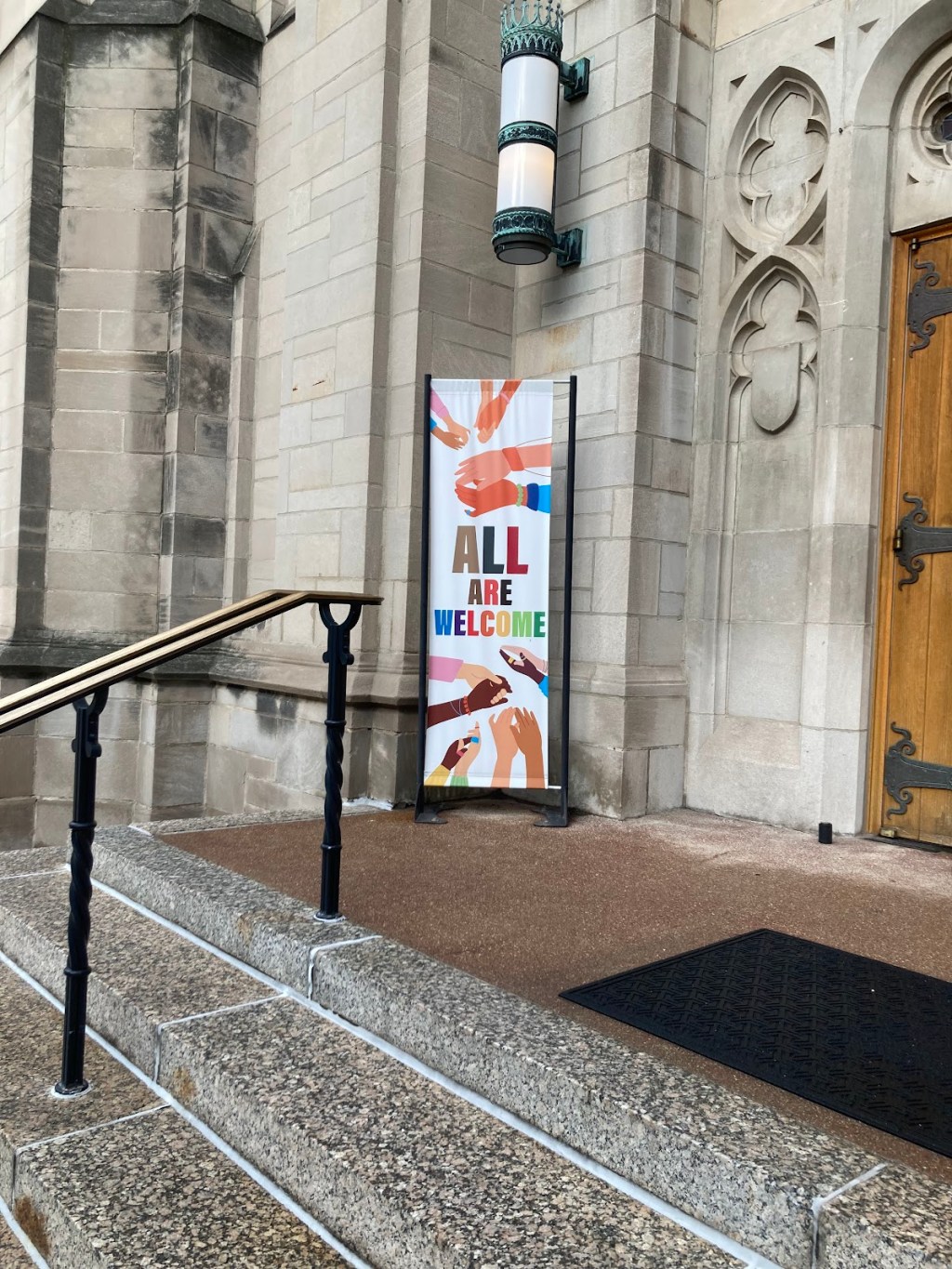
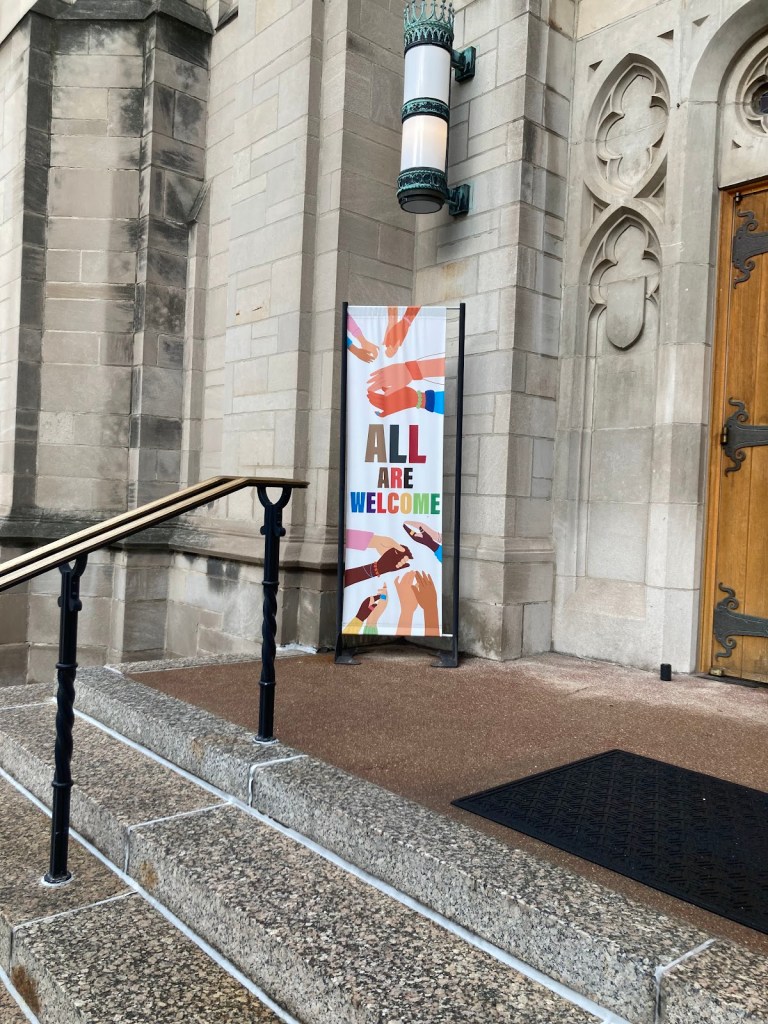
As I walked to the train the morning of Francis’s death, I reflected on the day. The weather was cool, my surroundings quiet, the world a somber place. I was moved as I thought of Francis’s legacy of compassion, modernization, progressivism and inclusivity. I passed by my church, as I always do on my way to the train, and I took a moment to stop. I looked at the banner that stood next to the doors. “All are welcome,” it said. I took out my phone and took a picture of the banner. “All are welcome.” Those three words were truly what Francis believed in and fought for as pope. People from all walks of life—all socioeconomic statuses, all religions, all countries of origin, all races and ethnicities, all genders, all sexual orientations, all identities, all beliefs—all are welcome.

![[Photo Gallery] Homecoming Football Game Payton vs. Brooks](https://paytonpawprint.com/wp-content/uploads/2026/03/img_4761.jpeg?w=1024)
 The Paw Print
Leave a comment