
By Elena Whitford, Features Editor
The 41st Chicago Latino Film Festival took place April 3-14. As it does every year, the festival included features, documentaries and shorts from dozens of Spanish- and Portuguese-speaking countries, of which 20 were North American premieres and 12 were world premieres. The genres of the feature films were also diverse, spanning sci-fi, magical realism, drama and more.
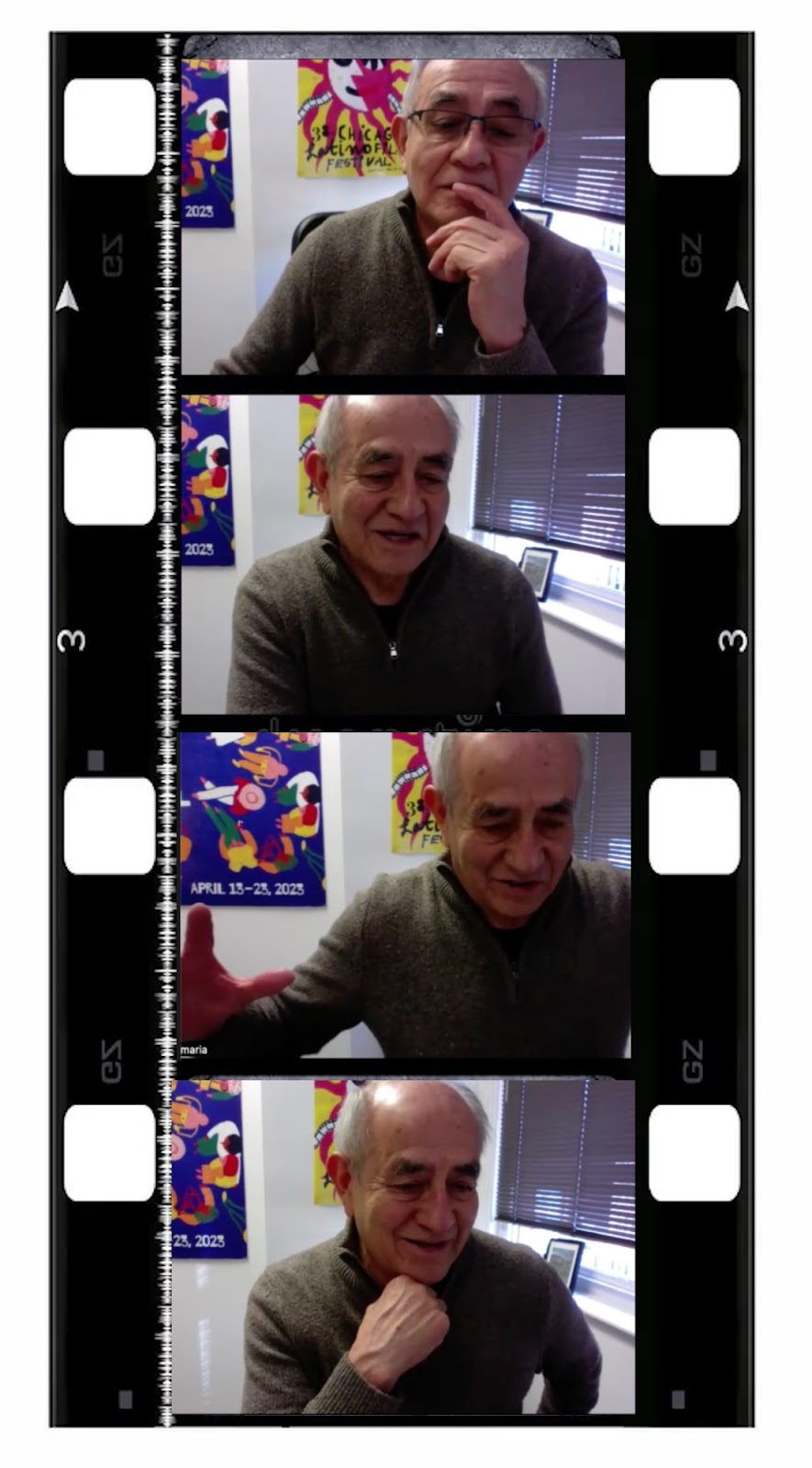
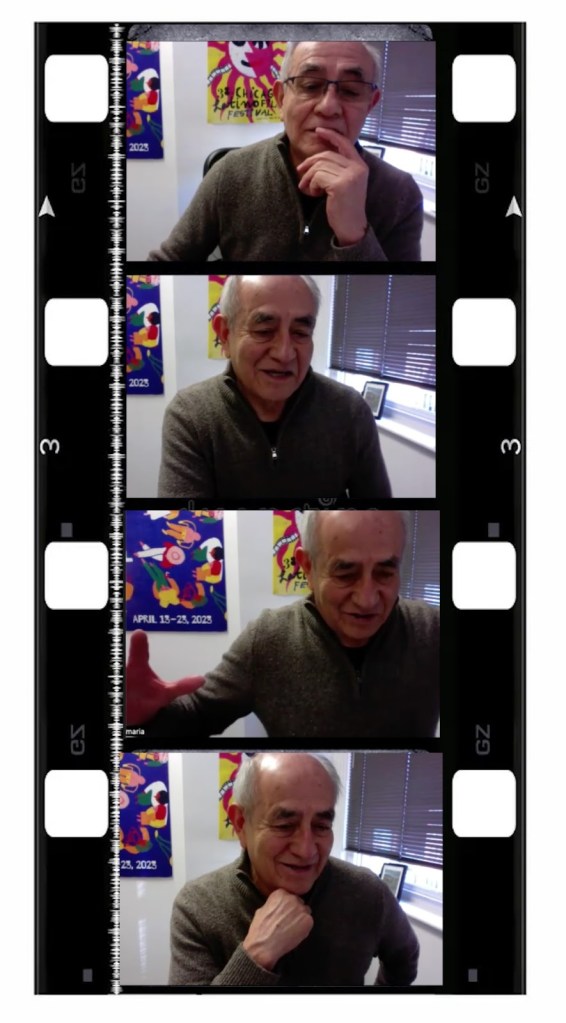
On the last day of the festival, The Paw Print was able to interview Pepe Vargas, the founder and executive director of the International Latino Cultural Center of Chicago, the group that organizes and finances the film festival and other events year round. Responses have been lightly edited for length and clarity.
The Paw Print: How did you get involved with the Chicago Latino Film Festival? Are you a filmmaker yourself?
Pepe Vargas: I went to school to study TV production, journalism and ultimately film production and directing. I made some short films and a documentary, and then I realized Chicago is not a place to make films. Everyone left Chicago. Years later, my daughter graduated with a film degree; she was here for three years and then she had to leave. Now she is in Los Angeles. Everything [in the film industry] is focused on New York or Los Angeles.
Going to school, I discovered the power of making a film. And then came the question, how can I use this to change the perceptions that people had about Latinos? We are a family of many nations, many races, many languages, so we can use cinema to show people who we are by using the talent of the filmmakers. And so I started doing that with English subtitles, so people started attending. I discovered that the festival was not only a good tool to change the perception, but also it was something that we can use to create awareness about who we are as Latinos. Things kept growing, and at some point, we started doing other things: music, dance, theater, poetry readings, book presentations, exhibitions.
By now it is crystal clear to me that our culture really has no end. It’s so profound, so diverse. And [the arts are] where we find the richness of our culture. So that is what I keep doing. And somehow we have now reached the 41st anniversary of the Chicago Latino Film Festival.
The Paw Print: So would you say that the Chicago Latino Film Festival is the most important event that the Latino Cultural Center does?
Vargas: I mean, the festival remains the flagship of everything that we do. But now it will be over [on April 14], we have to focus on what we are doing over the summer. By now, we have confirmed 10 concerts that will be offered for free in the parks. We have five films that are going to be shown also as a part of the concerts in the park. And we are the only organization that shows non-Hollywood films — we show Latino films with English subtitles. [This year] we are showing films from Peru, Colombia, Mexico and Puerto Rico.
And so, do we rest? Yes, we do. But the energy that we get from the filmmakers who visit the city and come here to show the films, that energizes us to keep going. I look at this as an opportunity. How can we make a difference and uplift people’s consciousness, not only Latinos, but Chicagoans in general? What we do is not for Latinos; it’s for absolutely everyone. And especially for us, it’s a way to get to know each other and stress the point that we are different. We don’t have to be the same. But how can we unite and then start feeling connected to a greater thing beyond any particular country? Because we have more than 20 countries and there are Latinos living everywhere in the world.
The Paw Print: That leads to my next question, which is how do you strike a balance between different genres, different countries and basically different types of movies in the festival?
Vargas: I mean, there is a great quantity of films that we receive. In the case of short films, we receive more than 450. So we have to deal with the process of selection. Feature films will receive about 250 [submissions], and we can show only 50. We have a very rigorous process of selecting the films and we really want to have a representation of every one of our [Latin American] countries — if we can’t find that with a feature film, then with a short film. We don’t want to have 50 thrillers. We want to have a few thrillers, a few comedies, a few dramas, documentaries, animations, so we start kind of mixing everything to make sure that people will see a very comprehensive sample of films that relate to every genre and type of film, and they’re coming from every one of our countries.
The Paw Print: Something else that I noticed when I went to the festival is that often, the director of the movie would come and have a talk with the audience, which has happened both this year and last. Do you ever decide to show a movie based on whether the director can come?
Vargas: We put the emphasis on being able to bring every director to every film. Finances sometimes don’t help. But in general, we are bringing a great number of them. Some directors are shooting another film, which is a great thing for them while they’re showing another film. So also, the film has to really stand on its own. If the director comes, it is a big plus because people get the opportunity to not only meet them, but talk to them and find a little bit about the intricacies of making a film and the complexities of putting their ideas and dreams into a film. So we put an emphasis on that.
Sometimes actors express interest in coming. That is a second priority for us because the actors, they just come and perform the part; sometimes they learn about the whole thing, but they are limited. The directors or the producers are really the ones who had the film in their mind, so they can sustain a conversation from whatever type of question they’ve been asked. The audience, they like that. And so a good number of directors have been in town. We still have some that will be leaving tomorrow [after the festival ends].
The Paw Print: In all your years overseeing the festival, how would you say it’s changed?
Vargas: Yeah, it has changed dramatically. It has evolved not only the way people make films, because they used to shoot a film on celluloid, which nobody does [anymore]. So in a way, the cost of making a film has gone down. Also, the great masters of the cinema, they just cannot make a film [anymore] because they are not used to the new technology. But a lot of new talent is developed because the cost has been going down. And in that regard, it’s easier to make a film than before, and that allows more people to really try. And out of the great quantities [of films made], some films come to be really, really good.
The other thing is that the films are a reflection of what is going on in society. It’s kind of a photocopy or a photograph of what is happening. A lot of things have changed. At some point it was the political situation in countries such as Argentina, Chile, Brazil, Bolivia, Peru. There was a lot of repression and kidnapping and disappearances. That has died down and then it becomes drug trafficking. There’s a lot of films dealing with that kind of theme. So the filmmakers address problems or changes in society. Political corruption has become a subject now; it’s still there. Another theme that is new, that wasn’t here 10 years ago, even 5 years ago, is dealing with Alzheimer’s. So filmmakers pay attention to that and start addressing it. This year we had three or four films dealing with that subject.
And so filmmakers condemn or shed light on that kind of phenomenon. In that regard, [the festival is] changing because societies and politics are changing. So how does the cinema start addressing that kind of subject? It varies from country to country, but this year we have one film dealing with the environment in Puerto Rico. Last year we had one that was filmed in Chile, Honduras and El Salvador, about people who made things difficult with the native people by stealing the water and destroying the agriculture, because these mining companies from Europe and Canada and the US go there. They disregard the environment and the lives of the natives. They only care about exploiting the natural resources and killing the fish and the vegetation.
So filmmakers get into this and start calling attention and seeing how they can help stop these problems.
The Paw Print: That’s very powerful, and I definitely agree. But I also saw a lot of happy movies at the festival. I saw 23 Hours, which is a sci-fi movie that was very lighthearted. And I saw it right after seeing Rita, which was one of the darkest movies I’ve seen in a very long time. So I think you’ve definitely succeeded in creating a balance between those tones and making sure the festival is not too depressing either.
Vargas: Good. Thank you for being interested; anytime just go and follow [the International Latino Cultural Center] for the many things that we do.
The Paw Print: Thank you so much.

![[Photo Gallery] Homecoming Football Game Payton vs. Brooks](https://paytonpawprint.com/wp-content/uploads/2026/03/img_4761.jpeg?w=1024)
 The Paw Print
Leave a comment