

By Alexa Gola, Associate News & Features Editor and Camila Alvarado, Staff Writer
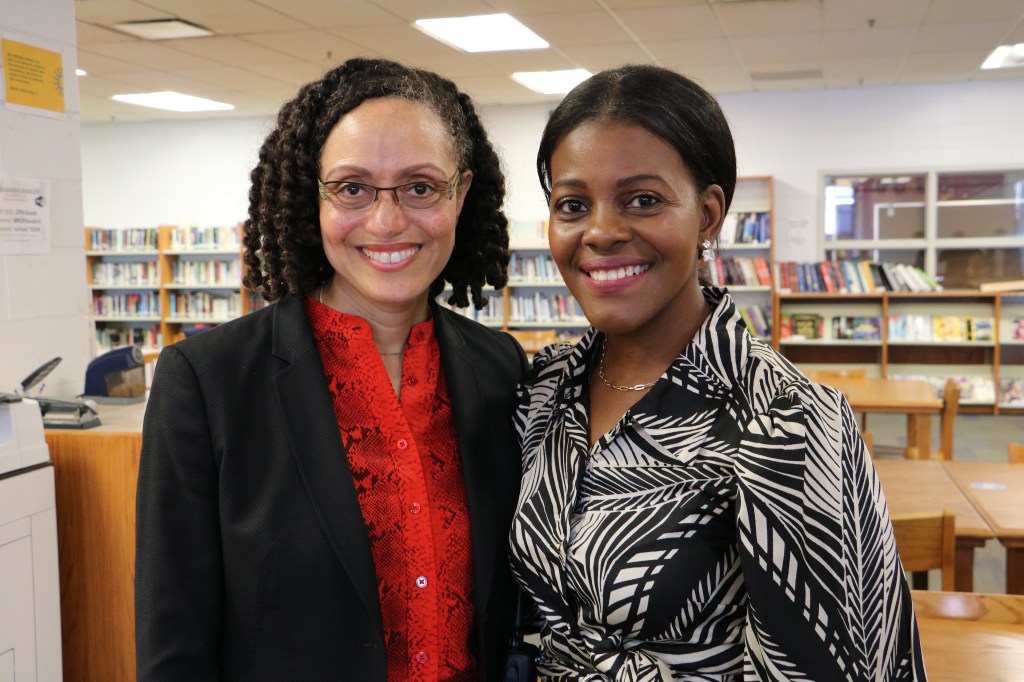
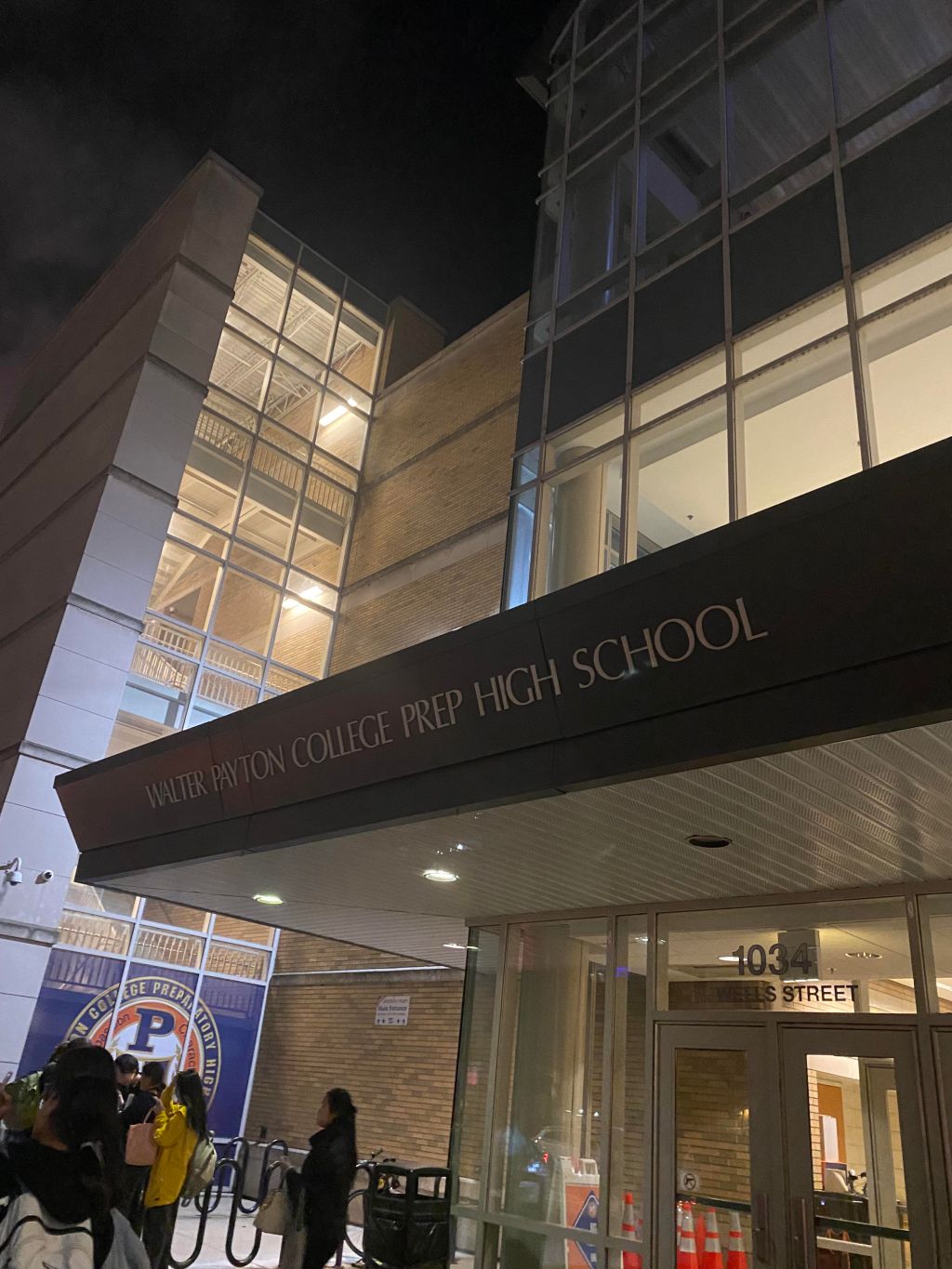
Principal Deputy Director of National Intelligence Dr. Stacey A. Dixon visited Payton on Sept. 26, introducing herself and the work of the intelligence community to students. Dixon and her team make a habit of visiting a local school when traveling in order to inform students about the intelligence community and to engage with young individuals, emphasizing the importance and applications of what students are learning in schools.
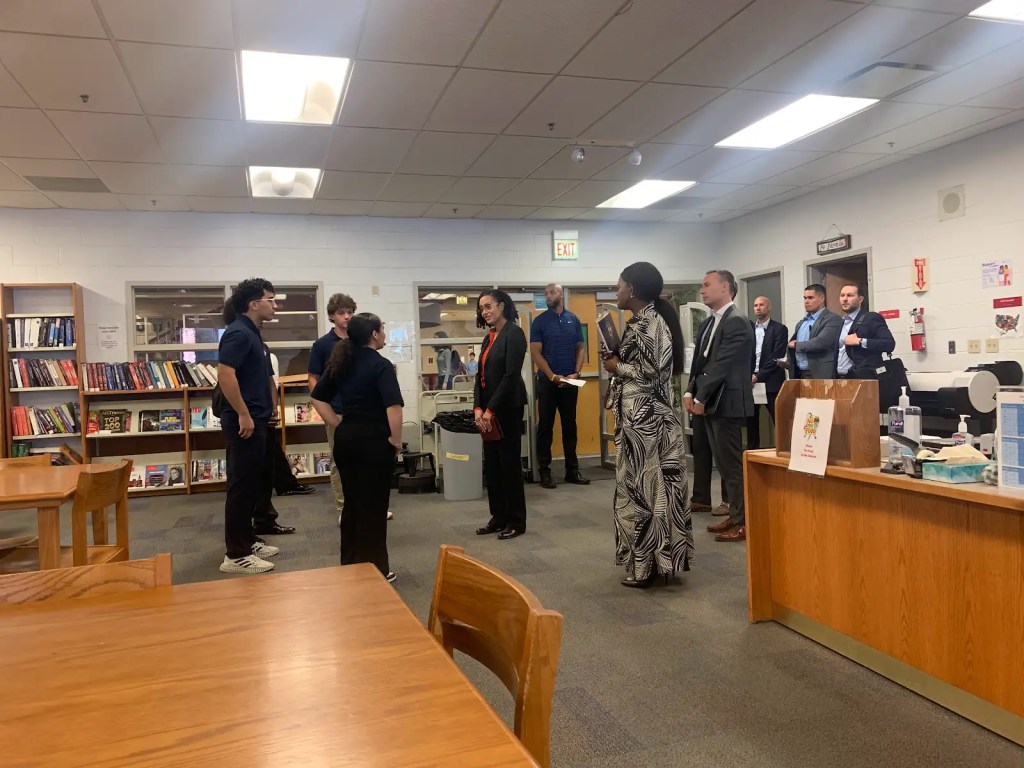
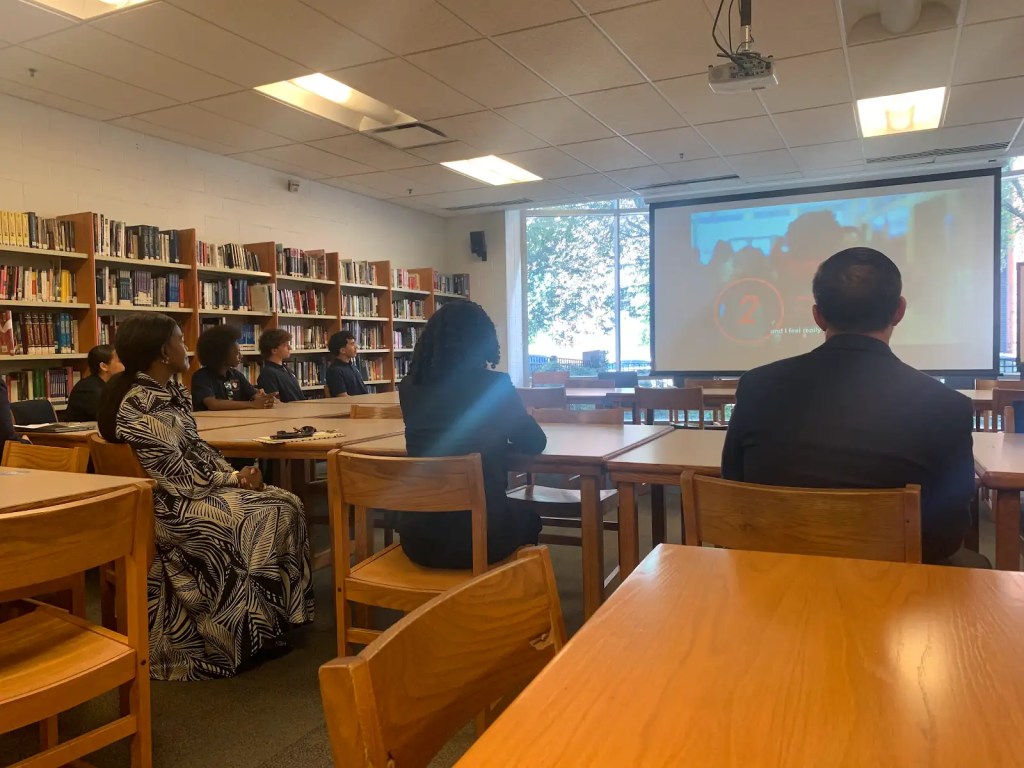
In the days before Dixon arrived, the school underwent several security checks, including visits from the Chicago Police Department. Dixon entered through the back door and swiftly moved to the library, where she was greeted by Principal Shabazz and several of Payton’s student advisory leaders. Following the warm welcome, Dixon and her team were seated at the library’s tables, where Vice Principal Arabie showed them a student-made video, “Why We Love Payton.”
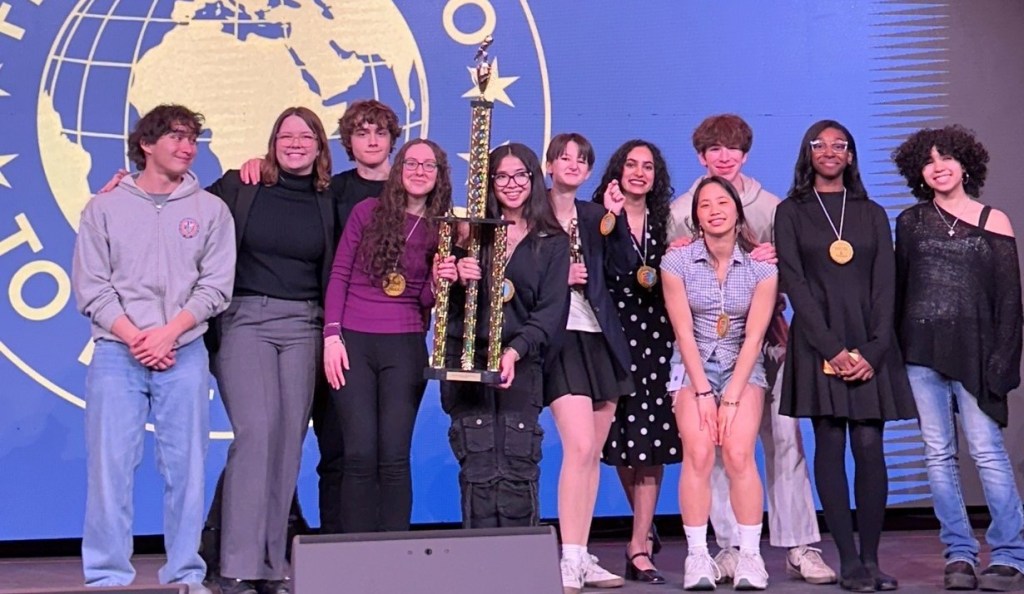
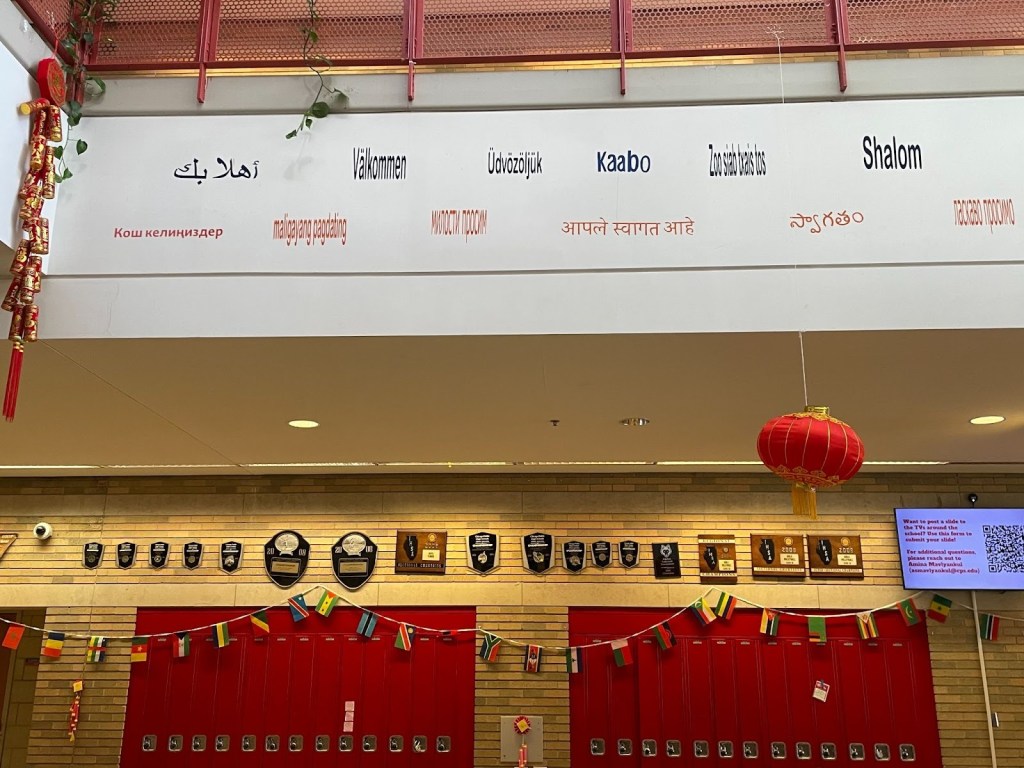
Made for the school’s 20th anniversary, the video featured a brief performance from the Payton’s slam poetry team, the Bombic Stans. From diversity to student engagement, the video included attributes highlighted by students of all grades alongside shots of student life.
Afterwards, Dixon and Dr. Shabazz discussed the academic rigor of the school, with Dr. Shabazz commenting on the difficulty of the high school entrance exam and the impressive academic capabilities of students. She joked about how “our students run out of classes to take” in spite of the myriad of AP classes Payton offers, relentless in their pursuit of knowledge. Dr. Shabazz also highlighted the student’s commitment to sports, regardless of the school’s limited accessibility to athletic spaces, further demonstrating student commitment to excellence.
Dixon then turned to the PALs, asking about the connections between their neighborhoods and Payton. Some students believe themselves to be alone in their admission, while others attend the school with several of their middle and elementary school classmates.
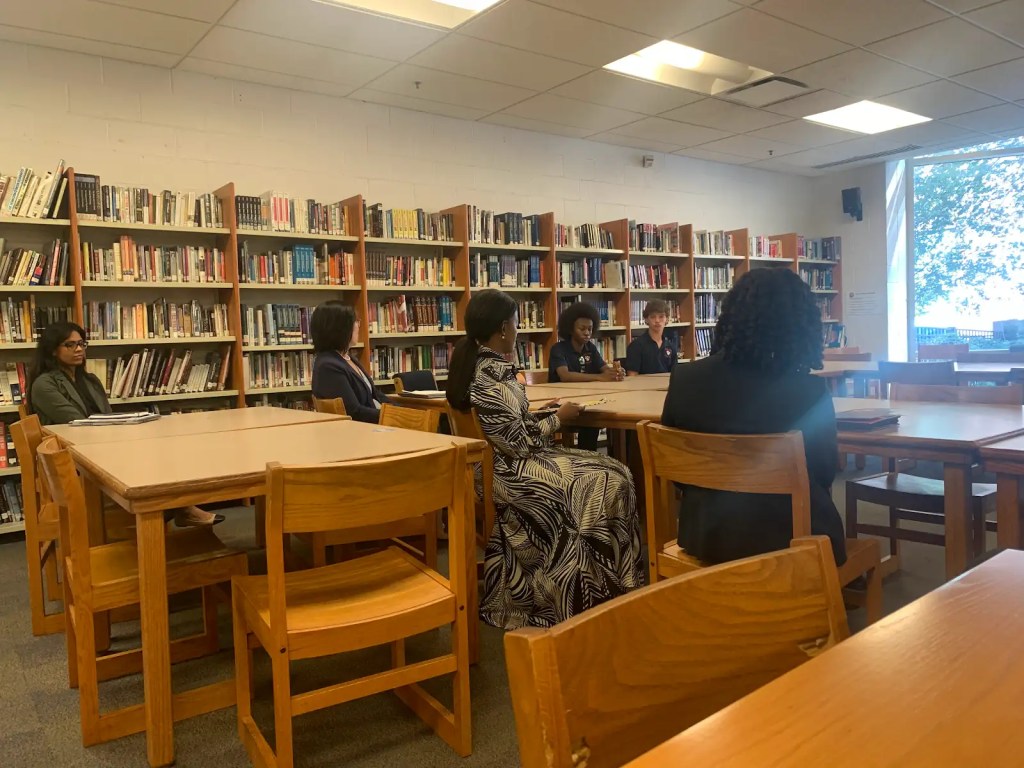
When asked about their favorite classes at Payton, one student joked that “We could just say PALs”. Others highlighted Mr. Chau’s Dual Credit Queer Literature class and Mr. Torres’s ability to engage students in high-level AP Biology coursework. Dr. Shabazz also emphasized the school’s faculty, saying, “Our teachers, when they come, they usually stay.”
Finally, Dixon asked the PALs about school culture. One PAL talked about Sweetness Day and the volunteer opportunities offered to students, which range from tutoring young children to cleaning the beach. He highlighted the compassion demonstrated by students. Another student spoke highly of enrichment, explaining how she loves that students are given time to explore their passions alongside their peers. A third student further emphasized a spirit of collaboration, saying that despite the emphasis on academics, “People tend to want to help each other instead of compete with each other.”
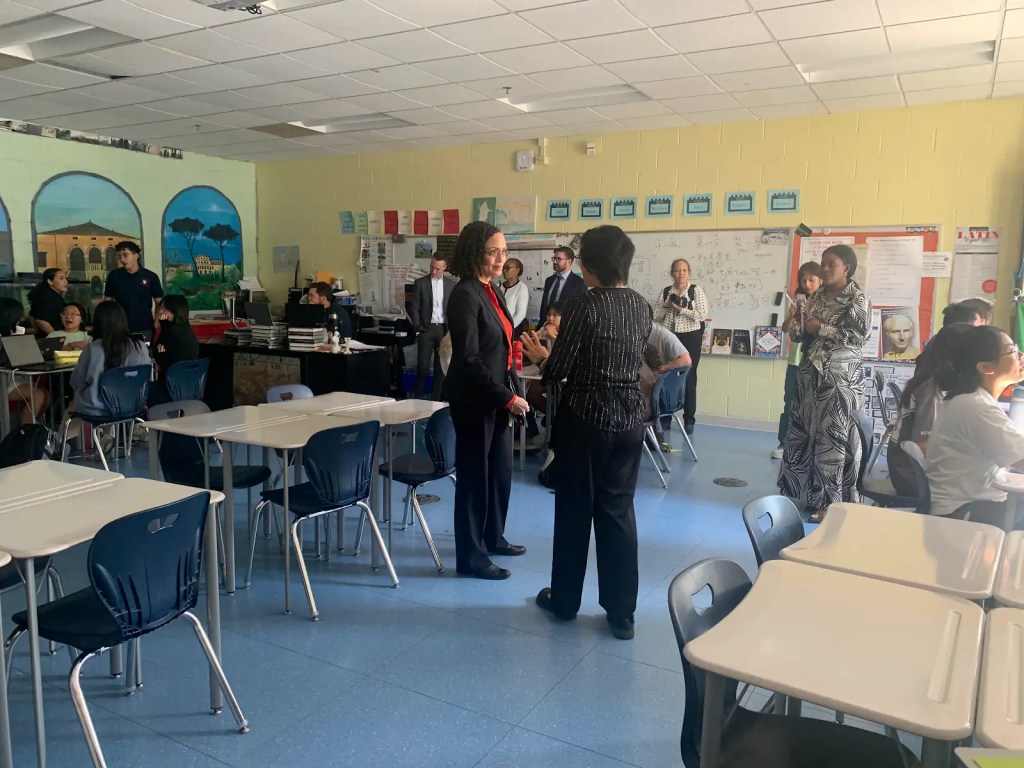
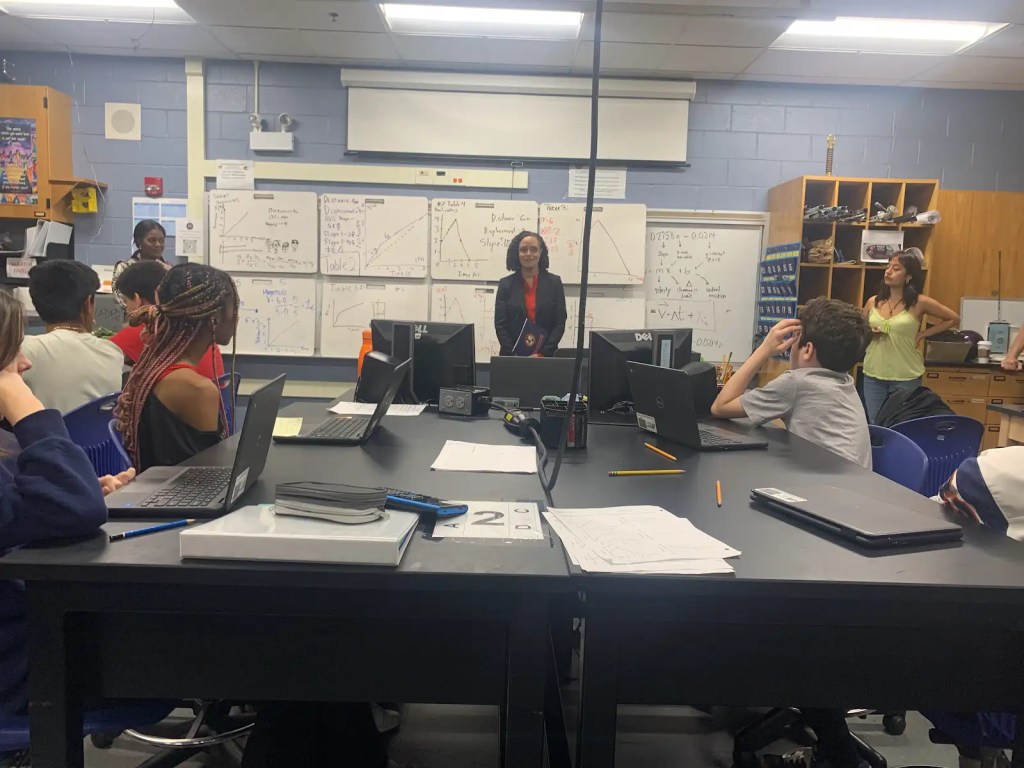
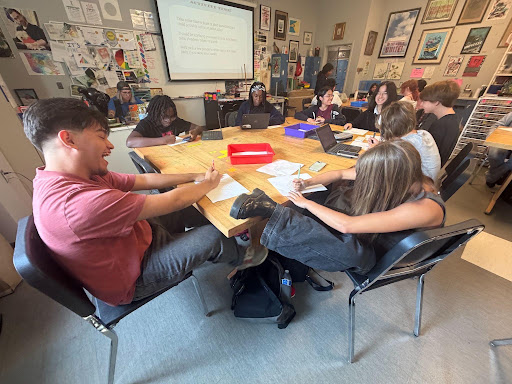
Leaving the library, Dixon visited several classrooms. In Ms. Xu’s AP Mandarin class, she observed students engaging in a speaking activity while chatting with their teacher. In AP Biology and Honors Physics, she introduced herself and her work before taking student questions. Throughout her speaking time in the science classrooms, Dixon highlighted the applications of what students were learning and how they connect to the intelligence community. She also stopped by Payton’s black box theater.
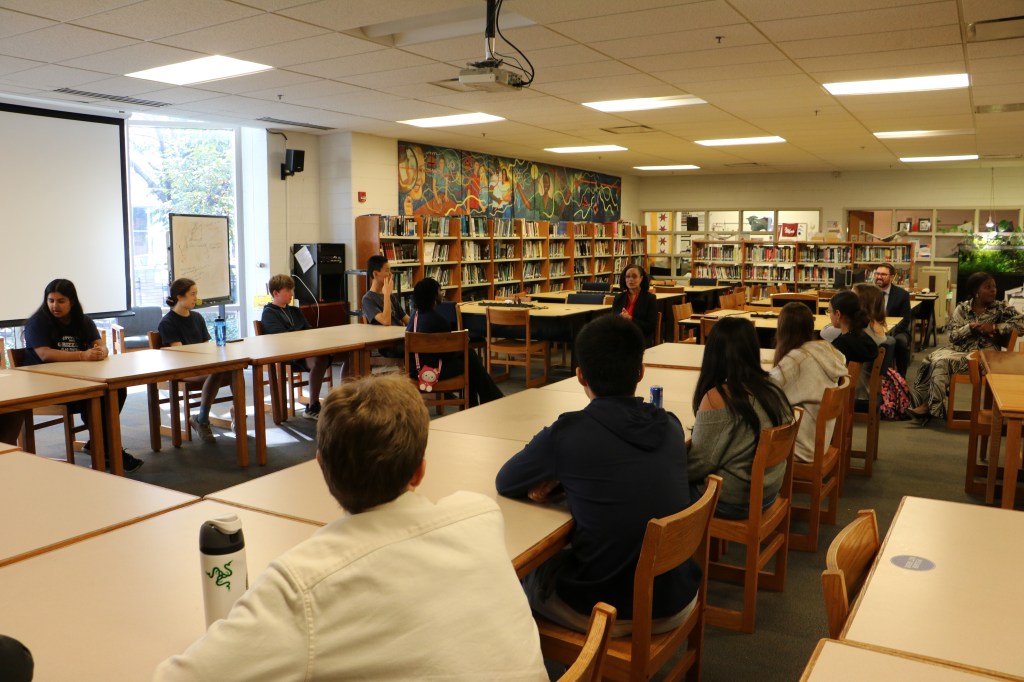
Following her mini-tour of the school’s academics and classrooms, Dixon returned to the library, where she introduced herself to and answered questions from a student panel. In particular, she spoke about her work in building relationships between different groups and institutions, and also reasserted the idea that the intelligence community is more than what movies and other media sometimes portray it as. Below are the Paw Print’s highlights from the student panel Q&A:
Advice for students:
When asked about what she means by the phrase “saying yes to new opportunities more than she says no” included on her website, she made a point of always saying yes to new opportunities whether those might be clubs, projects or anything else. She also stressed listening to pitches and expressing interest in opportunities regardless of whether or not they seem obtainable at the time in order to open doors.
Another student asked, “How do you balance your work and your other personal life?” Dixon said that “the idea of having work-life balance is sort of setting yourself up for failure” in certain jobs, but “finding balance when I’m not at work is kind of my compromise for not having work-life balance.” Physically, Dixon takes time to work out, spiritually, she attends church and mentally, she enjoys spending time with friends and family.
A third student wanted to know what Dixon would tell her younger self to “help her get on the path [she is] on today.” Dixon replied by underscoring the importance of not “limit[ing] yourself,” but instead discovering which skills you will need in order to work on building them for the future. She also encouraged students to keep in touch and build connections with individuals who they can offer help to and receive help from down the road.
Questions about her work:
When a student inquired as to why she works for the government rather than the private sector, Dixon replied by explaining that the government is always hiring, and so even in a recession, government remains fairly constant and jobs remain stable. Beyond that, she added that working in government has “been an adventure of a lot of really cool assignments and working with a lot of really interesting people around the world,” and that she knows her work has helped make the country safer.
On what a day in her life looks like, Dixon explained that “every weekday starts with a briefer,” and so “my boss will often be in the Oval Office doing this,” which will tell Dixon and the people she works with what should be of interest to them that day. She will then meet with a variety of people to check-in with their work and stay updated on what various intelligence agencies are up to. “The days go by fast, and you don’t really get bored because there’s so much change that’s happening,” she said, referring to her time at work.
Finally, in response to a student’s question about the global aspect of her job on a day-to-day basis, Dixon said, “One of the things that I’ve seen happening… is the relationships we have with are foreign partners (are) increasing.” She explained that the individuals working in each area will have touch points with the foreign counterparts, and so in “all of these different places, [they] can build relationships.” These shared partnerships and insights into each other’s analysis help to make the analysis all of these individuals do for the people they work for better.



Leave a Reply