

By Kieran Blake, Sports Editor
★★★★
There are few musicals as powerful as “Les Misérables.” Based on Victor Hugo’s colossal 1862 epic novel, it centers on the story of a reformed criminal by the name of Jean Valjean who breaks parole and attempts to live life as a free man. All the while, he is pursued by the ruthless, hyper focused Inspector Javert, who will stop at nothing to find him. Early in the first act, the character of Fantine is introduced, and Valjean’s promise to her to care for her daughter Cosette serves as the catalyst for the events that follow.
Valjean’s story is then somewhat pushed to the side toward the end of act one, as the various plots culminate in Paris in the middle of the 1832 Paris Uprising, with Cosette falling in love with Marius, the revolutionary son of an elite family. At the same time, an aging Valjean has his final encounter with Javert, and the second act serves as an introspection of Valjean, who asks himself and those around him one question: have I been a good man?
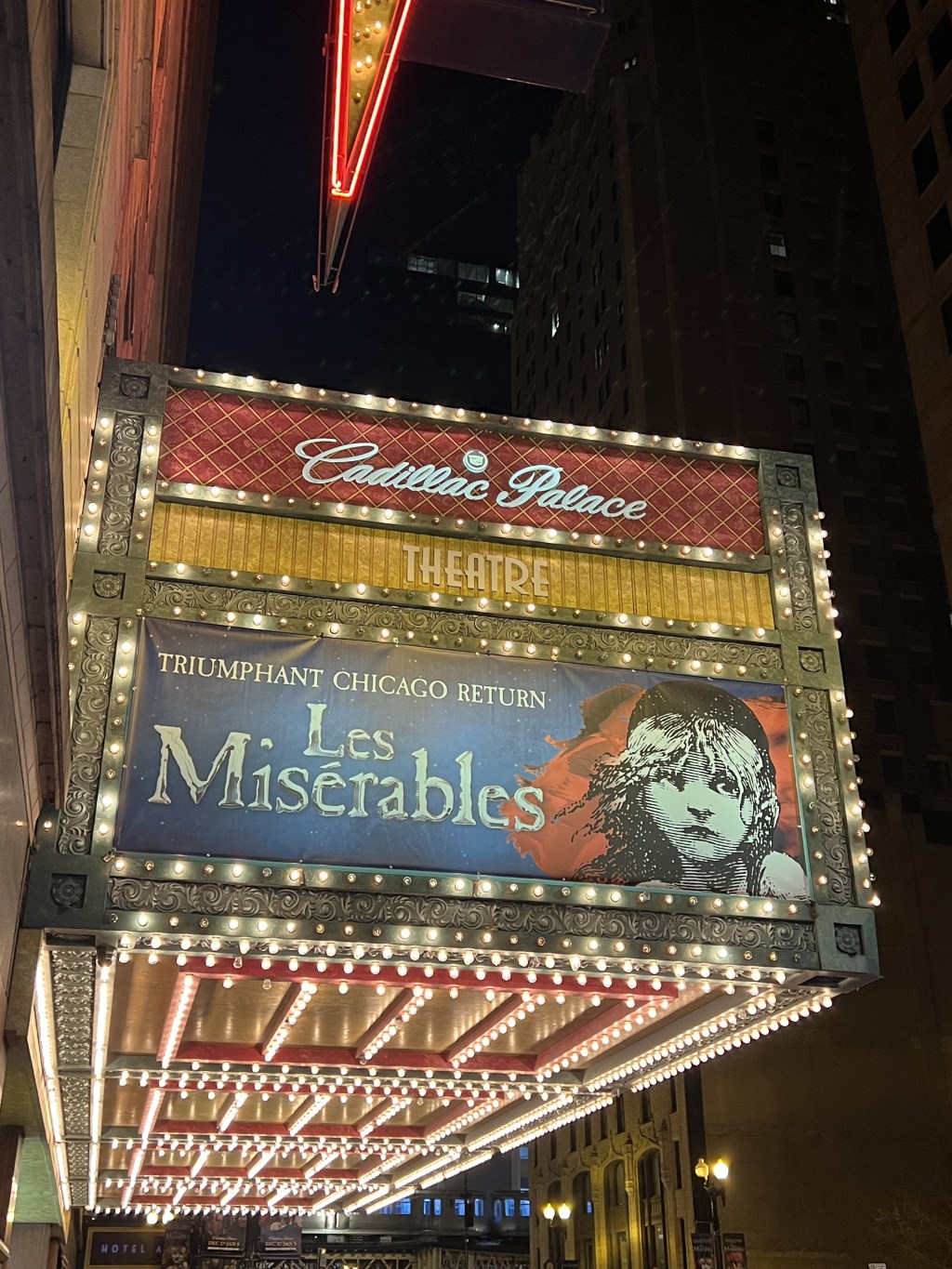
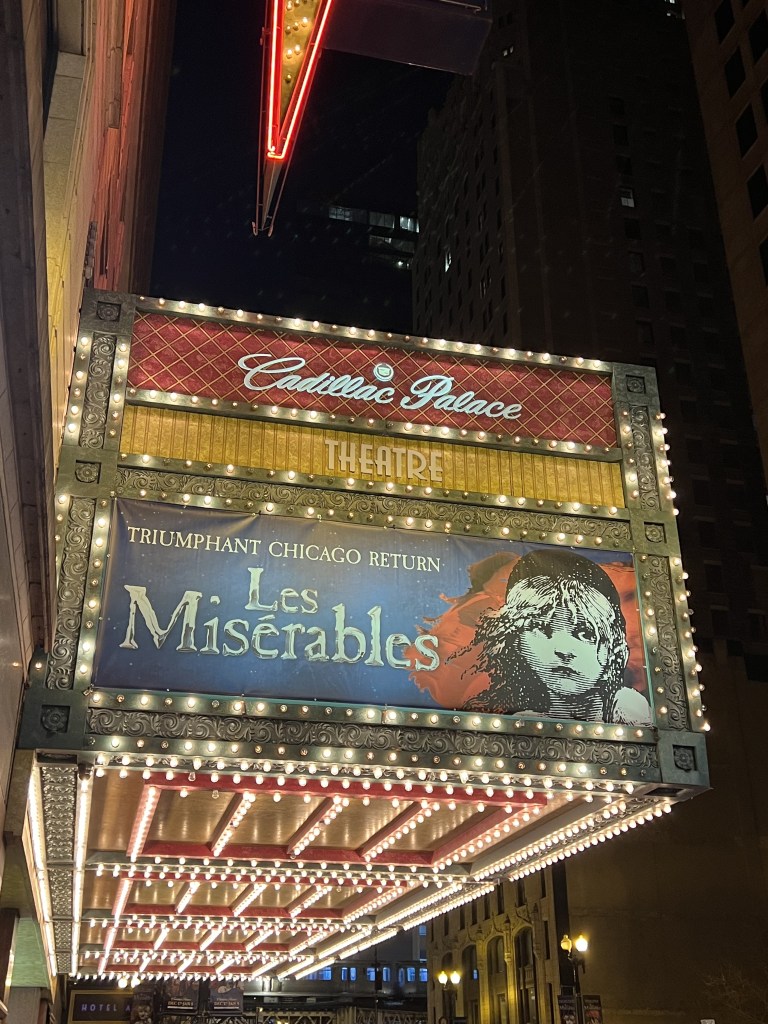
At the Cadillac Palace Theater, the cast and crew of the Broadway in Chicago production of “Les Misérables” put on a stunning performance. The show is technically and artistically brilliant, and overall the performances are phenomenal. As I got out of my seat after the curtain closed, my mind was racing thinking about how good the show was.
The performances are phenomenal, and while there are some that are slight letdowns, none of them are bad by any stretch of the imagination. There are four performances, however, that stand tall above all the rest. Nick Cartell is excellent as Jean Valjean, and his powerful voice takes center stage (no pun intended) in every number he is a part of. He truly is the heart and soul of the show. Matt Crowle is a hoot as Thénardier, the “master of the house” who offers some comedic relief in a musical that otherwise strikes a very serious tone. Crowle’s physical comedy is amazing, and the audience burst out laughing nearly every time he was on stage.
The two performances that really stuck with me after the show were David T. Walker as Javert and Mya Rena Hunter as Éponine. Walker is actually the understudy for Javert, with Nick Rehberger usually occupying the role, a fact that was hard for me to comprehend as I watched the show due to Walker’s performance easily being the best part of the night. I can only imagine how good Rehberger is for Walker to be the understudy. Walker’s booming voice filled the seats of the theater and left me in awe, especially during Javert’s signature number “Stars,” after which Walker received possibly the loudest applause of the night.
As for Hunter, her performance of “On My Own” was the best single-song performance of the night. She had been good up to that point, but during “On My Own,” she brought the theater to complete silence. At one point during the song, just as Hunter had finished one of her verses, the music had stopped, and the theater was dead silent. You could hear a pin drop. In between acts one and two, my father (who had brought me to the show) and I discussed how some of the female performances had been somewhat underwhelming. Then Hunter sang “On My Own,” and those criticisms were put to rest.
“Les Misérables” is often considered one of the greatest musicals of all time, and for good reason. It is a tale that has resonated with audiences ever since it was first performed in 1980 in Paris. It tells the story of a man who made one small mistake and has had to live with that mistake for decades. It portrays the scales of justice as imbalanced, and it forces audience members to take a good hard look at the world around them. It poses the universal question of what makes a person “good.” It depicts class struggle and rebellion, telling an underdog story like no other that culminates in chaos and bloodshed. It tells of the importance of religion as a guiding light in a person’s life that gives them “hope when hope was gone” and “strength to journey on.” It tells the story of love, both true and unrequited, and its characters must come face to face time after time with pain, struggle and the agony of defeat.
The lyrics of “Les Misérables” express these themes in a way that simple words could not. “I Dreamed a Dream” illustrates the innocence of youth, a time when “dreams were made and used and wasted,” while recognizing the harsh realities of life: “there are dreams that cannot be, and there are storms we cannot weather.” “On My Own” paints the ultimate picture of unrequited love and pierces the hearts of nearly all who listen: “I love him, but every day I’m learning all my life, I’ve only been pretending.” But perhaps the verse that epitomizes the themes of the show is the question posed by Jean Valjean throughout: “who am I?” Is he the man who he invents after he breaks parole and begins a new life? Is he Jean Valjean, the thief who “stole a loaf of bread” and was sent to prison? Is he 24601, the prisoner who served “19 years a slave of the law” and is now followed by them for the rest of his life? “Les Misérables” is more than just a musical. It is a journey of self discovery that explores both who controls a person’s destiny and what makes a person who they are.



 The Payton Paw Print
Leave a comment