

By Elena Whitford, Features Editor
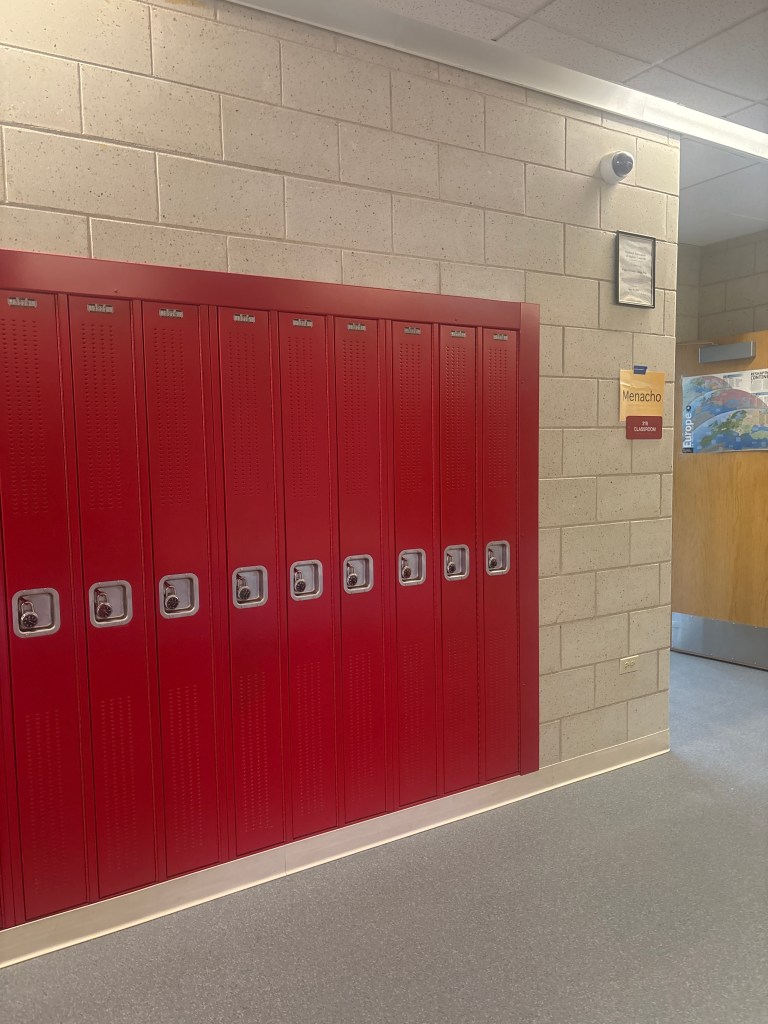
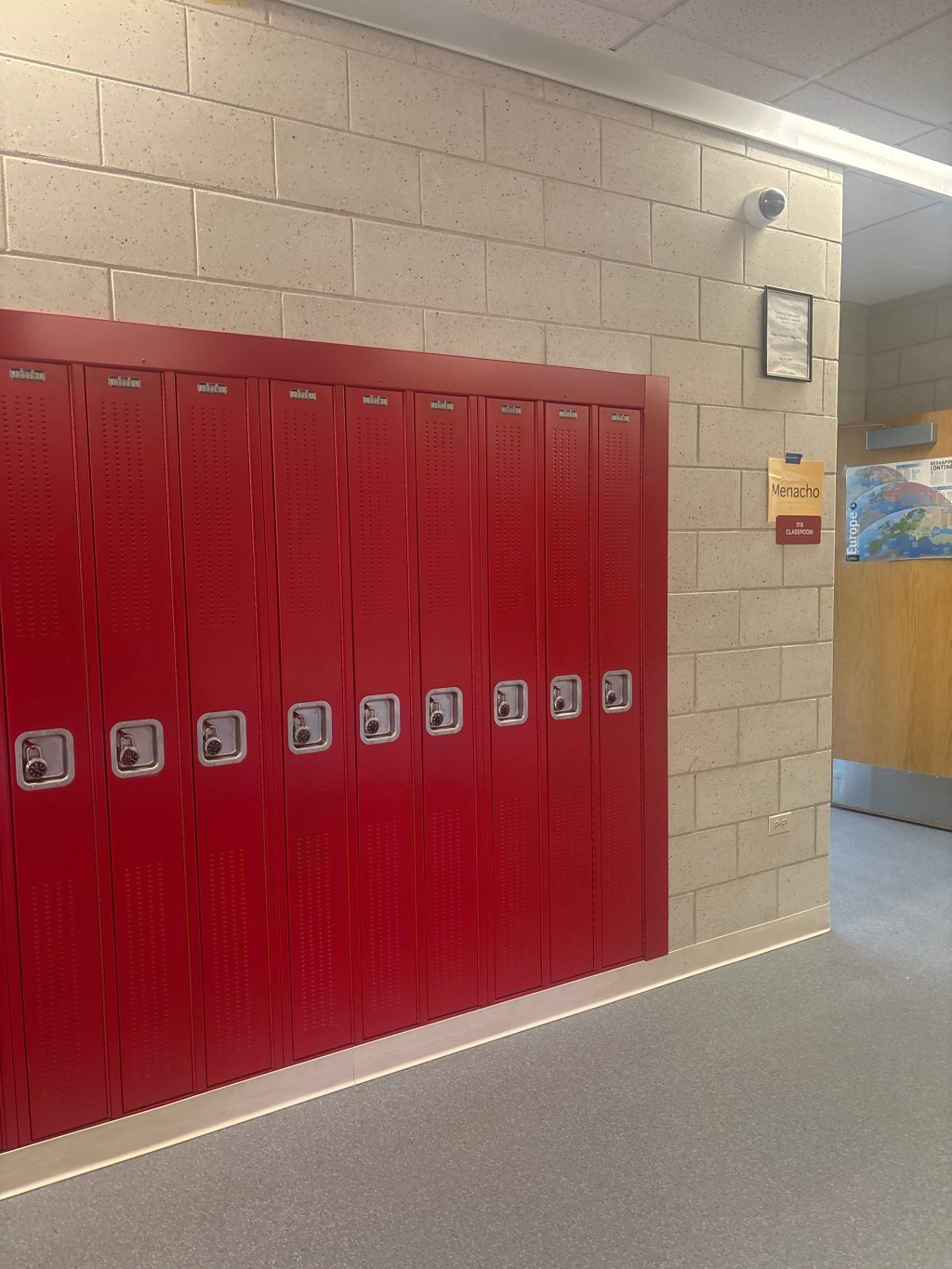
It is a nearly universal experience at Payton: walking into advisory on the morning of the first day of school and being assigned a locker that is, in all likelihood, subpar. Whether they are inconveniently placed on the third floor, hard to reach on the bottom half of the English-hallway walls or too narrow to fit a winter coat into, Payton lockers disappoint far more students than they help.
As a result, students with less-than-ideal lockers often choose to skip out entirely, carrying all their belongings for the day (and sometimes more) in their backpacks to, from and during school. And they may be left wondering how other students got their full-size, normal-width lockers on the first or second floor.
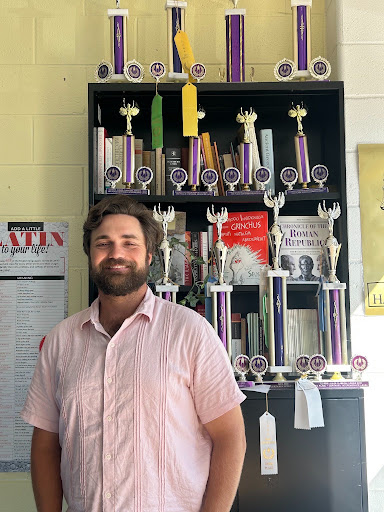
To find out, The Paw Print interviewed Mr. Arabie, one of our assistant principals and our designated “person in charge of lockers” (not an official title).
According to him, the locker assignment system is a relic of an earlier schedule. “Advisory used to meet every morning for 10 minutes before classes started. And when that was the case, lockers were put together by advisories, so students could be near their lockers going into homeroom,” Mr. Arabie said.
He added that once the switch away from daily advisory occurred in the 2023-24 school year, the previous locker-assignment system continued. When a graduating class gives way to a new group of freshmen, Mr. Arabie said, “those senior advisory teachers are now freshman advisory teachers, and I’m just going to drop freshmen into those advisories, which already align to lockers.”
As for the ways lockers are given to advisories themselves, these too mainly stay the same from year to year, with some exceptions. “It’s not a perfect science,” Mr. Arabie said. “When you get transfer students who initially weren’t on the roster, we have to find a locker for them. I do try to consider what floor, at least, their advisory is on.”
Ultimately, some advisories must end up with strange configurations of lockers because of the way this system works. “In fact, I have an advisory where the lockers start on the first floor and finish on the second floor. Instead of trying to put square pegs in round holes, I just move things up.”
When asked about more extreme cases in which certain advisories have had all their lockers on an entirely different floor than their advisory rooms, Mr. Arabie claimed, “Nothing is done on purpose to put a class on a floor or not.”
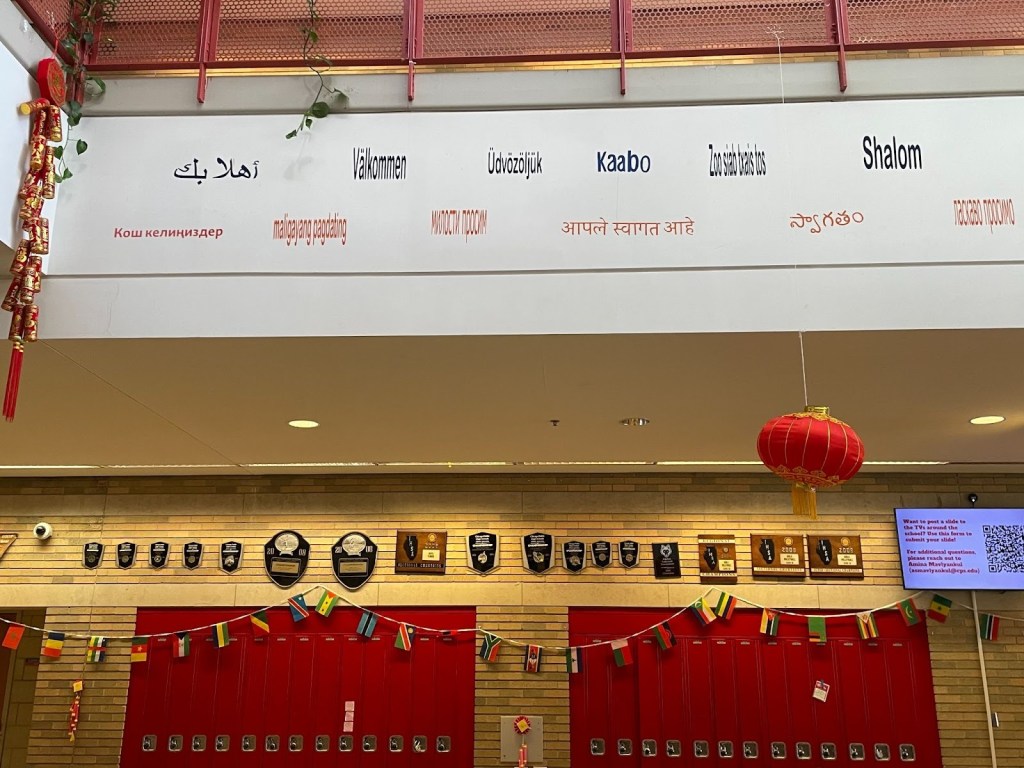
He is also aware that many students dislike the shapes and locations of the lockers. “I know the red skinny lockers are the least liked. If I could go back 25 years and ask the architects to rebuild this building with wider lockers, I would. But that’s not happening.”
When students were asked whether they use their lockers, the overwhelming consensus was that they are not useful enough to use consistently. Reinforcing Mr. Arabie’s claim, Ellison Knapp ‘27 told The Paw Print, “I think that instead of being one tall, skinny locker, it should instead be a shorter, thicker locker so you can fit your backpack in there.”
They added, “In all my three years of being at this school, I’ve probably opened my locker a solid three times.”
Conversely, Olivia Schleman ‘29 said, “I do use my locker, but only before school, after school and during lunch.” However, Schleman noted that “the passing periods are too short for me to use it at all.”
Both said that a different location would increase their locker use, though not by much. Schleman said, “Maybe if I had a class in the same area I would use it more, but only in the passing period before and after that class specifically.”
Knapp also stated that a more convenient position would provide a slight amount of utility. “If it was on the first floor, near the front of the school where I’m going through every single day, I’d use it more and put my flag football stuff in there. But I’d only probably use it during the beginning of the day,” they said.
When students are dissatisfied with their lockers, Mr. Arabie emphasized, change is not impossible. “I would love to get feedback because I want to make things as easy and seamless as possible here at school,” he said. “And I would hate to think that a student’s not putting things away or carrying too many things because their locker is inconvenient.”
“At the same time, there is a system for the lockers, and it is what it is,” he added. “Is there a middle ground? I’m happy to talk about it [with students].”
Ultimately, whether students are happy about it or not, the current system of locker assignments may simply be the most efficient way to use an imperfectly designed building. Mr. Arabie encourages students with more serious concerns about their locker placements, such as a necessity to store athletic equipment, to email him and schedule a meeting to discuss this.




Leave a comment