

By Issie Wee, Staff Writer
We all think of psychopaths as the evildoers in the movies or the subjects of true-crime documentaries that feature the cold, calculating, emotionless killers. Over time, our society has formed an image for psychopaths as individuals who are completely detached from the emotions of others. They are seen as individuals who can manipulate others without any remorse, seeking pleasure in others’ pain. However, what if that line between normal and psychopathic behavior is not as black-and-white as we think? What if the traits that we think of as psychopathic are actually present in everyone, at least to a certain degree?
This was the question that neuroscientist James H. Fallon posed after a discovery that he made about his own brain in October 2005.
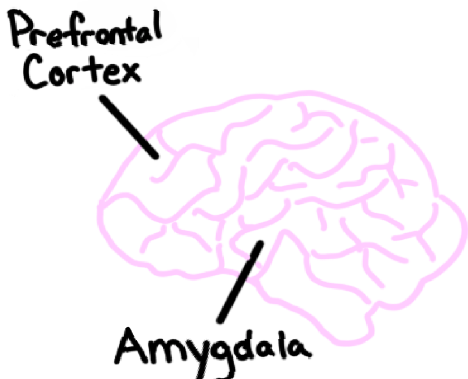
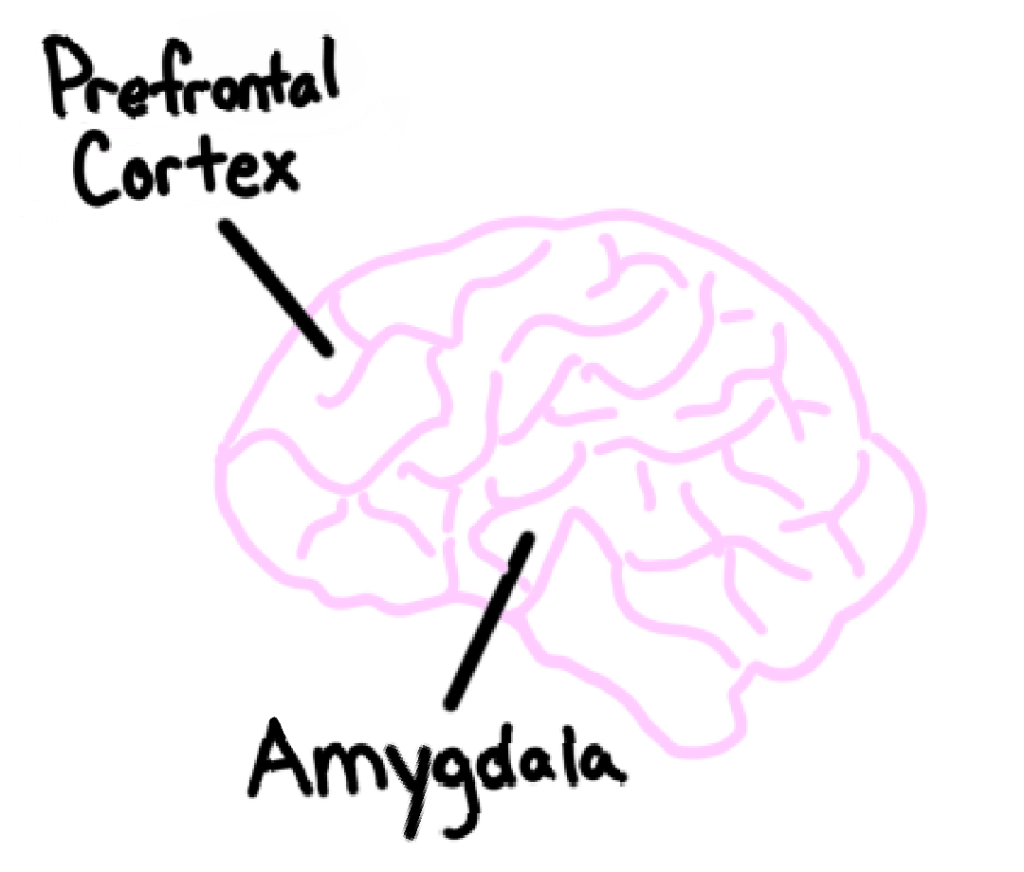
Fallon had spent years studying brain scans of violent criminals. As a professor of neuroscience at the University of California, Irvine, he focused on patterns associated with aggressive and antisocial behavior, especially in two regions of the brain: the prefrontal cortex and the amygdala. The prefrontal cortex regulates decision-making, planning and moral judgment, while the amygdala plays a major role in emotional response, fear and empathy. In psychopaths, these regions are found to have reduced activity and weaker connections.
One day, while studying a series of brain scans, Fallon found something unusual in one of the scans. It showed reduced activity patterns similar to those found in psychopathic criminals. Curious about this individual, he decided to look up the identity of the brain scan, only to discover that it was his.
At first, he thought that perhaps there had been a mistake. But the evidence continued to mount. Genetic testing eventually revealed that he had a version of a gene that had been associated with aggressive and antisocial traits. He also learned that he had distant relatives who had committed violent crimes.
Fallon had many biological markers of a psychopath, but he was no criminal. He was a respected member of the scientific community, a husband, a father and a normal member of society.
What makes Fallon’s tale so interesting is not the science behind it; it is the normalcy of it. Most people think of a psychopath as a criminal or an oddball, unable to fit into our society. Fallon thought of himself as an ordinary man. He taught college courses, conducted research and lived a normal life. What was shocking was not that a psychopath was studying the brain. It was that the brain scan revealed that an ordinary member of society could be a psychopath.
This realization prompts us to rethink how we conceptualize psychopathy. Instead of viewing psychopathy as a clear-cut category of “good” and “bad,” scientists are increasingly understanding that these qualities exist on a spectrum.
Qualities like risk-taking behavior, emotional unresponsiveness, fearlessness and reduced capacity for empathy are not only present among criminals but can also be found among the general population to some degree or another. Most people are likely to find themselves in the middle ground as opposed to at the extreme ends as previously believed.
Think about normal situations. Maybe you have had an argument with someone and completely disregarded their feelings just so you could win an argument. Maybe you have taken a risk you knew you should not be taking, like putting off a major assignment until the last minute or making a decision purely because it felt exciting at the time. Or maybe you felt completely indifferent to someone else’s struggles because they were not someone close to you.
Moments like these do not make someone a villain. They simply indicate that emotions and behaviors are not necessarily black and white, but rather a spectrum of possibilities within the human experience.
Some of the traits of a psychopath have also been known to have positive attributes to some circumstances. Fearlessness might help people remain calm during critical moments. Detachment might help people make tough decisions without the influence of emotions. Taking risks might help build creativity and ambition.
It is not the presence of these characteristics that makes one a psychopath. It is how a person applies them that determines their fate.
This part is where Fallon’s story becomes particularly relevant to the case of psychopathy. Fallon had the biological risk factors for psychopathy, but lived a normal life. Fallon has gone on to suggest that the positive influences and emotional support during his childhood might have impacted the expression of his brain traits. Rather than being detrimental to his character, the traits were simply part of his personality.
Modern neuroscience is supporting this idea more and more. The brain is not a machine programmed from birth to be a certain way. It is constantly changing, adapting and reorganizing itself. This is called neuroplasticity — the brain’s ability to reorganize itself in response to new experiences.
This is especially important for teenagers. Teenage brains are still developing, specifically the prefrontal cortex, the part of the brain responsible for decision-making, planning and thinking ahead. On the other hand, the parts of the brain responsible for emotions and rewards are working at full capacity. This is why high school can feel like an emotional rollercoaster. Choices feel urgent, high school social scenes can be overwhelming and it is easy to let impulses take control before thinking things through.
Furthermore, Fallon’s discovery is also important because it challenges the way society uses labels. Labels like “psychopath” are often used to put a line between “us” and “them.” However, science has taught us that human behavior is the result of a combination of genetics, brain structure, the environment and personal choices. Labeling someone as something as simple as a “psychopath” ignores this.
Of course, this is not to say that harmful behavior should be excused. Individuals should still be held accountable for their actions. With that in mind, knowing the science behind the behavior could start more thoughtful discussion about responsibility, mental well-being and self-improvement.
In all cases, self-awareness is the first step.
Fallon himself has joked about the possibility that he might actually be a “pro-social psychopath,” someone who shares the neurological traits associated with psychopathy but uses them in constructive and socially positive ways. Whatever the case might be, the reality remains the same: knowing ourselves might help us improve the way we direct our own behavior.
But what does it mean to the rest of us?
It means that an occasional selfish act, boldness or apparent lack of emotion is not necessarily indicative of who we are as individuals. It means that we are all capable of a variety of behavior. What ultimately defines who we are as individuals is what we do with those behaviors.
In a world that often judges quickly with simple categories — good or bad, normal or abnormal, hero or villain — neuroscience suggests that reality is far more complicated.
And maybe that is the most interesting lesson of all.
Everyone may have a hint of the qualities associated with being a psychopath. But those traits do not determine our future. Our choices, our relationships and our willingness to reflect on our actions matter much more.
James Fallon did not become the villain his brain scan suggested he might be. Instead, he became a hero who used his discovery to help better understand the human brain.
His story reminds us that the most important part of understanding the brain is not labeling people.
It is understanding ourselves.




![[Photo Gallery] 2026 Homecoming Football Game](https://paytonpawprint.com/wp-content/uploads/2026/10/7-img_2435-1.jpg?w=1024)


Leave a Reply