

By Steven Jiang and Elena Whitford, Opinions and Features Editors
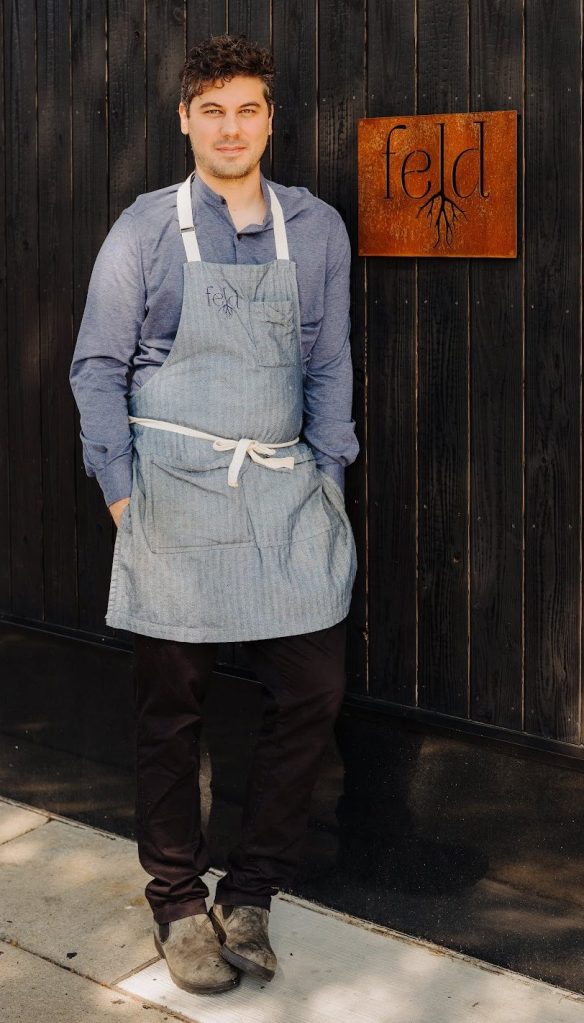
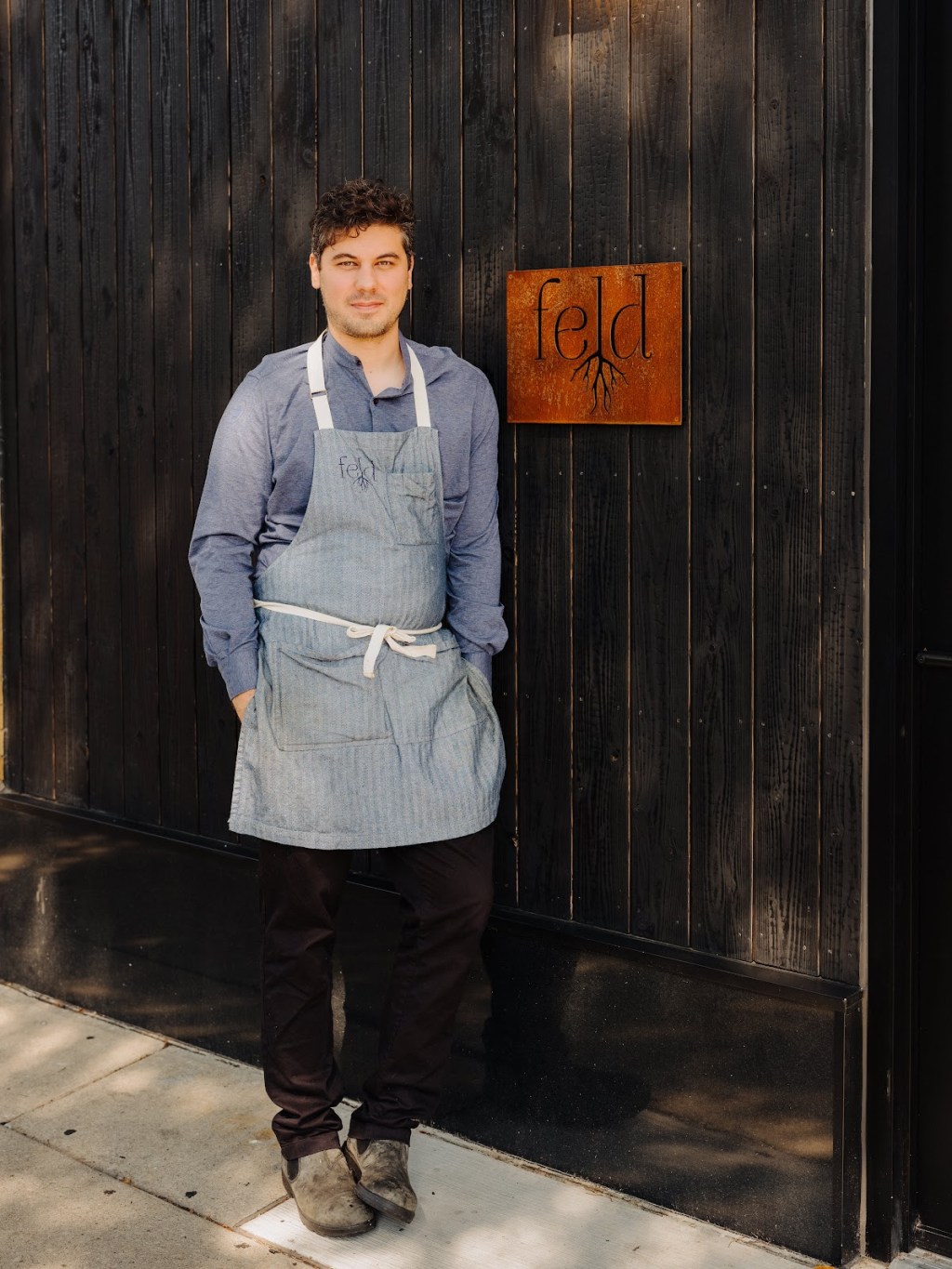
This year’s edition of the renowned Michelin Guide showcases a Payton alum for the very first time. Chef Jake Potashnick ‘11 is a born-and-raised Chicagoan who spent a decade perfecting his craft in Europe’s finest kitchens. In 2024, he returned to Chicago after his culinary odyssey to open a restaurant of his own. The city blessed him with a familiar social milieu and proximity to the Midwest’s lush farmlands.
It is here where Chef Potashnick has infused bold, unconventional flavors into the city’s vibrant food scene.
Feld, a prix-fixe fine dining restaurant in the West Town neighborhood, has already earned a Michelin Star in two short years of existence. It is one of two restaurants in the city with a Green Star, which is awarded for environmentally friendly practices. Potashnick himself has also received a prestigious James Beard Award nomination while still in the blossoming stages of his career.
In an interview with The Paw Print, Potashnick classified Feld as a “relationship-to-table” or “farm-to-table” restaurant. Unlike other restaurants that claim these monikers, Potashnick explained, “I wanted to imply something deeper about the distance and extent to which we go to work with our farmers, our fishermen, our ranchers, our producers.”
His approach to cooking is unorthodox: rather than starting with specific dishes in mind, Potashnick starts with raw, carefully cultivated produce. The goal is to create innovative dishes that highlight the qualities of fresh meat and vegetables. “We can never come up with a concept or a technique and force a product into it. It doesn’t work,” said Potashnick. His menu is always evolving, depending on what produce is in season at the moment.
Potashnick fondly remembers his time within the halls of Payton, where he participated in Model United Nations and wrote for The Paw Print. In fact, he still proudly displays old Model UN awards on his wall. He also recalls an English teacher named Mr. Miller, whose strict teaching style taught him valuable life lessons on adapting to the different systems of others. On Seminar Days, he participated in a cooking seminar hosted at a now-closed culinary school several blocks away.
Most importantly, though, Potashnick cherished the highly motivated peers that he was surrounded by. He felt encouraged to pursue his unique interests even though most of his friends embarked on traditional career paths in medicine, law and consulting. Payton was a “creatively freeing place…and a good launching-off point,” affirmed Potashnick. “Until you’re in an environment where you’re not surrounded by incredibly motivated people, [you don’t] realize how special [Payton] is.”

Although he took his fair share of arts and science classes at Payton, Potashnick hesitates to label his current work as one or the other. “I think because of ‘Top Chef’ and Food Network, food and cooking has been romanticized. At the end of the day, this is a craftsman’s career,” he said. “And I think there are [both] elements of art and elements of science.” The broader food industry encompasses everything from gourmet chefs plating intricate dishes to scientists engineering the color of mac and cheese, but Potashnick ultimately sees himself as a craftsman who uses his tools to pay homage to fresh produce.
Cooking, though, represents only a fraction of Potashnick’s interdisciplinary career. “The core of running a restaurant is running the entire operation: the building, the business, the people, the management. Every day is a little different, but the only consistent thing is service,” he said. Potashnick has personally established business relationships with Midwestern farmers to grow the produce that he loves.
Like many other small business owners, the chef also had to market Feld on social media in order to gain traction. His surge in popularity through TikTok marked a shift from traditional outlets for exposure such as the Bon Appetit magazine and the Chicago Tribune food critics.
Potashnick believes that fine dining goes far beyond mere ingredients and technical skill; instead, he focuses on the guest experience. The individual dishes are only a part of the story that he’s trying to tell at Feld. “A dish is successful when you enjoy it,” he explained. “But a restaurant is successful when people walk out saying, ‘What an amazing experience that was.’” He added that when asking for feedback from guests, he prefers to hear about their experience rather than the specific dishes they liked. According to Potashnick, people may not remember the contents of a meal years later, but they will remember the raw emotions associated with it.
As for cooking advice for young students, Potashnick underscores the potential for social connections through food. “The easiest way to meet people in college, especially if you’re living in a dorm, [is to make] dinner in the dorm for people,” he recalled with a smile. Even learning one or two dishes can have benefits for young people. Apart from boosting their popularity, cooking one simple dish teaches students techniques that can help them broaden their culinary abilities. “Use a dish you like, read a lot about it, and then expand,” Potashnick said. For instance, one may start with a simple spaghetti and meatballs recipe and build upon those skills to create a more advanced dish like carbonara.
The chef further clarifies that restaurant cooking differs significantly from at-home cooking. Not all restaurant-style cuisine can be replicated well at home. One key factor is heat capability, he explained, because restaurants often use special stoves. “Home chefs should better understand the equipment they are working with and how to use it well, rather than attempting to recreate restaurants’ methods,” he said.
However, cooking at home may unleash more creative freedom compared to the time constraints and high production quotas that restaurant chefs must meet. In addition, Potashnick acknowledges that restaurant dishes generally contain unhealthy excesses of salt and butter that should not be consumed frequently.
The bottom line is that food can be both healthy and delicious. Potashnick advises Chicagoans that farmers’ markets are a surprisingly affordable way to obtain fresh, organic produce while supporting local businesses. “In the summer in Chicago, there is a farmer’s market pretty much every day except Friday somewhere in the city. So you don’t have to be limited necessarily by day of the week,” he said. He hopes that Feld will inspire a shift in food culture towards more sustainable, environmentally-friendly practices.
Reflecting on his impressive accolades, Potashnick acknowledges the power of validation in a highly competitive industry. His Michelin Star represents a source of pride for himself and his team. However, he continues to explore wherever his curiosity takes him and adjust his flavors on the advice of others. “Everybody has an opinion about food, regardless if you’re a professional or not,” Potashnick said, explaining that consistent critiques indicate something to change, while not every critic can always be pleased. “It’s about filtering through criticism to decide what’s worth learning from and what’s not.”
In addition, partnering with local growers has helped Potashnick expand his culinary repertoire. For example, a nearby farm will soon attempt to grow white asparagus — a plant grown in complete darkness that is popular in Europe due to its sweet, tender flavor — so Potashnick expects it to be on the menu at Feld in the near future. He is always experimenting with new kinds of produce and discovering innovative flavor combinations.
“I think it’s very dangerous to stop wanting to creatively push yourself,” the young chef reflected. “I just want to keep focusing on making this restaurant the best it can be and see where that potential takes us.”



![[Photo Gallery] 2026 Homecoming Football Game](https://paytonpawprint.com/wp-content/uploads/2026/10/7-img_2435-1.jpg?w=1024)





Leave a Reply