

By Chloe Taylor and Eliana Baker, Staff Writers
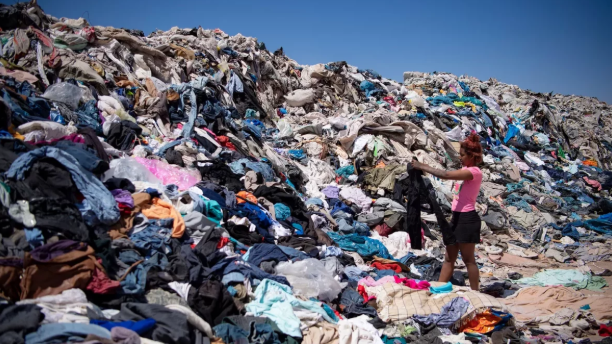
Photo courtesy of Chloe Taylor and Eliana Baker.
We have all seen it: the “get ready with me”’s, the Shein hauls, the closet tours and the seasonal wardrobes. The fast fashion industry is behind it all, producing clothes quickly and cheaply and putting quantity over quality. Though purchasing cute, trendy and often inexpensive clothing may seem like a good thing, the inhumanity and negative environmental impact of the industry more than outweighs this.
The fast fashion industry contributes to around 10% of global carbon emissions annually according to UNEP, and we must look at all the different aspects of the industry to understand why. To start, the clothes themselves are literally made of plastic. Most clothes made in the fast fashion industry are constructed with polyester, a thread made from plastic (which is made from oil!), and then woven into fabrics. Not only do the clothes shed microplastics onto the wearer, but when they rot away in landfills they also release the microplastics into the soil, air and water. Polyester and other synthetic materials do not decompose typically and can not be recycled like cotton or wool, and can also contain toxins that cause countless health issues for the wearer.
The other problematic aspect of the industry is production. The majority of fast fashion’s carbon emissions come from its production process. To start, fiber and fabric production of polyester are difficult and energy-intensive processes that take place in developing countries mainly rely on natural gases. On top of that, textile production, specifically textile dying, bleaching and finishing, significantly drains and pollutes water sources. According to the United Nations, textile production contributes to 20% of global clean water pollution.
Fast fashion is primarily human-made. This means that the clothes do not come from a machine, they come from a real, living person. 60-80% of the people who produce the clothes are women in developing or low-cost manufacturing countries such as China, India and Bangladesh. The women work for little to no money, and the safety risks are astronomical. From exposure to hazardous chemicals to unsafe factory conditions, both the workers and surrounding inhabitants are harmed by fast fashion production. Since the majority of factory workers are women of all ages, rates of workplace harassment and sexual assault are extremely high. It depends on the country, but 53.84, 22.9 and 42.5% of people have experience sexual harassment in Nepal, Thailand and Myanmar respectively. These figures are likely higher in reality due to chronic under-reporting.
It is estimated that the fashion industry produces over 100 billion pieces of clothing each year, and because of fast fashion’s hold over the internet, social media is used to actively promote overconsumption, meaning this number is likely to be even larger now. This leads to people having more clothes than they could ever need, and because of the constantly changing online fashion scape, people are constantly discarding their old, ‘ugly’ clothes to bulk buy the new, trendy and ‘pretty’ ones. This leads to about 92 million tons of clothing waste annually being dumped into landfills to rot, and because the majority of that clothing is made from polyester, it stays there, polluting the environment for years.
Despite its widespread appeal, there are ways to combat this industry. The most impactful ways include holding fast fashion companies accountable for their actions. Although fast fashion consumers drive demand up, the fast fashion companies are the ones creating these cycles of buy, wear (sometimes this step is skipped…) and discard. Advocating for public policies limiting the use of plastic can bring much-needed regulation for the industry. However, the quickest way to make an impact is to mindfully decide where we shop for clothes. This could include buying from local or sustainable shops or going thrifting!
While many might argue that thrifted clothes are of lower quality or even claim that it is embarrassing to buy secondhand, thrifting is gaining traction among our generation. According to the New York Times, growing numbers of Gen Z-ers are taking the initiative to target thrift stores and buy secondhand despite the stigma. According to a report from eBay, around 86% of Gen Z-ers say they are more likely to purchase a secondhand holiday gift this year than they would have been. External factors, such as costs of freshly manufactured items and the pandemic, have revitalized thrifting as trendy on social media platforms such as TikTok, with hashtags like #Thriftmas and #Thrifthaul spreading the message. Millions of views pile up on trends such as thrift hauls, closet clean-outs and $20 thrift store challenges. Gen Z-ers’ holiday spending in 2025 was set to plummet by 23%, which makes thrifting an affordable and trendy option. Thrift stores themselves have also become popular due to their nostalgic and community-like vibes and have become the primary location for picking clothes or gifts.
And to our materialistic friends: no need to be wary of thrifting! If anything, thrifting also saves money in the face of dishonesty from big retailers. Big corporations and manufacturers often inflate the worth of deals during peak shopping seasons, notably for Black Friday. Wirecutter, a New York Times product recommender, tracked prices of products all year and revealed shocking price manipulation from retailers from the original manufacturer’s suggested retail price (M.S.R.P). The journalists reported that of 185,000 supposed Black Friday discounts, only about 1,700 have actually been verified to not be subjected to price inflation. This accounts for less than 1% of the studied deals, and is a huge blow to the supposed integrity of big retailers and the quality of their products.
Gen Z is also more focused on environmental issues than previous generations, with surveys showing that Gen Z prefers retailers and manufacturers that create environmentally friendly products. A 2024 Deloitte report revealed that 64% of Gen Z respondents said they were actually willing to pay more for environmentally sustainable products or services (although how much more they would have to pay was not included). The PDI Business of Sustainability Index polled that 91% of Gen Z-ers have been concerned about the environmental impact of their purchases and want to buy from sustainable companies. Of course, everyone wants to pay less for sustainable products that are still of good quality, so why not thrift?
Social media and research studies on fast fashion have opened the eyes of Gen Z-ers to the real-world impacts that fast fashion has. Thrifting empowers us to make better choices for the environment and labor conditions around the world – all at the same cheap prices. It is a trend actually worth hopping on!








Leave a Reply